


 Listen Live

CHARLOTTESVILLE, VA (CVILLE RIGHT NOW) — As Artificial Intelligence continues to evolve, a new UVA program is connecting local businesses directly with students trained specifically in AI this summer. Its aim is to give the businesses a chance to learn how to best utilize AI in their operations, while giving students 100 hours of combined training and real-world experience.
The program, called “AI4VA,” will pair 130 students with Virginia-based small and medium-sized businesses, non-profits and local public sector agencies for six-week, 100-hour projects. Beforehand, each student will receive training through Google’s AI Professional Certificate, which will provide real, professional AI training they can use in their projects and beyond.
Vice Provost for Online Education and Digital Innovation Kemi Jona told Cville Right Now the idea behind the program came about as students face a “really challenging job market” as they prepare for graduation or look for internships.
“We wanted to do whatever we could to support them,” he said. “And in particular, because AI is changing the workforce so quickly a lot of students are recognizing that having AI skills on the resume is going to be really important for their future competitiveness.”
Jona said the team behind AI4VA landed on the idea of pairing students with small businesses, as many of them are “probably eager to adopt AI, but don’t have the money or expertise to afford expensive consultants.”
The basis for the program came from a previous program from Jona’s office, also known as OEDI, called Career Academies. which similarly paired students with asynchronous employer project through the Riipen platform. AI4VA also uses Riipen, and OEDI has also teamed up with Grow with Google and the Charlottesville Regional Chamber of Commerce to put the program together.
“We’re thrilled to partner with UVA to launch the AI4VA initiative, which features the Google AI Professional Certificate and pairs local Virginia small businesses with skilled UVA students,” Grow with Google Founder Lisa Gevelber said in a statement to Cville Right Now. “This creates a dual impact: talented students gain tangible AI expertise while solving real-world challenges, and businesses are able to see how AI-powered solutions can help them grow.”
Charlottesville Regional Chamber of Commerce Andrea Copeland told Cville Right Now the chamber was approached by the OEDI in the late winter with the prospect of becoming a partner. When the chamber was given an overview of the program, Copeland said she could see how it could be beneficial for the small and local businesses it serves given the growth of AI, particularly in the business world.
She said while there are plenty of concerning things about AI’s impact, particularly on the workforce, it’s still important to connect the chamber’s businesses with individuals who are using it in ways that can help them.
“As a chamber of commerce, we’re about supporting the business community and growing the business community, which grows our region,” she said. “And so, it behooves us as a chamber of commerce to embrace [AI] and find the ways to that it benefits the business community and give our members access to those individuals, so the business community, our members can see ‘Okay, this how it’s helpful to me.'”
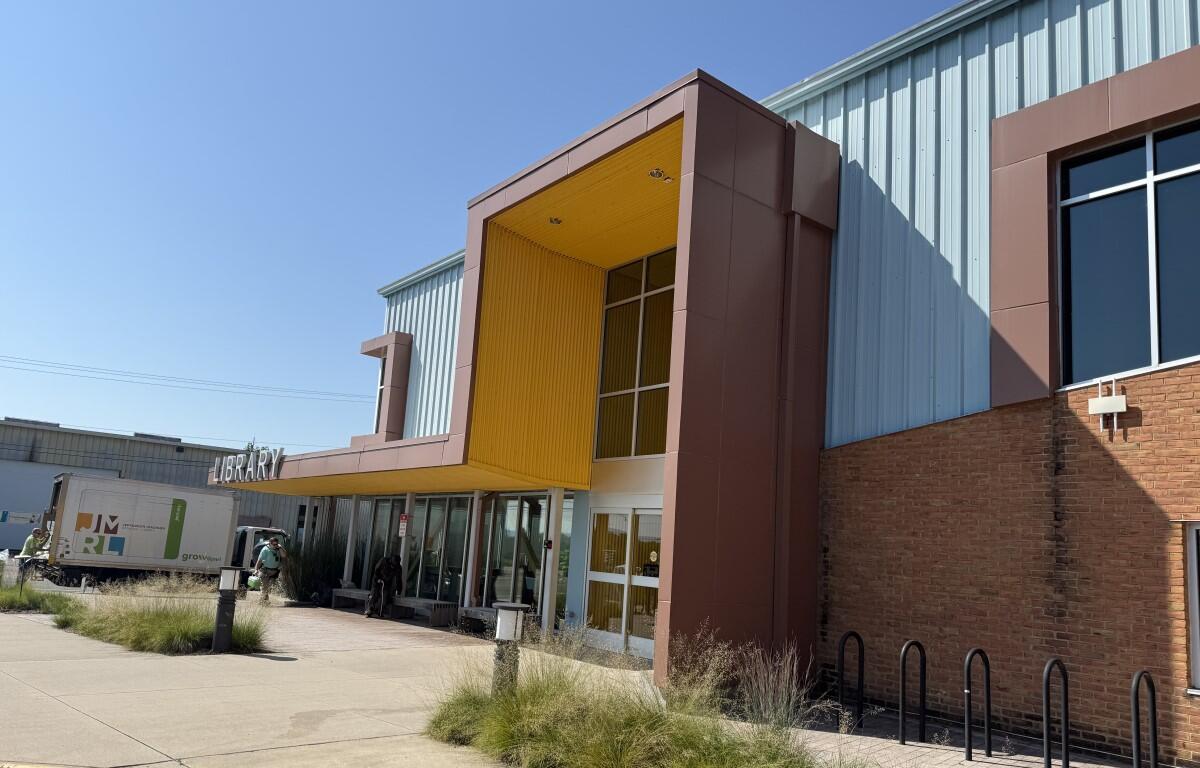
The Chamber of Commerce’s involvement in the program directly led to Jefferson-Madison Regional Library joining the program as a participating business. Library Director David Plunkett told Cville Right Now staff at the library had already engaged in discussions on how it could ethically use AI in its operations, as well as how the library could potentially showcase the technology to the public in a safe way, like it has done with other emerging technologies.
He said the staff was “tremendously looking forward” to connecting with the students participating in the program.
“I’m excited to see what new tools they have seen and what they have learned that’s kind of fresh out in the world,” Plunkett said. “And I’m also excited to show them a little bit about how public libraries work.”
Student teams will be paired to businesses on May 20, with students working with their business from June 17-July 29.
With the program just around the corner, Jona said he hopes the students have the opportunity to tackle “some messy, real-world problems” the businesses have, especially given how rapidly the AI tools are changing.
“The real skill is looking at a real-world problem and figuring out what tools, and specifically what AI can I bring to bear to actually solve this,” he said. “There’s no one right answer, and that’s what makes these real-world, applied, messy problems so powerful is it teaches you really how to think through the problem and find the right tool for the job, and then figure out how to put it into place and see real impact.”