


 Listen Live

CHARLOTTESVILLE, VA (CVILLE RIGHT NOW) — On July 5, 1776, just one day after the Constitutional Congress passed the Declaration of Independence, copies of the document were distributed and delivered throughout the 13 colonies, spreading the word that the time for independence had come.
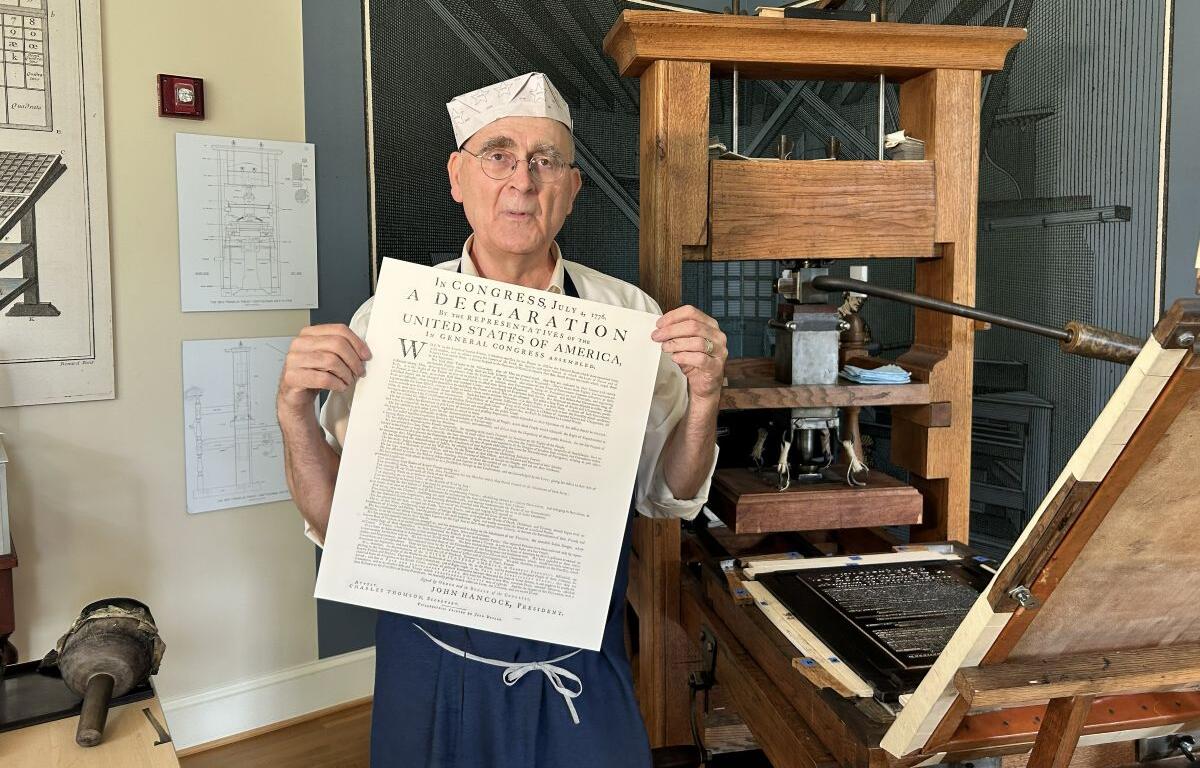
This Saturday, on the 250th Anniversary of the Declaration’s ratification which is now celebrated as Independence Day, the public will have the chance to receive their own copy of the historic document, printed using a replica printing press at the Albert and Shirley Small Collections Library at the University of Virginia.
The library, which is typically open Monday through Friday from 9 a.m. to 5 p.m., will be open on Saturday from 11 a.m. to 4 p.m. for the free and family-friendly event.
While a number of timed events have already sold-out tickets for the day, Curator of University Library Exhibitions Holly Robertson said there will be plenty of walk-up activities, including printing copies of the Declaration, hearing music of the American Revolution, screen-printing a bag and more.
“I hope that people come away with their own sort of sense of pride about America today, and what it means to declare your own independence, what it can mean to be in rebellion, in revolt, and to understand how our nation was founded,” Robertson said.
While small copies will also be available to print, bigger copies of the Declaration will be printed by artist Josef Beery. He said the replica press he will be using has been at UVA for the past three years and that the University has run this event in past years as well.
The press will be used to print replicas of the copies of the Declaration that were printed and distributed throughout the colonies, often through local newspapers.
“If people wanted to talk and cause trouble the way they do on the internet, it was through the newspaper,” Beery said.
Two of those original copies are at UVA, with one on display at the Special Collections Library.
Of the questions Robertson has received from visitors who see UVA’s copy of the Declaration, one of the biggest is “Why is it not handwritten?” But in actuality, the handwritten Declaration that is most famous was actually written later and first signed on August 2.
For many, the broadside, or printed, version of the document was how they first heard the news of independence.
“When you think about how information is spread today, it’s a tweet or it’s a press release or it’s text that you get,” Robertson said.
“A broadside was the way the word was spread in 1776. So, to bring people to this document and an understanding of how information was communicated, how word got out about this very important Declaration of Independence is really a way for them to understand our material culture and our shared history.”
250 years later, the Declaration is remembered as a pivotal document in United States’ history, but Beery said when he prints every copy, he hopes people take away its message.
“It’s Americans saying, ‘We won’t be pushed around,'” he said. “At that time, it was King George III, and I’m hoping that when I’m printing this for people, it’s a political act. And it’s saying once again, reaffirming, we won’t be pushed around.”