


 Listen Live
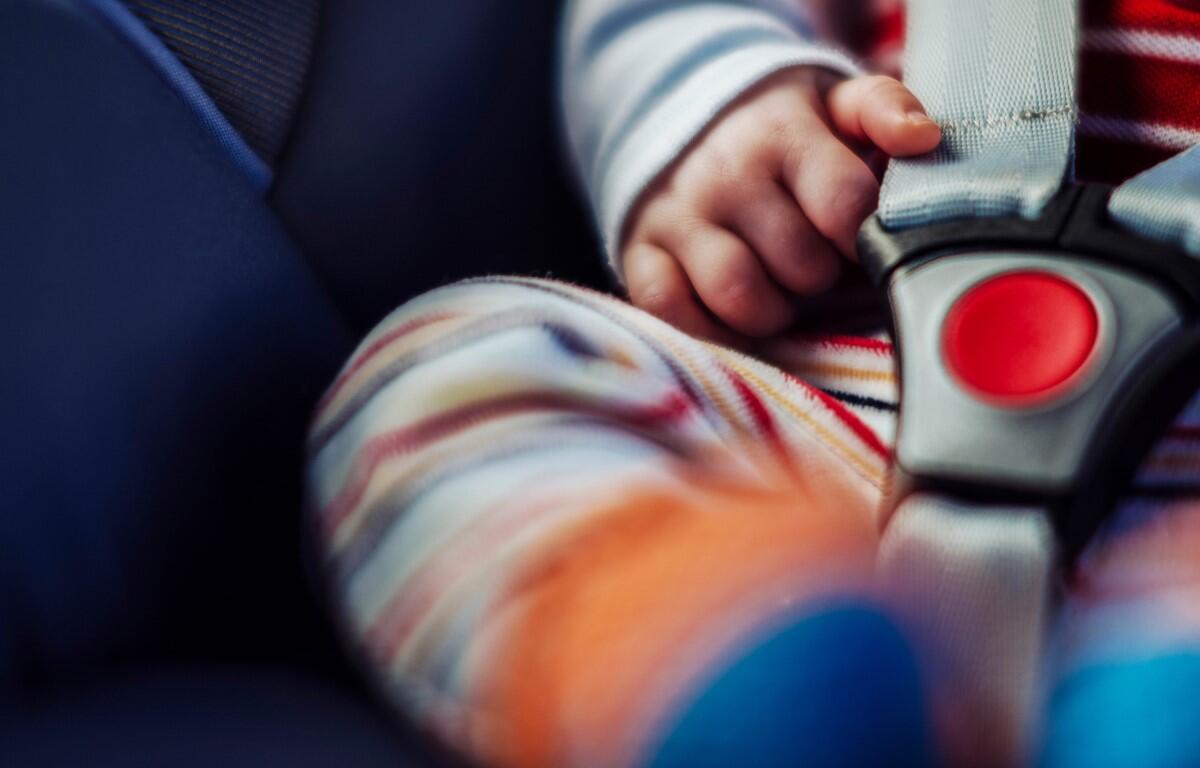

CHARLOTTESVILLE, VA (CVILLE RIGHT NOW) – Based on what they’ve seen with patients who are parents visiting their medical centers in Charlottesville and Prince William County, UVA Health is urging vigilance in not using counterfeit child safety seats in vehicles.
“You know, probably in the past there were more,” said Teresa Baltuano-Post, a registered nurse and certified car seat technician at UVA Health Prince William Medical Center’s mother-baby unit, in a reporter conference call. “But in the last six months, we at least four or five.”
That’s in their unit, and UVA Health spokesman Eric Swenson noted they’ve identified in the last six months about a half-dozen counterfeit child safety seats at University Medical Center in Charlottesville in what’s an ongoing issue.
Back in September, heading into National Child Passenger Safety Month and Child Passenger Safety Week then, UVA Health reported at least six non-compliant child safety seats during inspections they were asked to do then.
In this latest round in Prince William County, some of the issues found included a lack of structure.
“You pick it up, and it is markedly lighter than an approved car seat, and that is because there’s no steel in it, probably,” said Lee Ann Brown, another registered nurse and certified car seat technician at the Prince William facility. “Approved car seats have steel along the base, along the seat area, and along the length of the torso.”
Brown notes both she and Baltuano-Post are seeing the same thing though she works in the NICU and Baltuano-Post works postpartum.
“You notice that the straps are thinner and there’s no chest plate… that goes across the chest to hold the baby securely,” Brown said. “Without that, you have a propensity for ejection during a car wreck.”
Also, a legitimate child safety seat has a Federal Motor Vehicle Safety Standard 213 label (FMVSS) which includes a manufacture and expiration date.
Key components of a compliant product, according to the National Highway Transportation Safety Administration (NHTSA) include the heavy-duty shell frame as outlined by Brown; impact-absorbing foam, a five-point harness system with chest plate strap, and buckles; LATCH anchors; and top tether.
“This one does have a manufacture date and an expiration,” Brown said showing one of the counterfeit seats they found. “But if you also look at this one, and this is the kicker right here, it says, Hubie Doll Baby Children Product. So, it’s a doll seat.”
“It is not meant for an infant, but they’re selling as an infant car seat, and there’s also no height or weight measurements on it.”
The nurses observe people are purchasing these not-compliant seats pretty easily on platforms like Tik Tok, Amazon, Temu, and at second-hand stores.
She said she saw a seat advertised on Amazon as having a five-point, “And in the picture, you can clearly see that’s nuts.”
Brown advised a car seat should never be resold.
“You use it, it expires, then you throw it away,” she said. “You never know if the car seat was in an accident and they’re being sold at those stores,” Brown said. “It’s just like wearing a bike helmet. Yeah, if you hit your head with a bike helmet, you should be getting a new bike helmet. If a car seat was in an accident, you should be getting that replaced.”
Brown advises purchasing a child safety seat only at a reputable retailer that one knows is selling only the legitimate seats.
One of the challenges, Brown said, is the United States is one of only four regions in the world with car seat regulations.
“It’s the United States, Canada, the European Union, and Australia.” Brown said. “Other countries have some sort of suggestions, but not really regulations. So, even if a car seat’s coming from another country, they’re very much at risk to have these faults.”
Baltuano-Post noted most of the car seats they find non-compliant in their Prince William facility belong to patients who don’t speak English.
“We’ve even changed our practice in the NICU a little bit to encourage parents to please bring their car seat in a few days before they’re going home, because we may need to be doing a car seat test, which just tells us whether or not the baby’s gonna be able to, tolerate the position it’s in,” Brown said. “And so then we have an opportunity to look at it, and if it’s inappropriate, we can make arrangements with case management to help us out if they need that help.”
Brown and Baltuano-Post said this is definitely a buyer-beware issue because it’s not illegal to sell seats that don’t comply with the Federal Motor Vehicle Safety Standard.
The consumer can use the Safe Kids Worldwide Coalitions directory for in-person, hands-on verification of a seat, or the Virginia Dept. of Health Safety Seat Checks program.
Baltuano-Post said not all fire departments have certified child safety seat inspectors; however, Albemarle County Fire Rescue has a child safety seat inspection program where parents can make an appointment.