


 Listen Live
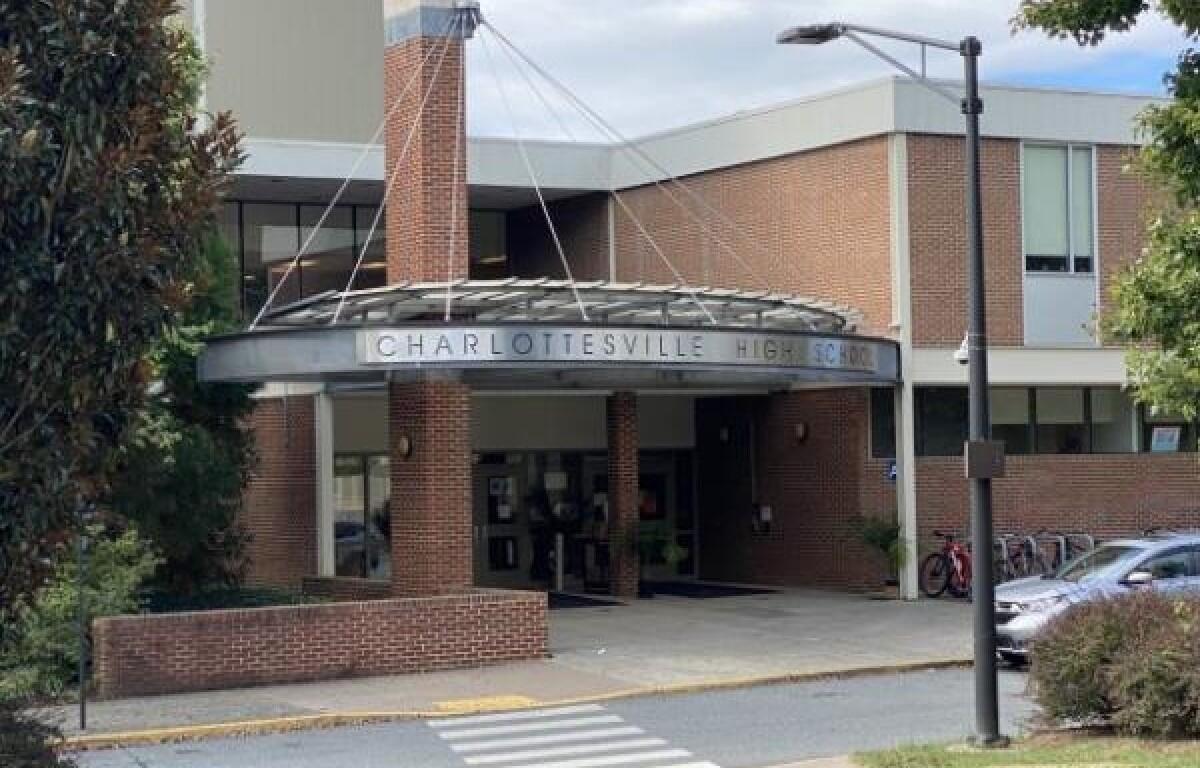

CHARLOTTESVILLE, VA (CVILLE RIGHT NOW) – The Charlottesville School Board voted not to reconsider the school resource officer program being instituted in the next academic year despite a call from some community activists to “rethink” and “revote.”
Though the issue was not on the agenda for Thursday night’s work session, the board did entertain a motion to reconsider its March 2025 decision to bring school resource officers back into the city’s high school and middle school. The motion was defeated on 3-to-3 tie vote.
Zyahna Bryant, who requested the vote to rescind the earlier decision, was one of the “yes” votes along with Shymora Cooper and Nicole Richardson.
Vice Chair Amanda Burns was a “no” along with Chris Meyer and Emily Dooley.
Chair Lisa Torres took about 45 seconds between the time her name was called for a vote and announcing her decision to abstain.
Because the motion was to rescind an action from a previous meeting without prior public notice, Torres noted it would have taken a 2/3s vote, or 5 in this case, for the motion to pass.
There was no vote associated with the SRO plan included as a work session agenda item.
Bryant told Cville Right Now she submitted an email to the board chair and vice chair to include an SRO discussion item on the agenda for the March 31 regular meeting.
“On March 25, I received a response it was (too) late to add to the March 31 agenda, so they then scheduled an April 16 work session to include SROs,” Bryant said.
Bryant suggested revisiting the topic again in May.
“We can, after digesting all of the information and feedback we’ve heard tonight, have a more complete foll0w-up conversation about this in particular,” she said.
Bryant was particularly curious why Torres, who voted against the SRO program last year, passed on the chance to bring it to a revote now.
She suggested Torres’ contemplation might be a reason more discussion was needed in May.
But Torres said she believes that the current model, based on the memorandum of understanding put together by police, school officials and community members, is the best available model for city schools and supported not revisiting the decision.
“That’s what I’m holding is just the amount of work, and knowing and feeling like if we’re going to have an MOU, this is probably for lack of better words the best of the worst of what we could have for Charlottesville,” Torres said.
Torres said they talked about “a Charlottesville model” as something different in an SRO approach.
Some of the provisions to which she refers is keeping data on interactions, the demographics, and which administrator asks for an interaction.
“If something’s going wrong, if there’s a poor interaction or behavioral whatever you want to call it, the administrator can have that SRO pulled out of the building immediately,” Torres said. “That’s what’s changed.”
But she said she’s not prepared to answer if the data supports bringing SROs back.
Some response from public after the vote was angry.
Former Mayor Nikayuh Walker pointed back at 2020 when the School Board opted to end the SRO program.
Torres, in a statement after the April 16 work session date was set to talk about the SROs, said police have been in the schools regularly without incident, and fulfilling needs.
However, city resident Tenesha Hudson questioned what those situations were about.
“When you all were talking about those emergency calls, what you didn’t cover was how many of those calls were medical, calls that involved threats, fire drill checks, or what type of incidents those calls were,” she said. “How many times were the perimeter of the school searched and you recovered like weapons or drugs or how many incidents with children involved like weapons that didn’t belong in school or something considered a weapon, how many incidents involved drugs on school grounds, how many incidents from different fights that have occurred involved teachers going out on medical leave, or how many fights involved ten-day suspensions versus five-day suspensions versus expulsion.
“Like, you guys are not detailed enough,” Hudson asserted.
She said she agreed with SROs in high school, but not in every school.
Some Charlottesville High School students spoke.
“Police are in our schools,” senior Harper Ullrich said, saying that data showed CPD responded to calls at city schools 226 times in the 2024-25 school year. “Many students do not see them, some calls are not student-related, but still, we constantly have police in and around our schools and inevitably there will be some level of interaction with students.”
Ullrich said a survey of her classmates found many students would rather have an SRO who’s a member of their community and whose role is defined.
“There are students who are not in support of SROs,” she said. “The biggest concerns are about guns, and additionally there’s continued work needed to determine the best way to introduce SROs as members of the community.”
Ullrich said a survey sent out Tuesday that had 186 responses by Thursday afternoon that found, “The largest group said they were indifferent to SROs coming back to the building. A majority of students of color who I spoke to shared that they are comfortable or indifferent with SROs, especially when informed about the MOU, etc.”
She claimed the current data is 61.3% of students said they are indifferent or would feel safer with SROs.
That said, Ullrich said, “An SRO is not a standalone solution that transforms systemic problems reflected in our schools, and students hope the board will continue to address these issues regardless of SRO presence.”
Bryant agreed with Hudson on the lack of data.
She feels the April 16 work session was called to give staff extra time to prepare.
“What is disappointing about that is there were way to many instances where I asked very direct questions and there were no answers, and I was told we do not have that data,” she said.
She said they’re hearing anecdote after anecdote about police engagement in schools, but no numbers to go with them.
Bryant said hearing from the students they heard the 61.3% data point, “But what is the racial makeup of those responses because as of the meeting that we had with those students earlier this week, there were, I believe, 50 white students who responded and six Black.”
“So, again, data needs to be complete and I emphasized that point to our students and they understood,” Bryant said. “And so it’s just disappointing not to have any of that represented here tonight.”
Burns said she appreciated the community bringing the issue back to the board, realizing Bryant was new to the board and brings her perspective and experiences.
She said while she understands those who view the SRO votes as abrupt, she believes over the months they have been provided clear directives on where to go.
“I think it allowed us to be intentional in developing an MOU that reflected community input, that incorporated important guardrails, transparency, and accountability on how we were going to do the work,” Burns said.
“I remain committed to listening and acknowledging concerns in supporting the division’s work to implement a thoughtful, balanced safety model, a comprehensive approach to safety that does prioritize student well-being and inclusion in a positive school climate that we have heard constantly over the last three years.”
Burns concluded, “I appreciate you all, and this work isn’t easy because it’s about kids.”
“If it was easy to run for an election, 50 people would have run last time but they didn’t, and so maybe this is my invitation that if you think you can do it better and you want to, there’s another election in two years.”