


 Listen Live
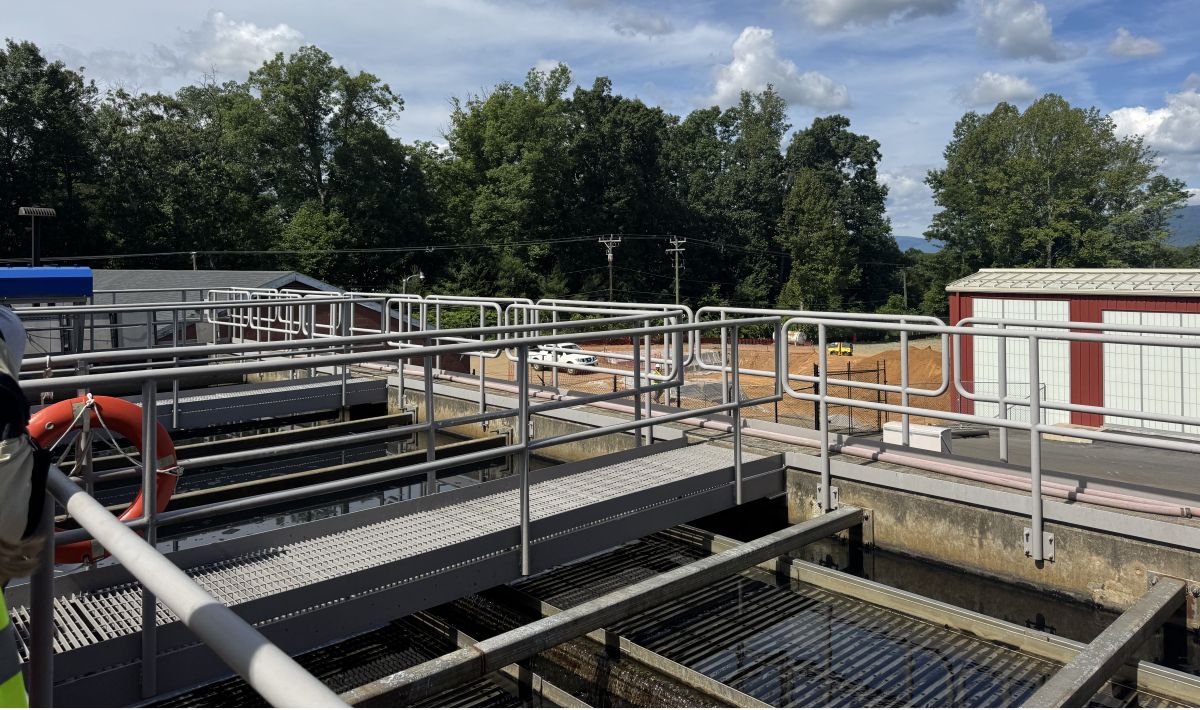

CHARLOTTESVILLE, VA (CVILLE RIGHT NOW) – Rivanna Water and Sewer Authority offered a tour to the public of the Crozet Water Treatment Plant, putting the facility’s primary functions on display as it handles almost a million gallons of water a day.
Westley Kern, Communication and Outreach Coordinator and Brad Puffenbarger, Water Manager, showcased the plant’s stages of sedimentation and filtration with Granular Activated Carbon (GAC) as well as outlining plans for expansion at the plant and beyond.
Built in 1964 and transferred to RWSA around 1972, the Waterworks process water from the Beaver Creek reservoir, which holds about 500 million gallons of water and collects water from the 10 square miles of its surrounding watershed.
As drought concerns pile up in the area, due to a lack of rain and drier conditions in Albemarle, these reservoirs and their waterworks determine the availability and quality of water from day to day.
Kern noted that although conditions can be difficult without rain, the county’s reservoirs are more prepared to maintain their resources following the significant 2002 drought, and that there is no need for a water conservation mandate for the public at this time.
“Right now, our reservoirs are sitting at about 98% full,” Kern said. “After that drought occurred, we went through about a 10-year planning period.”
The results of that planning period included expanding the Ragged Mountain reservoir, increasing capacity up to 1.4 billion gallons, and $300 million of infrastructure projects, both visible to the public and at water treatment plants and pump stations.
For the Crozet Waterworks, a key improvement is the addition of a new building for GAC filtration, with two new vessels to expand to full treatment capacity of all water that goes through the facility.
Granular Activated Carbon itself is a porous material that traps water contaminants as it passes through, such as chemicals, organic compounds and “forever chemicals” — synthetic chemical compounds that interfere with human health — absorbing impurities and removing them from the water.
Other long-term projects include a 6.5-mile pipeline connecting the South Fork Rivanna reservoir to the Ragged Mountain Reservoir, as South Fork stands to benefit from Ragged Mountain’s increased capacity, and a central waterline project.
The long-term efforts can cause interruptions within communities, but Kern emphasized their importance in maintaining public health amid challenges like extreme weather and water safety risks.
“At the end of the day, when someone turns on the tap at their house or at their place of business, they expect water to come out of that tap,” Kern said. “That’s really what these projects are about.”
The Crozet Water Treatment Plant offers group tours to the public for those interested in the plant’s role in treating Albemarle County’s water.