


 Listen Live
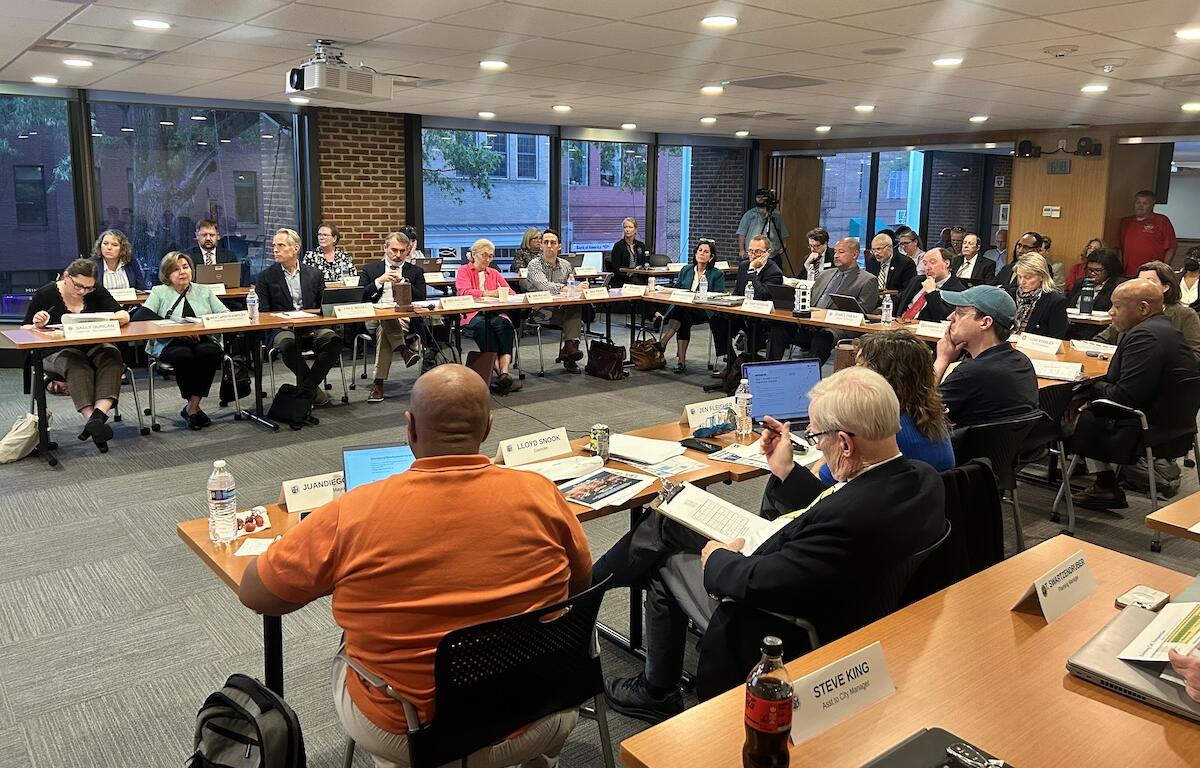

CHARLOTTESVILLE, VA (CVILLE RIGHT NOW) – At the joint meeting between the Albemarle County Board of Supervisors and the Charlottesville City Council on Tuesday, members of both boards expressed encouragement over how collaborative the two localities have become, but still stressed that there is plenty of work to be done, including coordinating their strategic plans.
“We’re doing a hell of a lot of things together, the city, county, university, but (there) is so much more that we could be doing,” Charlottesville Mayor Juandiego Wade told Cville Right Now. “And it has to start with conversations like this.”
The semiannual meeting gave both boards, as well as staff from both governments and representatives from the University of Virginia, a chance to discuss the collaborative efforts between the county, city and university.
These efforts include the Charlottesville Albemarle Regional Transit (CARTA), which was activated in 2025. Charlottesville Area Transit Director Garland Williams gave a presentation on regional transit during the meeting, but CARTA was specially brought up by the Albemarle County Board of Supervisors during the discussion at the end.
The main concern of members of the board was that while Albemarle is a customer of CAT, they have no vote on how the transit decisions are made, and CARTA currently doesn’t give them that power.
“We’ve created a regional transit authority, and that regional transit authority doesn’t yet have any power,” Scottsville supervisor Mike Pruitt told Cville Right Now. “For it to be able to make those decisions collaboratively, for us to act in a real regional way there, the city has to kind of be a first mover on that. And I think that’s a goal we both share, but there’s gonna be some bumps on the road.”
Sanders said at the end of the meeting that he and County Executive Jeff Richardson have initiated a conversation on CARTA at the executive level, adding he sensed and understood “the frustration of not being sure what that entity is really going to be able to do.”
The other main concern of Pruitt’s, which he brought up during the meeting, is the revenue-sharing agreement between the county and city. The agreement, which both governments entered into in 1982, requires both localities to make an annual contribution to a Revenue and Economic Growth Fund. That contribution is based on the localities’ populations, “true real property tax rates” determined by the Virginia Department of Taxation, and the assessed value of real property.
As Pruitt said afterward, concerns over the agreement on the county side are not new, but they have been renewed now that the county has put more effort toward economic development. The county’s payment to the city in FY27 was $21.9 million.
“Our revenue is going to grow faster than Charlottesville’s, and is going to continue to grow faster than Charlottesville,” he said. “That means our contribution to revenue sharing is going to grow faster than Charlottesville. It is going to get quickly to the point where the numbers stop making sense.”
Pruitt said he was optimistic the city will consider voluntarily implementing a ceiling on the dollar amount into the agreement.
Communication between the city, county and UVA was another major discussion point, with representatives from both boards expressing concerns that the university is less accessible than the two local governments.
UVA Executive Vice President and Chief Operating Officer Jennifer Wagner-Davis responded to those concerns during the meeting, saying that while the university is large and decentralized, that does not mean they are inaccessible. She also said that Sanders and Richardson are already meeting regularly with UVA President Scott Beardsley.
“Our success is interdependent,” she said. “Whether that’s public safety or affordable housing, whatever the issue is, our ability to be effective as leaders requires collaboration … so, I appreciate that our structures are different, but that doesn’t make us unavailable and (less) accessible. And if there’s need for more information, I would just say, ask and we will do our best to respond.”
By the end, all sides agreed that further communication from all parties is needed, with Charlottesville City Manager Sam Sanders suggesting the joint meeting be held annually moving forward, as it had been previously. That suggestion was met with approval from members of both boards.
For Wade, who worked for the county as a staff member, seeing this collaboration among elected officials was a welcome sight.
“I’m encouraged by this,” he said. “Because we were able to have this conversation and during the course of my time with the city and the county, I don’t think that this type of thing would have been possible as it is now.”