


 Listen Live
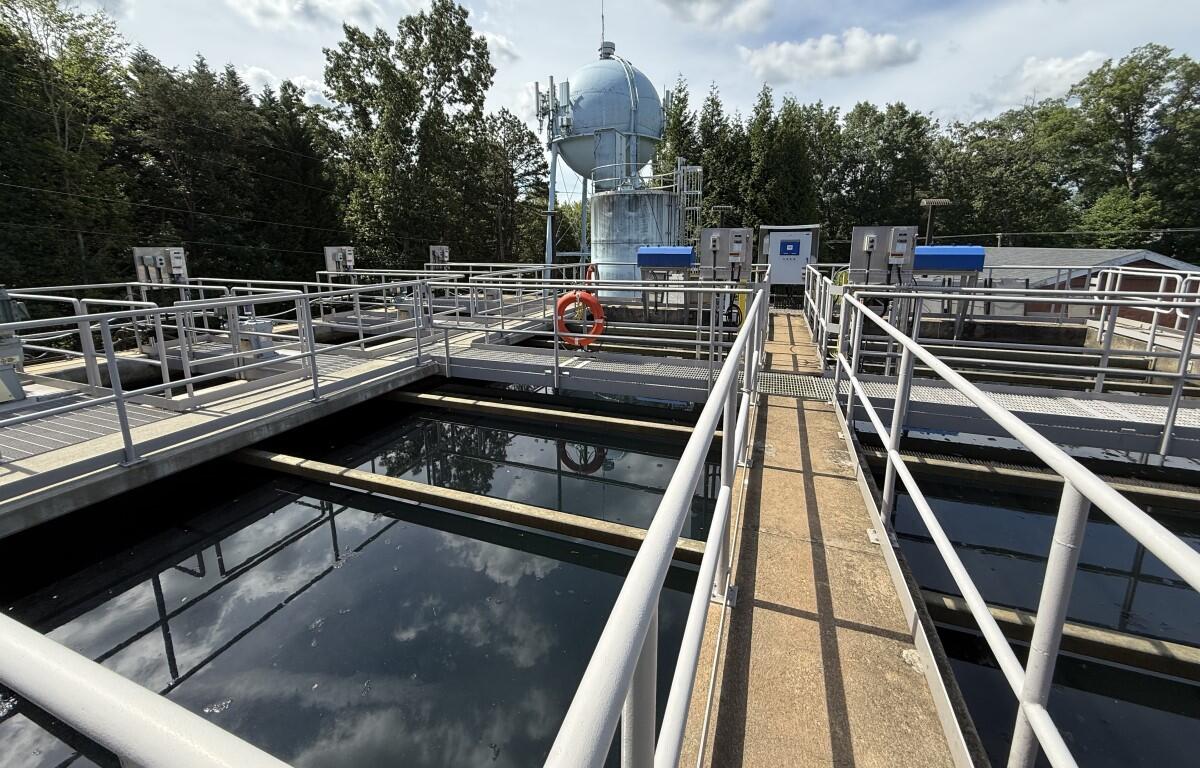

CHARLOTTESVILLE, VA (CVILLE RIGHT NOW) – Though the Rivanna Water and Sewer Authority said the local reservoirs “are doing alright for the time being,” Governor Abigail Spanberger along with the Virginia Drought Monitor Task Force are urging “voluntary, commonsense steps to conserve water” in response to what the Governor’s Office called “historic drought conditions.”
At the RWSA, the three urban reservoirs are holding at 98% full, along with Beaver Creek that serves Crozet.
“We always like to preach conservation,” RWSA spokesman Westley Kern said. “We don’t want to see people wasting water unnecessarily, but we haven’t reached a point yet where we need to mandate conservation efforts.”
That’s not the case in Louisa County where the Water Authority June 9 mandated “restrictions for all customers on Green Springs/Zion Crossroads and New Bridge/Lake Anna well systems”.
Among the restrictions is not watering outdoor trees, shrubbery, or gardens with anything other than a can not exceeding three gallons, no washing of vehicles or sidewalks, streets, or driveways, no ornamental fountain operation, and no serving of water in restaurants unless otherwise requested.
Despite much of the state receiving recent beneficial rain, a significant lack of precipitation has resulted in Virginia recording its driest period since 1941, according to the Governor’s release.
Precipitation totals are approximately eight inches below average across much of the Commonwealth.
“All Virginians can play a role in protecting our water supply during this historic dry period,” Spanberger said in a statement. “As communities across the Commonwealth — particularly in Southside and Central Virginia — continue to be impacted by these conditions, it is important that we take commonsense steps to meet this challenge. I’m grateful to Virginians for doing their part, and my office will continue to remain in close coordination with the Virginia Drought Monitoring Task Force as we focus on safeguarding our water supply.”
The Governor recommended Virginians reduce lawn and garden watering schedules to alternating days, only watering between dusk and dawn, turn off ornamental fountains, limit washing of vehicles and paved surfaces unless addressing public health and safety and limit the filling of swimming pools
While most of Virginia’s water reservoirs remain full, streamflow and groundwater levels show evidence of severe hydrologic drought. The most recent Department of Environmental Quality Daily Drought Map shows 100 percent of the Commonwealth’s land area experiencing drought conditions, with the majority of the Commonwealth in a drought warning status.
Kern said RWSA reservoirs have remained full because of infrastructure improvements made over “the last decade or two.”
“In 2002, we experienced a tremendous drought where the region lost a lot of its water supply during that drought because it wasn’t able to replenish itself,” Kern said. “After that drought occurred, we went through about a ten-year planning period looking at how we can make improvements to our system to make us more resilient to dry periods in the future.”
That led to the first project of building a new urban dam at the Ragged Mountain Reservoir that increased capacity from just over 500 million gallons of water to 1.4 billion gallons.
“That particular improvement right there is already helping us out in these dry periods because we can have more water waiting in that reservoir for us to pull when we’re in these dry periods,” Kern said. “Right now, we have some $300 million worth of infrastructure projects going on, some that are extremely visible to the public and others happening behind the scenes at our water treatment plants and some or our pump stations and such.
“Two major projects we’re working on right now are the South Fork Rivanna Reservoir to Ragged Mountain Reservoir pipeline which is a six-and-a-half mile long, 36-inch pipeline that is going to allow us to move water between the two reservoirs.”
Kern explained the key advantage is the 1.4-billion-gallon Ragged Mountain Reservoir is “a huge battery for the region that holds a lot of water for us”.
But the downside is it doesn’t have a very large watershed which is why it’s kind of a backup right now.
“Up on the South Fork Rivanna Reservoir, while that reservoir has about half the capacity, it has a huge 259 square-mile watershed,” Kern said. “So, when we do get rain in the region, that reservoir typically of our three reservoirs is very quick to fill. We want to be able to harness the power of that watershed and then store it in our big battery for the region.
“So, we have that pipeline project going on right now, and they’re working over on Woodburn Rd. and they’re actually going to be making their way south to where we connect those two reservoirs over the next four years.”
Additionally, Kern said they’re working on the central water line project, which was not part of the initial community’s water supply plan, but is “helping connect the finished water side of things”.
“Right now, we have three water treatment plants that serve the urban area in Charlottesville, out to northern Albemarle County, out to Glenmore and that vicinity, and those three reservoirs and water treatment plants provide the water to the area,” Kern said.
He added RWSA has an internal plan that helps lay out where trigger points are to issue conservation advisories.
“Part of that is looking where our water level is at the South Fork Rivanna Reservoir as well as looking at a prediction monitor, and then looking to see where we are out at Beaver Creek,” Kern said. “If we reach those metrics where the water levels are dropping in those reservoirs to set standards, we’ll go through and our board will make the final decision whether we’re entering a watch, a warning or an emergency situation, and our two customers, that are the Albemarle County Service Authority and the Charlottesville Dept. of Utilities, will go through and start implementing those water restrictions.”
The Governor’s release stated ongoing drought conditions have made significant impact on Virginia’s agricultural industry. Persistent dry soil conditions and lack of precipitation have delayed and prevented planting and reduced yield potential. The U.S. Department of Agriculture (USDA) using a “fast-track disaster declaration process” to declare designations across dozens of localities in the Commonwealth.
The USDA also uses fast-track designations provide producers impacted by droughts with emergency loans and other assistance.
“Under Governor Spanberger’s direction, Virginia continues to coordinate with USDA and federal partners to ensure resources are available and communicated to farmers and growers impacted by drought,” the release said. “If drought conditions continue, the Governor may declare a Drought Emergency by executive order. Mandatory water use restrictions for certain users and industries would be implemented at this stage. Drought emergency responses are required from all impacted state agencies and localities in accordance with local drought ordinances and executive orders during the height of a significant drought event. Although Virginia is typically a water-rich state, severe droughts have occurred, most recently in the summer of 2002, when Governor Warner declared a Drought Emergency.”