


 Listen Live

CHARLOTTSVILLE, VA (CVILLE RIGHT NOW) – Albemarle County and Charlottesville have 11 new projects combined in the 4,300-plus overall projects included this past week by the Commonwealth Transportation Board in its Six-Year Improvement Program (SYIP) starting July 1, according to VDOT and Albemarle County.
In addition to new projects throughout the state, the SYIP includes projects that have been completed but are still being paid for within the six years from 2027-to-2032, as well as projects in various stages of planning or construction throughout that time period.
In all, Albemarle County has 61 projects in the SYIP, while the City of Charlottesville has 23.
“We’re way behind,” Albemarle County Board of Supervisors Chair and Rio District Supervisor Ned Gallaway said. “We’ve got 169 projects on our transportation priorities list and that was a couple of meetings ago when we saw all that.”
“Albemarle County like most localities in the state primarily relies on state funding to do our transportation projects, and we do that through two major programs, Smart Scale and then the revenue-sharing program,” Kevin McDermott, County Deputy Director of Planning said during a Board of Supervisors’ meeting with local General Assembly legislators back in Dec. “I don’t have a lot on that [revenue-sharing] because it’s a fairly stable program providing every other year $10 million that will be matched with a local amount of $10 million for any transportation projects we select.
“Right now, there’s about $200 million left statewide for the program, and that has not really kept up with inflation, though it still goes a long way and we’ve taken advantage of that almost every year.”
But he added the significant amount of money Albemarle and other localities get for all the major transportation projects, along with the bulk of the projects, is from Smart Scale.
Among the 61 Albemarle projects in the SYIP, 13 are Smart Scale funded, and just one of the City of Charlottesville’s 23 projects has Smart Scale funding.
The Albemarle projects added in the SYIP starting July 1 are the slightly-over half-mile extension of Boulders Rd. from Boulders Ct. to Seminole Tr., the Stony Point Rd. pedestrian crossing improvements at Riverside Village, the bridge rehabilitation of Woodlands Rd. over the South Fork Rivanna River, the Hydraulic Rd. bicycle and pedestrian improvements, and the paving of Gilbert Station Rd., Giannini Ln., Murray Ln., Broken Sun Rd., Blacks Ln., and Old Sand Rd. under the Rural Rustic Roads program.
None of the new projects has Smart Scale funding, with Stony Point Rd., Woodlands Rd. bridge rehabilitation, and Hydraulic Rd. projects funded in the Revenue Sharing program, with Hydraulic Rd. still at a $300,000 funding deficit according to the county, and the Boulders Rd. extension in a public-private funding program of $20 million by VDOT Transportation Partnership Opportunity Fund, with $12 million by Astra Zeneca and $10 million from the county.
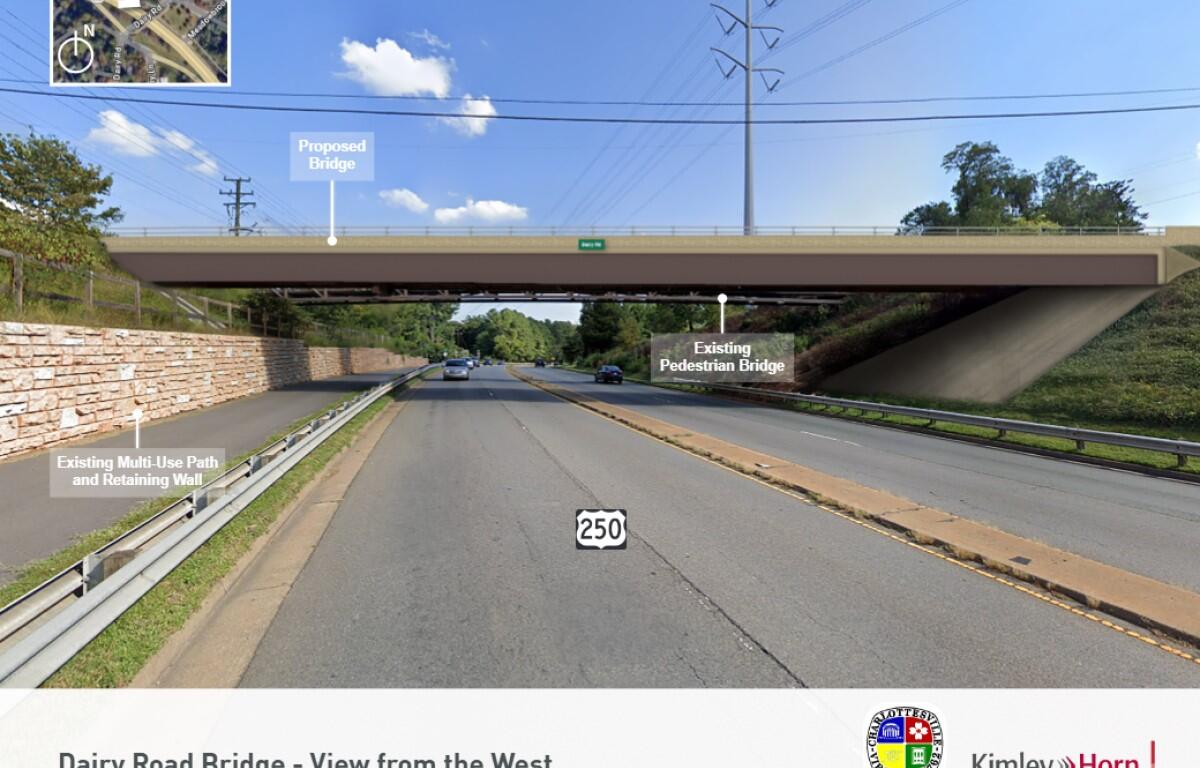
The lone new project for the city is a mile-and-a-half of 250 bypass to be added around mile posts 95 and 96, with funding from VDOT’s State of Good Repair maintenance fund. which is the same funding for the Dairy Rd. bridge replacement over the bypass that’s also in the new SYIP.
The city has one Smart Scale funding project in the SYIP Barracks Rd-Emmet St. intersection reconfiguration.
“Over the years of Smart Scale, there’s been over $30 billion in applications requested from the state,” Gallaway said. “You can’t just apply for all your projects, you have to pick about four projects every two-year cycle, so in the state of Virginia, of over $30 billion in asks, only $8 billion has been approved with a $1 billion matching effort from those local governments.”
McDermott in the Dec. legislative meeting presented data showing while between 130-to-165 projects were approved statewide for Smart Scale funding each 2-years from 2018 to 2024, only 53 projects were approved in the latest 2026 round.
$1.6 billion was allocated in the 2024 round while $1 billion was allocated for 2026.
The number of projects in the entire VDOT Culpeper District was 4, of which Albemarle County got 1.
“The Commonwealth Transportation Board identifies the funding in the amount of funding they’re given for transportation overall, and first they pull out the maintenance funds,” McDermott said. “And one of the reasons we’ve seen these numbers go down [number of projects funded] is costs have gone up. So that maintenance costs comes out first, then they divide up all the other money among all the different construction programs they have, and one of those is the Smart Scale program. And those are the most high-priority items.”
An example McDermott gave was the roundabout under construction right now on Route 250 at Old Trail, which was $16.7 million when it got approved for funding in 2024.
In a prior submission in 2022 that was not successful, the project was $13 million.
Further illustrating how much costs have risen, McDermott said the roundabout at 250 and 151 at Afton, which has a very similar design, was approved in 2016 with a $5.8 million price tag.
“The state of Virginia is funding some projects at a third of the rate,” Gallaway said. “What that means is some, very few, projects get done. They’re expensive to do, we understand that, but a lot of projects are sitting undone. These are the things where you go, okay, if you’re trying to get ahead of an issue and put a project in place, it’s harder to win competitively because a lot of times they score to help solve a current issue.”
McDermott and Gallaway both said projects are competing with each other all across the Commonwealth, and all the applications submitted are for urgent needs of each locality.
Back in the December meeting, Gallaway equated the issue to recent Thanksgiving dinner where in finding out more people were coming, they needed to divide up a pie into more portions.
But at some point, you need a bigger pie.
Del. Katrina Callsen heard the comparison, but said, “The pie metaphor almost doesn’t work anymore. The pie’s all kind of messed up right now.”
“We have federal things happening making the pie having to get split up in ways that don’t even make sense,” Callsen said. “And the work I’ve done, and Senator Deeds if he were here he would echo it, has been on the Medicaid front. It is just such a big chunk of the pie that my conversations haven’t really been on the transportation front.”
Del. Amy Laufer talked about how the fuel tax has been the main transportation funding driver, and that money has been shrinking with more fuel efficient and electric vehicles, which is a reason Virginia has an electric vehicles tax to make up for the lost revenue from gasoline those vehicles don’t burn.
One of the cost-reductions she advocated in the December meeting was asphalt recycling for road projects, but legislation sponsored by Del. Vivian Watts (D-Annandale) failed in a House committee.