


 Listen Live
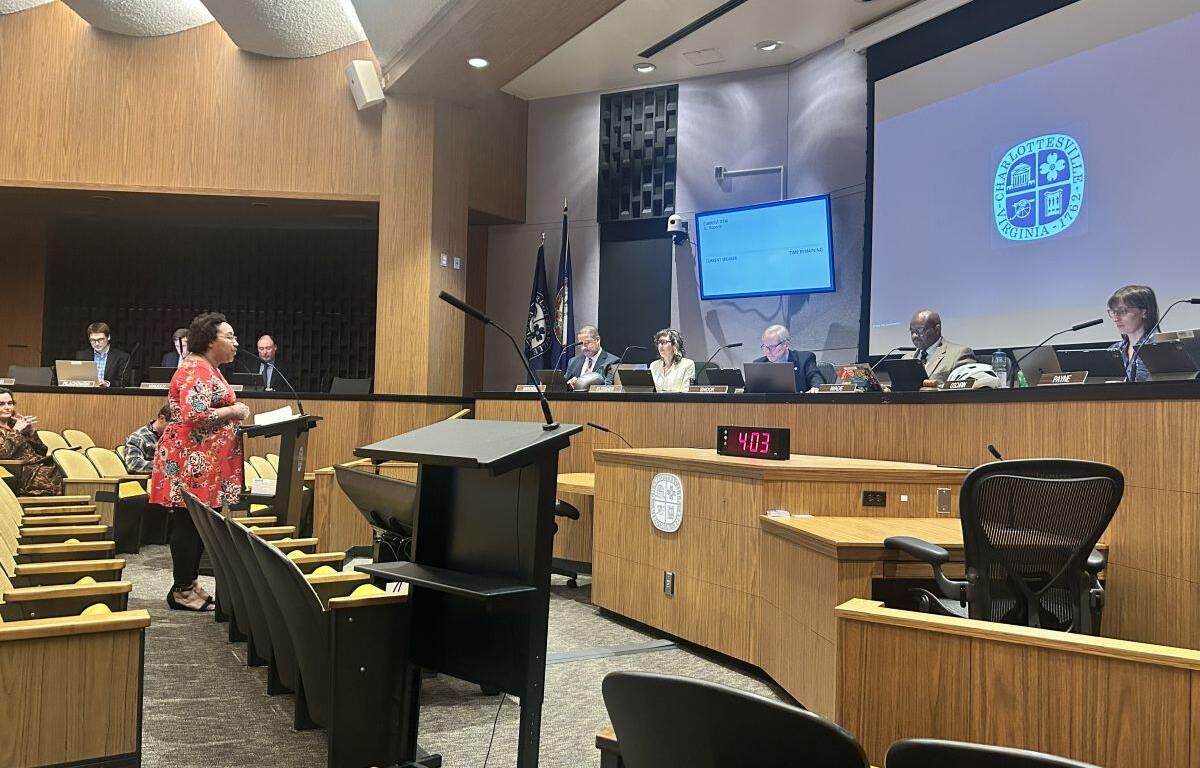

CHARLOTTESVILLE, VA. (CVILLE RIGHT NOW) — Calling progress on the city’s proposed low barrier homeless shelter “completely stagnant,” Blue Ridge Area Coalition for the Homeless (BRACH) Executive Director Shayla Washington said the workgroup she is heading needs more involvement and direction from Charlottesville City Council.
“The ball is in the city’s court right now to develop what they would like to see in Phase Three,” Washington said, noting progress has stalled since the last joint session between Council and the workgroup on March 25.
During the annual State of Homelessness Report presentations to Council on Monday, councilors focused on what it will take to get the low-barrier homeless shelter running, and expressed concerns that the different organizations working on the Low Barrier Shelter Workgroup might have differing approaches to tackling the issue.
That surprised the groups’ representatives.
“I think what we’re doing in our low barrier shelter work group isn’t necessarily all trickling down to council,” Washington told Cville Right Now afterward.
The report was presented by Washington, as well as representatives from PACEM, The Haven and The Salvation Army Charlottesville Corps. Each organization detailed their services, highlighting the collaborations between them, and shared statistics from the past year.
Overall, BRACH reported an increase in self-reports of homelessness, defined as living in any place not meant for human habitation, from 620 people this time last year to 703 currently.
“The overarching message is, we’re all working together,” Washington said at the beginning of the presentation.
But after each organization’s presentation, the conversation quickly zeroed in on the 3.8-acre property bought by the city at 2000 Holiday Drive in November, and the current homeless encampments in the city.
During the conversation, the council expressed a sense of urgency over the current encampments, with Councilor Michael Payne looping Chief of Police Michael Kochis and Fire Marshal Joe Phillips, both in attendance at the meeting, into the conversation to discuss their concerns over the encampments.
These concerns included the encampments’ current locations within a floodway, the misuse of propane tanks by many residents and the difficulty for police to locate and respond to call for services. Kochis said there were 63 calls for police service to the encampments last year. He also said there was one death at an encampment on Nov. 24.
“I walk there and my heart really does break and I’m terrified,” Payne said during the meeting, “because what is happening is not any minimal level of care. It is not meeting any level of structure that is going to help these folks.”
All of this led to the council at times expressing concerns about the coalition working on the project.
“The broad concern that some of us looking (at it) from the outside have had is that it seems as though the different organizations, the different nonprofits, have sort of fundamentally different ways that they think they want to approach the problem, and that we need to have one approach,” Councilor Lloyd Snook said during the meeting.
But afterward, Washington said she was surprised by the councilors’ comments, referencing Snook’s comments in particular as an example of where there might be a disconnect. She said she is “constantly collaborating” with representatives from the Haven and PACEM, describing the relationship as “really strong and tight.”
“Perhaps that doesn’t get out to the community,” she said, “but we’re just so in the weeds with that detail that maybe we just need to be presenting that more to the community.”
She said she would love to get started on memorandums of understanding for the organizations who will be providing services at the shelter, as well as further understanding as to what those partnerships with the city will look like.
“We need more direction from the city,” she said.