


 Listen Live
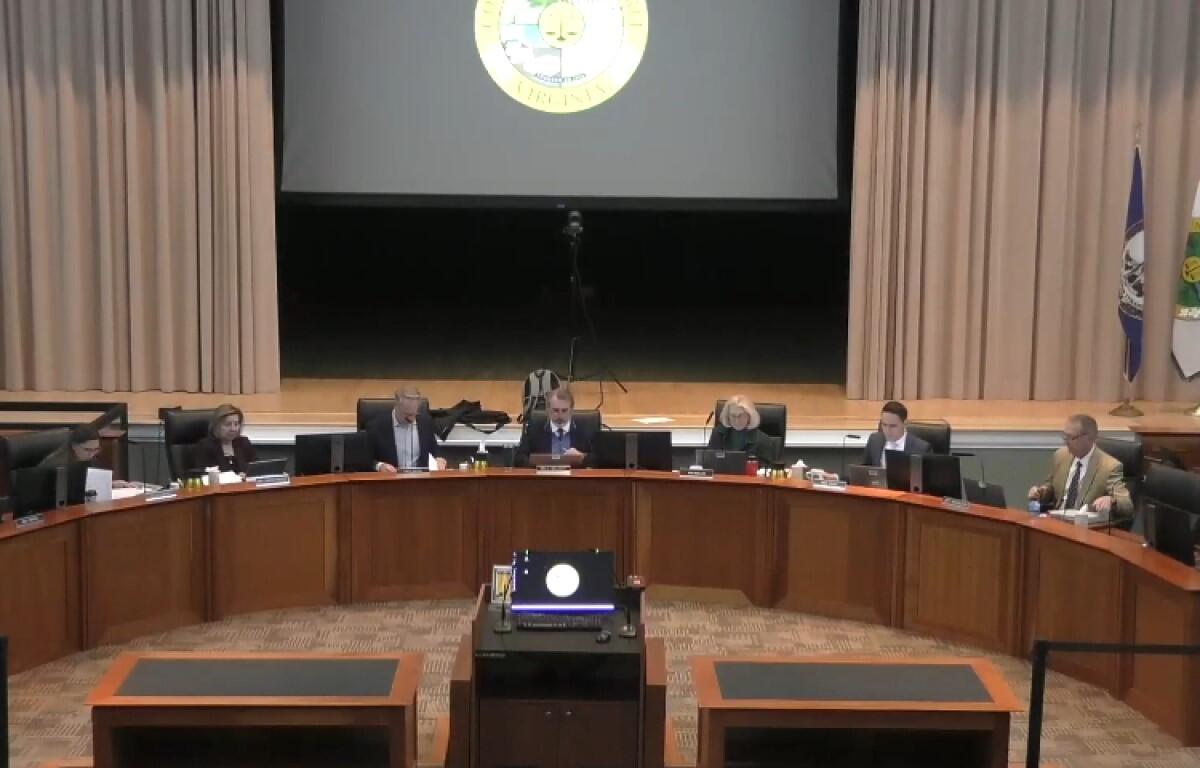

CHARLOTTESVILLE, VA (CVILLE RIGHT NOW) – Albemarle County’s Board of Supervisors will hold its final public hearing, after an array of town halls and work sessions, on the tax and budget proposals for fiscal 2027 on Wednesday.
The big headline grabber has been the March 18 decision to advertise a 15-cent-per-$100 assessed personal property tax increase that was not included in County Executive Jeff Richardson’s budget proposal.
The public will be able to weigh in on that Wednesday night in the third public hearing after the 6:30 p.m. start.
The idea was initially floated by Scottsville Supervisor Mike Pruitt and the advertised rate agreed to by the board majority, who also made a suggestion of a 1-cent real estate tax rate hike a non-starter.
“We can do all the planning we want, but eventually we’re going to have to do the hard thing,” Pruitt said in that meeting. “I’m not pretending that what I’ve proposed isn’t hard, I certainly don’t want to have to assess these taxes, but I think some combination of the two of these [real estate and personal property tax rates] is necessary if we’re going to meet this need.”
“This need” is what all the supervisors agreed is a need for a more robust Affordable Housing Investment Fund, which Rivanna Supervisor Bea LaPisto Kirtley said she’d like to see at $5-million in the short-term, and Pruitt, Sam Miller Supervisors Fred Missel, and Jack Jouett Supervisor Sally Duncan have expressed would like to see at $10-million annually.
“Bottom line for me is we need a road map, we need to figure out how to get from here to success and I don’t think a million dollars a year is enough to do that,” Missel said. “I think we need to think more aggressively about that, but we need to plan for it, we need to get to a place where it’s predictable. Because, then the community will be able to anticipate that’s where we’re headed, the community of developers of affordable housing will be able to anticipate that, others will be able to anticipate that if there are increases in taxes in the future, they’ll know that’s coming.”
Duncan added, “The city has a much smaller budget than we do, they give a lot more money to affordable housing than we do, they also have higher taxes than we do.”
She expressed support for a 1-cent real estate tax rate hike in order to eventually get to a $10-million affordable housing goal, but other supervisors would not go there.
“As a slight alternative, the city’s personal property tax is 4.40, our’s is 4.28, even if we raised it to where the city’s is that would give us some more,” she said.
LaPisto Kirtley and White Hall Supervisor Ann Mallek were hard “no”s on the higher advertised tax rates.
“For me, I think it’s disingenuous to have that advertised knowing we may do it, we may not do it, depending on how the board votes, and I don’t want to cause that anxiety,” LaPisto Kirtley said.
Rio Supervisor Ned Gallaway noted affordable housing is brought up often among many issues the board considers, and he opined the vast majority of residents are willing to entertain a tax increase if the case is well-presented what it’s for.
He favored having the conversation about the 15-cent personal property tax increase, and a willingness to hear from the public about it.
Supervisors will also hear from the public about holding the line on the real estate tax rate as Richardson proposed.
Most people will see their real estate tax bills increase with the average assessment up nearly 6.2% over last year.
The first public hearing is on proposed fee increases for building, subdivisions, water protection, zoning, and miscellaneous changes.
The agenda item summary noted the last time those fees were adjusted was in 2023, and the policy is to revisit fee adjustments for inflation every three years.
For the six months of 2026 the higher fees would be implemented, the revenue is projected up $265.000.
Earlier in the afternoon portion of the meeting, Supervisors will hear from Principal Planner James Wilkerson on five initial work project proposals spurred by the newly implemented AC44 plan.
AC44 is the county comprehensive plan update the Board unanimously approved last October.
There are five work projects proposed which are zoning modernization, activity center plans (ACPs), multimodal transportation planning, rural area priorities and rural area plan, and AC44 administration.
The zoning modernization project is an update to the 40-year old zoning ordinance that will make regulations “clearer, more consistent and better aligned with the community’s vision for the future”.
Some of the specifics involve increasing density in the development areas, expanding incentives for historic preservation, and improving dark skies protection.
Many of the work projects overlap their objectives such as protecting and preserving environmental and cultural resources, and supporting agriculture and forestry production both fall under the zoning moderation and rural area priorities and rural area plan.
The multimodal transportation planning is, according to the county presentation, a “strategic document will crystallize the County’s transportation vision into a System Plan with maps of
existing and future modal networks – including vehicular, transit, bicycle, and pedestrian networks – and identify modal emphasis for corridors across the county, with emphasis on the Development Areas”.
Activity center plans (ACPs) “will identify opportunities for increased density and well-connected mixed-use development, establish multimodal transportation networks and vibrant streetscapes,
expand housing supply and affordable housing opportunities, prioritize catalyst projects, and address infrastructure needs and market conditions”.
Supervisors will be urged to provide feedback on what staff presents in the work session.