


 Listen Live
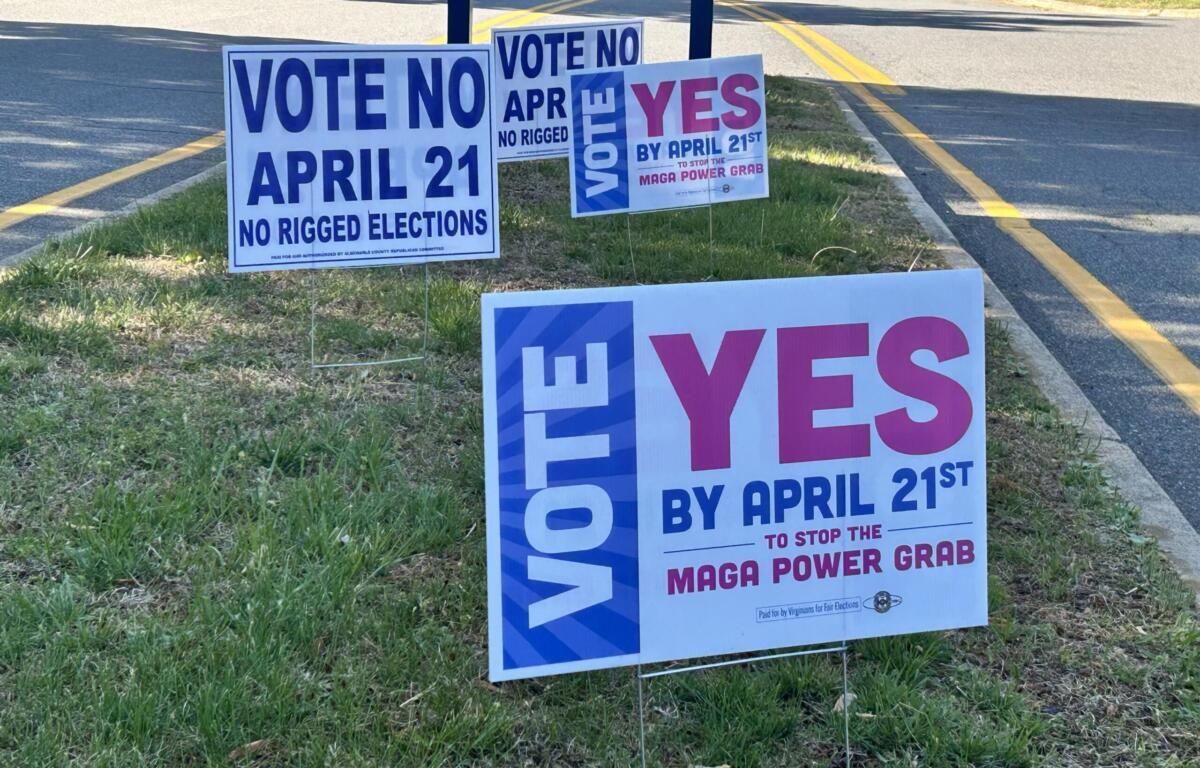

CHARLOTTSVILLE, VA (CVILLE RIGHT NOW) – Despite state law requiring elections to be certified within 10 days, the Virginia Board of Election took no action on certifying the April 21 referendum during its meeting on Friday afternoon due to the injunction issued by Tazewell County Circuit Court Judge Jack Hurley and upheld by the Supreme Court of Virginia on Tuesday.
“The State Board of Elections is currently under an injunction that prohibits certification of the results of the election, and this matter is currently pending before the Virginia Supreme Court,” State Elections Commissioner Steven Koski said in his report to the board. “Once we get a final order from the court, we will act accordingly with that.”
At the direction of the Department of Elections, Koski said all localities except Tazewell County, which is under the injunction, have certified their local results.
“And so, if an order from the Supreme Court permits certification, then will convene the board as soon as feasible for that purpose,” Koski said.
He and state board chairman, Dr. John O’Bannon, a former Republican state legislator, thanked the registrars in the 133 localities as well as thousands of elections workers who worked this referendum.
“This was a special election, I think we kind of forget with the turnout that was in many places right in line with the 2025 general election,” Koski said. “A lot of interest, a lot of energy and enthusiasm surrounding this referendum of course, and there were a lot of developments that happened in the courts throughout the process, so there was a lot for localities to keep straight throughout the process.”
Koski thanked those local workers for their “resilience, and their dedication, and professionalism in delivering another well-run election for the Commonwealth”.
Chairman O’Bannon noted this development was expected.
“The board working papers do have asterisks by this item, and it’s highlighted, so it’s not a surprise as you all know,” he said.
He said the localities had to be prepared, though, in case the board had to certify “yea” or “nay”.
There’s no indication when the Supreme Court will issue a decision, or what way they’ll go.
If two local legal analysts were on the Supreme Court, the decision would be split.
Charlottesville attorney Scott Goodman thinks the court should and will throw out the referendum saying.
“If they read the law and go with what the common sense interpretation of law is and what the intent of the original framers of the constitution were, then they will overrule this and not allow the referendum to stand,” he said.
Goodman, who thinks it will be a split court with the decision favoring Republicans, told WINA Morning News the reason Virginia law requires a general election occur between the time the amendment passes a special session and finalization is so voters will have an election to weigh in on it before a new assembly finalizes it.
He said by the time the General Assembly special session met in October, one million people had already voted, as early voting started September 19, 2025.
However, former U.S. Attorney and Charlottesville practicing attorney Tim Heaphy told WINA Morning News the Virginia constitution has the same wording as federal law instituted in 1872 defining an election.
“The briefs do a good job of teeing up that an election is defined in Virginia law as taking place on the Tuesday after the first Monday in November, and that is in the plain language of the Virginia constitution,” Heaphy said. “There’s a plain definition of election in the Virginia constitution, and there’s a practical reality that votes that are cast early are not opened or counted until after the polls closed on Election Day. Early voting is a convenience.”
Heaphy said people who vote early do it fully aware that developments may occur between when they cast their vote and Election Day that they will not be able to consider, and they make that choice.
The Supreme Court, in the case they’re considering now called McDougle et al vs Nardo et al after April 27 arguments, previously stayed an injunction made by Tazewell County in February attempting to block the referendum from happening.
That decision allowed the April 21 referendum to take place, in which the amendment passed narrowly with 51.5% of the vote.
However, the Tazewell County Circuit Court issued an injunction in a new case filed by the RNC, RNCC, and Rep. Ben Cline (R-6th) April 22 that blocks certification of the vote, and the Supreme Court has allowed that injunction to stand.
There are four total pending cases regarding the April 21 referendum and Heaphy thinks the Supreme Court will bundle them together for the purposes of a decision.