


 Listen Live
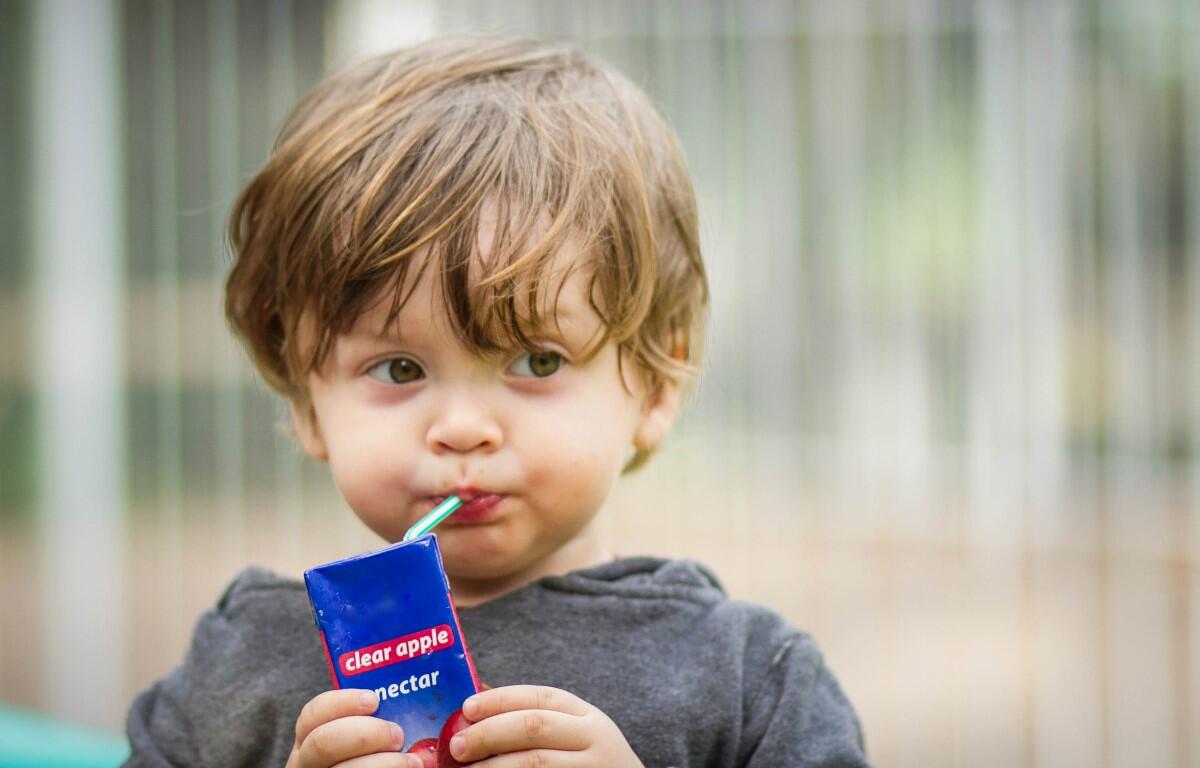

CHARLOTTESVILLE, VA (CVILLE RIGHT NOW) – University of Virginia researchers have begun testing a new digital program they hope will reduce the sugary drinks children and their families drink, according to a UVA Health announcement.
“We know that nationwide children and adolescents, and adults for that matter, drink way too many sugary beverages which is problematic because sugary beverages are providing obviously a lot of sugar and calories without a lot of nutrients,” lead researcher Dr. Jamie Zoellner, PhD, RD, a registered dietician with UVA’s Department of Public Health Sciences, told Cville Right Now.
Backed by a $669,251 grant from the National Cancer Institute, the team from the UVA School of Medicine and UVA School of Education and Human Development have rolled out the weSIPsmarter program to eight Head Start programs – which support children’s development from birth through age 5 – in Virginia, Alabama, Georgia, Kentucky and Ohio.
“It’s estimated that about half of preschool children are drinking sugar-sweetened beverages daily,” Zoellner said. “And we know that daily that kids in rural regions are drinking about 30% more than kids in urban regions.”
Thus, this trial study is focusing specifically on some of the rural regions in that five-state area.
The UVA research team has enrolled 94 families at four Head Start locations and expects to enroll 372 families across 12 locations, Zoellner said.
Researchers are looking for four additional rural Head Start programs in Appalachia or the South to join the study.
She said they’ve started the study with Head Start programs because of its wide reach, along with caregivers and families who will produce the needed data.
“Some of these behaviors around drink choices really are established at those very early young ages,” she said. “And so really thinking strategically, with the parents and providing them with strategies on the parental role modeling and setting limits on these drinks can really help empower the parent to make sure the child and entire household are making better choices.”
This program, she said, is really personalized to the families.
“They’re seeing their own data, they’re getting feedback on their data, they’re setting goals, and we’ve seen really high engagement so far,” Zoellner said. “It’s still early in the trial and we haven’t had the chance, and we won’t have a chance to peek at our data yet until we run all our families through.”
“So far, we’ve just been really excited about how this program has been received by our Head Start centers, our administrators and the families, and we’ve seen good enrollment and good engagement which is usually a pretty good sign that our interventions are working.”
Zoellner noted this education and engagement is essential.
“It’s almost like this concept that people sort of know and appreciate that like cookies, and cakes, and candy, and ice cream have sugar in them, but there’s something about beverages that people just often tend to overlook and don’t understand the volume of sugar and calories they’re getting from sugary beverages.”
“Research shows that helping parents build knowledge, confidence and healthy attitudes about sugary drinks can improve what young children drink. Factors such as parents’ understanding of healthy beverages, their own drinking habits and how they offer drinks to their children can all influence a child’s intake of sugary drinks,” said Zoellner.