


 Listen Live
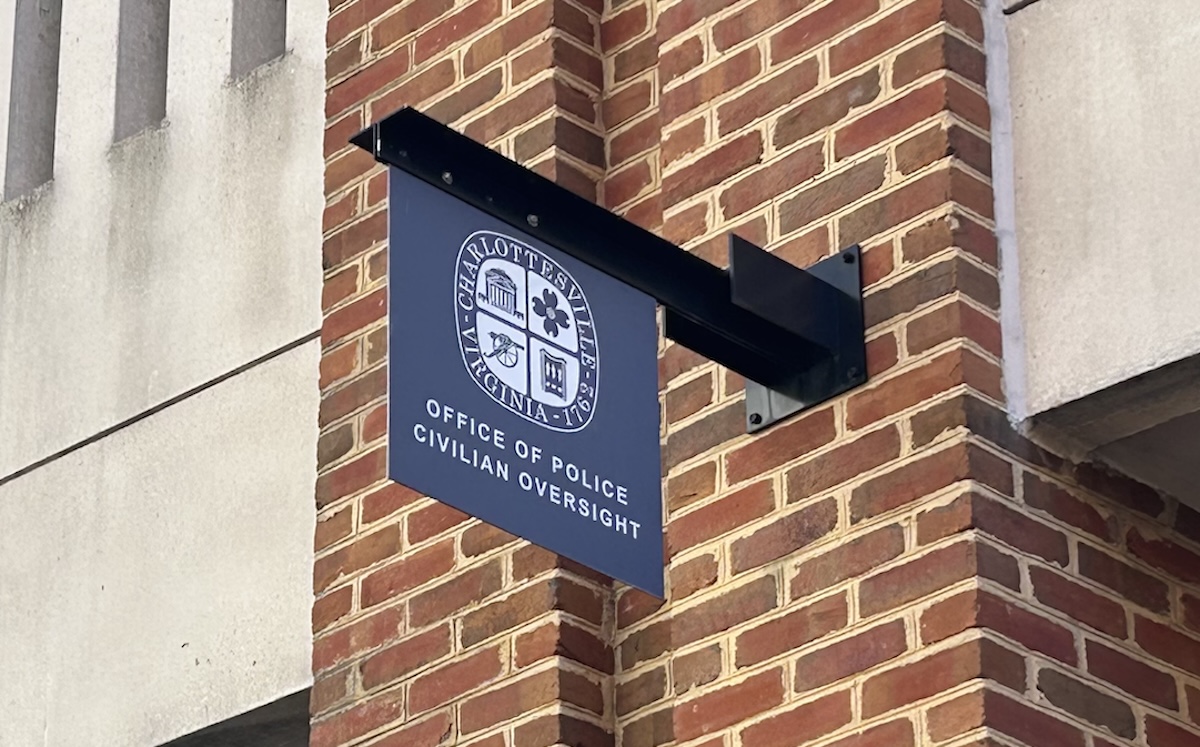

CHARLOTTESVILLE, VA (CVILLE RIGHT NOW) – Next month, Charlottesville City’s Police Civilian Oversight Board will review its first cases. On Dec. 10, the board expects to take its first official votes to approve reports on how the police department handled those cases, ending a nine-year wait by the community for the body to begin its work.
“I never worked in government and bureaucracy,” PCOB Chair Dr. Jeffrey Fracher, a retired forensic psychologist, told Cville Right Now. “It frustrates the hell out of me how much time it takes to get anything done.”
Fracher’s frustration is shared by many.
Legal and practical obstacles made the original iteration of the PCOB in 2017 essentially useless. Designed as an investigative body, the board lacked the legal authority, access, time and funding to carry out its own investigations.
But in September, the city revamped the governing ordinance the board operates under, eliminating the investigative function that caused the board’s near-total failure to launch.
“That is where 90% of the barriers, challenges, legal issues, resource issues, stemmed from, that concept of independent investigations,” Director of the Office of Police Civilian Oversight James Walker told Cville Right Now. “The new ordinance basically removes that component, so it takes away the concept of an independent investigation. All investigations are done by internal affairs inside the department with monitoring. And then all those investigations come to the board for review.”
Despite Chief of Police Michael Kochis granting the PCOB and Walker’s office unprecedented access to case files, including bodycam footage, some in the community still don’t believe the board will be anything more than a rubber stamp for Kochis’s discipline decisions.
“I just think it’s a flawed process, not giving the PCOB full authority to investigate the way that they need to,” Charlottesville native and community activist Tanesha Hudson told Cville Right Now.
In the nearly nine years since its inception, the PCOB didn’t complete a single investigation or hold a single hearing, eroding the community’s confidence, Hudson said. Those on the board felt the same frustration.
“We couldn’t do any business,” said Fracher, who joined the board in 2019. “We never had a hearing or even did a case before now. That’s how bad the ordinance was and how disorganized and chaotic things were within the PCOB.”
Dismayed by the lack of progress, a number of board members resigned in 2025, rendering the organization even more ineffective because it did not have enough members for a quorum.
“I was there sort of from the beginning,” Fracher said. “Through the worst of the chaos and the turmoil and the unenforceable ordinance and a massive amount of turnover on the board, in the office, in City Hall. We were really struggling.”
How the revised PCOB will work
Walker and Fracher said the new ordinance establishes an oversight model of “monitor, audit and review” for the board’s work.
The monitoring work falls largely to Walker, who sits in on a number of police panels for Internal Affairs investigations, use of force hearings, hiring interviews for new officers, and promotions and assignments within the department. For investigations, he has access to case files and bodycam footage, and can watch IA interviews from a separate room. This was part of the original ordinance, but it is more clearly defined now, he said.
CPD notifies Walker’s office of any complaints the department has received. IA has 45 days after it receives the complaint to gather its findings and send them to the chief. Ultimately, it’s Kochis who decides whether discipline is appropriate.
Once Kochis has made his final decision, the case goes to the PCOB for its review. The board can go back and review all the material and steps in the IA investigation, to evaluate both how the investigation was handled and whether the chief’s findings were appropriate, Walker said.
Each board member individually reviews and scores the case. Walker then compiles all of the board members’ reviews into a single report, which the board will vote to approve at a monthly meeting. That report will be made public.
“Because it’s after the fact, board members are speaking to the investigative process,” Walker said. “They’re speaking to the policy, the practice, the procedure. They are not adjudicating that specific officer and what should happen for discipline with that officer because that’s already been decided. What the board is really doing is trying to shape the systemic process going forward.”
The report also goes to the chief, who has 30 days to respond in writing to the report’s findings.
Walker and Fracher also noted that citizens can bring complaints directly to the PCOB. In those cases, Walker gathers information and then offers the citizen the chance to have their complaint investigated by IA. From there, the IA investigation would be monitored and reviewed by the PCOB. Citizens can lodge complaints by email, through an online portal, over the phone orin person at the PCOB office just off the Downtown Mall.
The third facet of the new model is the newest. The audit powers of the board expand the scope of its reviews, moving beyond examining how specific cases are handled and looking at different policies and practices within the department.
“We’re not only looking at cases,” Fracher said. “We’re looking at budget. We’re looking at policies. We’re looking at school resource officers. We’re looking at how they interacted with the homeless community.”
For some, the new board isn’t strong or independent enough
Walker understands that the new ordinance for the PCOB doesn’t give the public exactly what activists were originally pushing for back in 2017.
“In some ways, I know that misses the mark on what people had expected of the board originally and how it was originally written,” Walker said. “But the way it was originally written also wasn’t functioning.”
Not only is the independent investigation component gone, but the board has no power to determine disciplinary action in the specific cases it reviews. It can only cast light on the process, question outcomes and make recommendations moving forward.
“There is no mechanism for reconsideration,” Walker acknowledged.
That is the biggest issue Hudson has with the board.
“That PCOB has not done what it’s supposed to do since it started,” she said. “That’s why people left the board. It wasn’t giving them the authority to do anything.”
Despite Kochis granting the board unprecedented access to interviews, bodycam footage, internal panels, and the ordinance requiring both the board’s report and Kochis’s response to be public, Hudson said she questions whether the city will really be providing transparency.
“Charlottesville is one of those places that screams they want change, they say they want to be transparent,” Hudson said. “At one point in time, they said all of that. Here we are in 2026, about to walk into 2027 and we’ve reverted back way before 2017 ever occurred.”
Hudson said it should be made public how many complaints have been filed against each officer.
In Hudson’s eyes, the inherent flaw with the PCOB is that it still feels like a part of the police department.
“What we wanted was for community citizens to be able to act more like a review board of complaints that were coming in,” Hudson said. “The problem with Charlottesville is that too often we see this entity make mistakes, and then they have internal reviews of their mistakes. They drop the ball somewhere, and then when they drop the ball, the repercussions are basically coming from people who work for them and with them. You can’t be reviewed by the same people cutting your check.”
She said she doesn’t have confidence the revamped PCOB will be any more effective than its predecessor.
“I guess we’ve got to wait and see,” Hudson said. “Because until I see it, I’m not a believer. I’m sorry.”
Proponents say strengths are access and public reporting
For his part, Kochis isn’t surprised the PCOB is being met with skepticism from some members of the community.
“I realized a long time ago, I’m not going to make everybody happy all the time,” he said. “That’s just not something that I can ever do or that they can ever do. I think we have to continue to listen. I think we have to listen to all voices. Voices who agree with us. Voices who disagree with us.”
Fracher credited Kochis with giving the PCOB the access it needs to conduct meaningful reviews of how the department operates.
“He’s pretty much given us an open book,” Fracher said. “We have access to anything over there: bodycam footage, records, interviews. We can sit in and observe the officer’s interview with the IA officer. We can sit in on use-of-force panels. We’ve got carte blanche to see anything we want. Because the chief’s position is, good oversight is a plus for them, because it means good policing and it helps their credibility and trust with the community.”
For the board, the challenge is maintaining a cooperative relationship with the police department while preserving its independence.
“The risk of that is people will accuse us of being too cozy with the police department,” Fracher said. “But in fact, without their cooperation, we can’t get anything done.”
For Kochis, the rationale behind granting the board such extensive access is simple.
“There’s nothing to hide. I think that’s the key,” he said. “My peers will also look at me funny, give me the side-eye. Like, ‘You allow what?’ What are we hiding? There’s nothing to hide. We run a professional law enforcement organization. We hold people accountable when they’re wrong. We make sure that we are living the procedural justice mindset internally just like we do externally in the community. If there’s something that we need to change, something that is found, I want to be the first to know about that. It just makes sense to be honest.”
Ultimately, Kochis said he believes “oversight is a good thing.”
“We’re trying to ensure that we have an effective, professional law enforcement organization that is accountable and transparent,” he said. “What they’re trying to do strikes the right balance and is going to be effective. I look at the PCOB as a bridge between the police department and the community.”