


 Listen Live

CHARLOTTESVILLE, VA (CVILLE RIGHT NOW) – Legislators in the Virginia General Assembly overcame a data center tax policy logjam to come to a near 11th hour compromise and pass the state budget on Monday a week before the fiscal year deadline.
“We have a budget that is great for the citizens of the Commonwealth,” Senate President Pro Tempore Louise Lucas (D-Portsmouth) said in her appeal to the Senate to pass the legislation. “But the Senate conferees and I spent a lot of time trying to find the right balance between compromising with the House and the Governor and having something that made the data centers pay their fair share.”
After Lucas’ remarks, the legislation passed on a 23-16 vote with two Republicans joining Democrats in “yea.”
The House of Delegates passed the conference report by a wider margin, 71-22. The budget now goes to the desk of Gov. Abigail Spanberger for her signature.
“Virginia families sent us here to solve problems, lower costs, and create opportunity — and that’s exactly what this budget does,” House of Delegates Speaker Don Scott (D-Portsmouth) said in a statement. “From the largest investment in public education in Virginia history to major investments in childcare, affordable housing, healthcare, and public safety, this budget delivers real results for the people of Virginia.”
Lt. Gov. Ghazala Hashmi praised the budget passing in a statement.
“When Virginia Democrats were elected in November, we promised Virginians to work to protect our Commonwealth from the disasters of the failed federal policies of the Trump administration,” she said. “We are delivering on those promises by investing in our most vital services: healthcare, education, and the social safety net for our most vulnerable.”
But Virginia House GOP Leader Terry Kilgore struck a different tone, saying in a statement the budget did not pass “in a manner that should make any Virginian proud.”
“With one party controlling the Governor’s Mansion, the House, and the Senate, Virginians should expect a budget process that is transparent, timely, and accountable,” he said. “We never should have been put in this position, and taxpayers deserve better than governing by deadline and last-minute negotiations.”
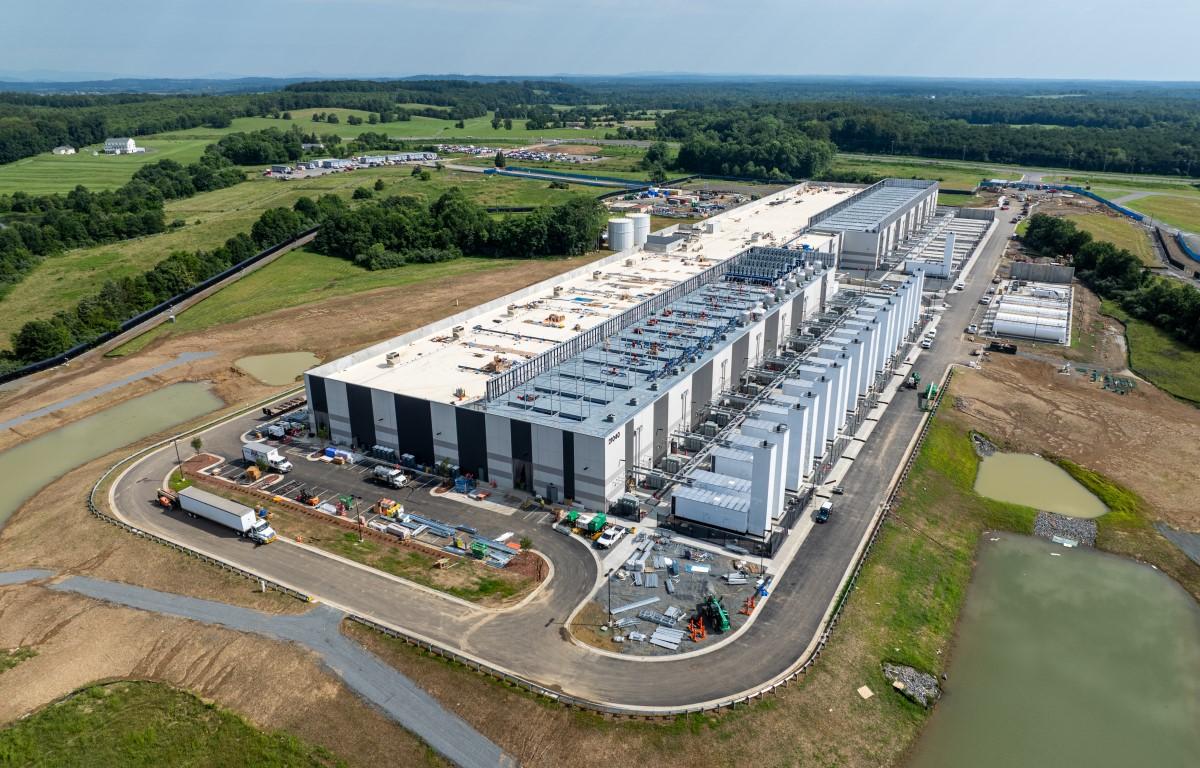
The conference agreement has data centers pay $1.2 billion total for the biennium, with $600 million paid each of the two years.
The State Corporation Commission calculated data centers to pay $0.011/kilowatt hour of electricity consumed by a data center each month to raise approximately that much.
The $600 million each year would go into the state general fund.
In regard to money collected over that general fund allocation, the budget resolution stated, “In every fiscal year beginning on and after July 1, 2027, the State Corporation Commission shall allocate and distribute refunds from any excess revenue collections deposited to the fund … in the prior fiscal year. The refund amount for each data center operator paying the tax under this Item shall be determined by the data center operator’s pro rata share of tax collections in the fiscal year for which such refund is made.”
The refund will go to the data center owner.
The resolution did not repeal data center tax exemptions that are right now slated to continue until 2035, which Lucas and other Democrats hoped to do.
The Data Center Retail Sales and and Use Tax Exemption (DCRSUT) allows data center owners and tenants to waive sales taxes on infrastructure such as computer hardware, software, and even backup generators and cooling systems purchases.
The exemption applies to at least a $150 million data center capital investment that creates at least 50 jobs that pay at least 150% of a local average wage.
Gov. Spanberger, in a Cardinal News interview in May, stated she is not going to break that contract that “the state has signed” referencing the potential for expensive litigation by data center owners for a breach.
“Sometimes I wonder what budget some of my colleagues are reading,” Sen. Barbara Favola (D-Arlington) said on the Senate floor Monday after Sen. Glen Sturtevant (R-Midlothian) objected to the exemptions not being removed. “I guess I have to remind folks it was Governor (Glenn) Youngkin who actually put in place the sales tax exemption that the data centers are currently enjoying without any environmental conditions. I can remember Gov. Youngkin saying he wanted to turn Virginia into the data center Mecca of the world.”
Youngkin said in his 2025 State of the Commonwealth address Virginia should, “continue to be the data center capital of the world and make sure Richmond is doing what is necessary to support that goal.”
But the Governor also added localities have a role, and that “different communities will make different decisions on data centers, but these must be their decisions. And Richmond should not stop them from capitalizing on these incredible economic opportunities.”
Youngkin advocated for more natural gas as well as small modular nuclear to generate the power needed for them.
“So now, we’re stepping back and beginning to say ‘What does this mean? What are the public impacts of having data centers?'” Favola said.
As a Northern Virginia representative, Favola said she realizes data centers are very big part of the future and that AI is here to stay.
“We also have to understand what those data center mean to our communities,” she told the Senate. “And we have to understand what they’re taking in terms of water usage, electricity usage, and whether we have the infrastructure to support that, and whether or not they are paying their fair share.”
The Joint Commission on Tax Policy, which is made up of six members each from each chambers money committees, under this new agreement will review the sales and use tax exemption and other impacts of data centers and make recommendations in late 2026.
The legislation also includes water and noise standards that will be administered by the Virginia Dept. of Environmental Quality (DEQ).
A budget conference committee staffer explained the water standard regards “cooling water scarcity areas to minimize impacts on water consumption and/or quality”.
Those centers would have to use either air-cooled closed loop or more efficient cooling systems by July 1, 2032.
The legislation also requires DEQ to adopt and enforce regulations no later than Dec. 31, 2029, which would “identify or determine the lowest achievable noise for such centers”.
As of Jan. 1, 2030, any data center that violates the regulations is subject to a civil penalty of up to $32,000 per day of violation.
“I want, and I want to tell the body here and I want to tell Madam President here, I will be submitting a budget amendment next year to end the data center sales tax exemption for the fourth year in a row because it is so critically important that we are not subsidizing corporation greed of a multi-trillion dollar industry with individual multi-trillion dollar players,” Sen. Danica Roem (D-Manassas) said. “The consumption tax does not go as far as we would want, but $1.2 billion over the biennium is not nothing.”
She expressed other concerns with the timelines and other items.
“We have in front of us today something that does move the ball,” Roem said. “Something that does at least give us the opportunity to address major policy considerations that this legislature needs deal with.”