


 Listen Live
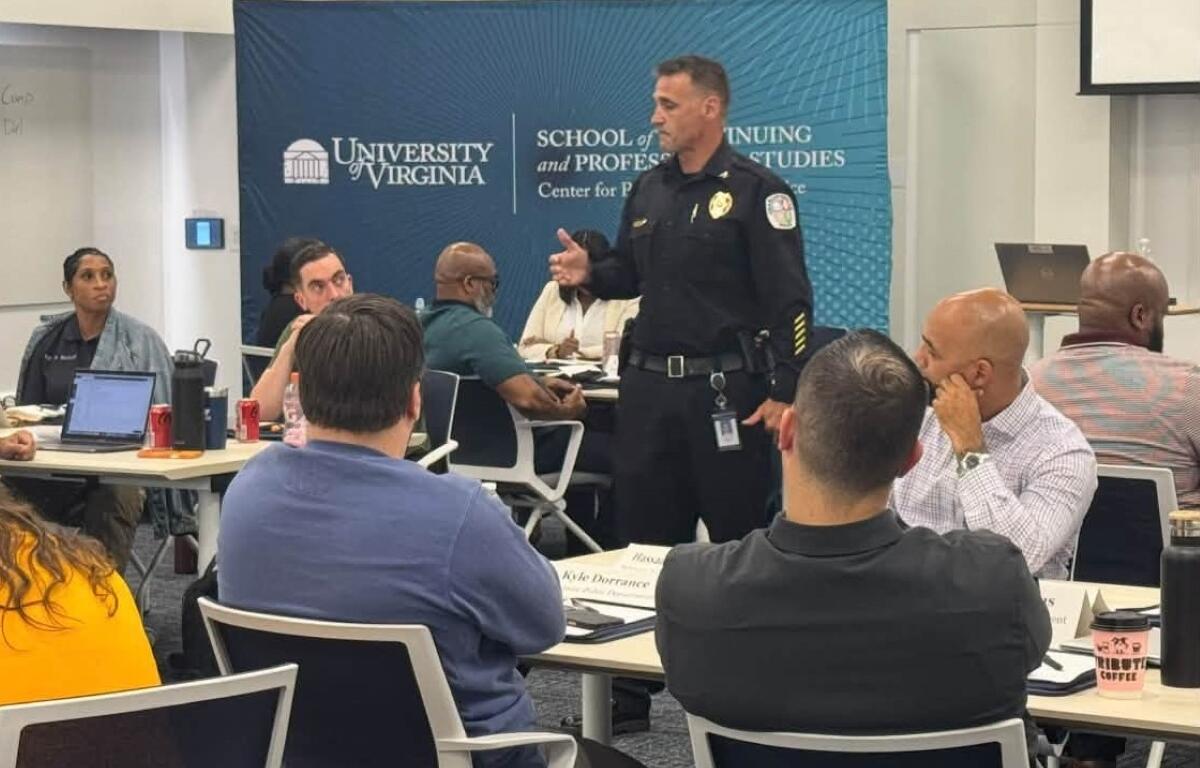

CHARLOTTESVILLE, VA (CVILLE RIGHT NOW) – For Charlottesville Chief of Police Michael Kochis, the use of technology in policing is a balancing act. His more than two decades of experience in law enforcement have shown Kochis the value of state-of-the-art technology in crime solving and prevention. But in his nearly four years leading the city’s police force, he’s also come to understand that some portions of the Charlottesville community have a deep mistrust of how that technology could potentially be misused.
“It’s always going to be a challenge,” Kochis told Cville Right Now on Thursday. “We, as a profession, have to make sure we’re not moving faster than our communities actually understand this stuff. I think that’s the key piece of it. And the other piece is making sure whatever technology we’re using isn’t creating barriers between us and the community. There’s a lot of great technology out there. A lot of stuff that will help bring justice to victims, help solve crimes, help deploy resources, help create efficiencies. They’re asking us to do more and more with less. But it’s got to be a balance, and the community has to be able to have a say on what the technology looks like and what guardrails are put in place. That’s important.”
Wednesday, CPD announced the launch of “Let’s Talk! Public Safety Technology and Community Conversations,” a series of seven neighborhood meetings to discuss the topic of law enforcement technology and policies. The first is Nov. 9 in the community room at the Velocity Urgent Care on East High Street. There are also meetings scheduled for the Rose Hill and 10th and Page neighborhoods on Nov. 10, Fifeville on Nov. 12, Venable on Nov. 16, Lewis Mountain on Nov. 18 and Fry’s Spring on Jan. 13. There is also a session at City Space on Nov. 17.
The conversations will focus on three topics, according to the release announcing the events – what technology the department is currently using, what technology the department possesses but is not using and what technology could and should the department have access to.
CPD recently made technology presentations to the Police Civilian Oversight Board and the City Council. The PCOB sent the CPD a letter “expressing support for technology that would help the department analyze data and support evidence-based approaches to policing,” according to the CPD release.
Charlottesville ran pilot programs with FLOCK cameras and Peregrine data sharing in 2025. FLOCK cameras are automated license plate readers that scan license plates along with other information about vehicles and can be used for tracking. Peregrine is a data-integration software that allows law enforcement agencies to more readily and quickly share information.
By June, Kochis had discontinued using Peregrine and disconnected the city’s FLOCK system from other localities. In October, he ended the FLOCK pilot and, in December, the City Council announced it would not be moving forward with FLOCK.
“When we did the FLOCK program, you have to remember, for a year we went out and spoke to the community and those conversations helped develop our policy,” Kochis said. “We had the most restrictive policy in the commonwealth.”
Kochis said there is much more technology out there for police besides FLOCK and Peregrine. He pointed out that, while CPD does own drones, it doesn’t run a Drone First Responder Program, something that could be a valuable tool in policing large events like UVA football games and the annual Tom Tom Festival.
For CPD to expand its use of drones, Kochis said the department would first want public input.
“Do we post every time a drone flies somewhere and what the route is it’s actually flown?” he said. “When a drone flies, is the camera looking down or forward? That matters. All of these things, we have to have a conversation about.”
For his part, Kochis has emphasized community engagement with his officers. He hopes and believes he’s fostered a strong working relationship with a variety of communities within the city. Still, Kochis knows that every time a police department or officer is accused of misusing technology anywhere in the nation, it makes it harder for people to trust their local officers.
“This is why we can’t have nice things,” Kochis said, jokingly, before emphasizing the importance of prevention and accountability in instances of misuse. “When stuff like that happens, people get arrested. They go to jail.”
Kochis said the best way to help the public understand and feel comfortable with what technology the department is using and how it is using it is through clear policies and open communication. That’s the aim of “Let’s Talk,” he said.
“We just have to make sure we’re listening to the people that we serve,” he said.