


 Listen Live
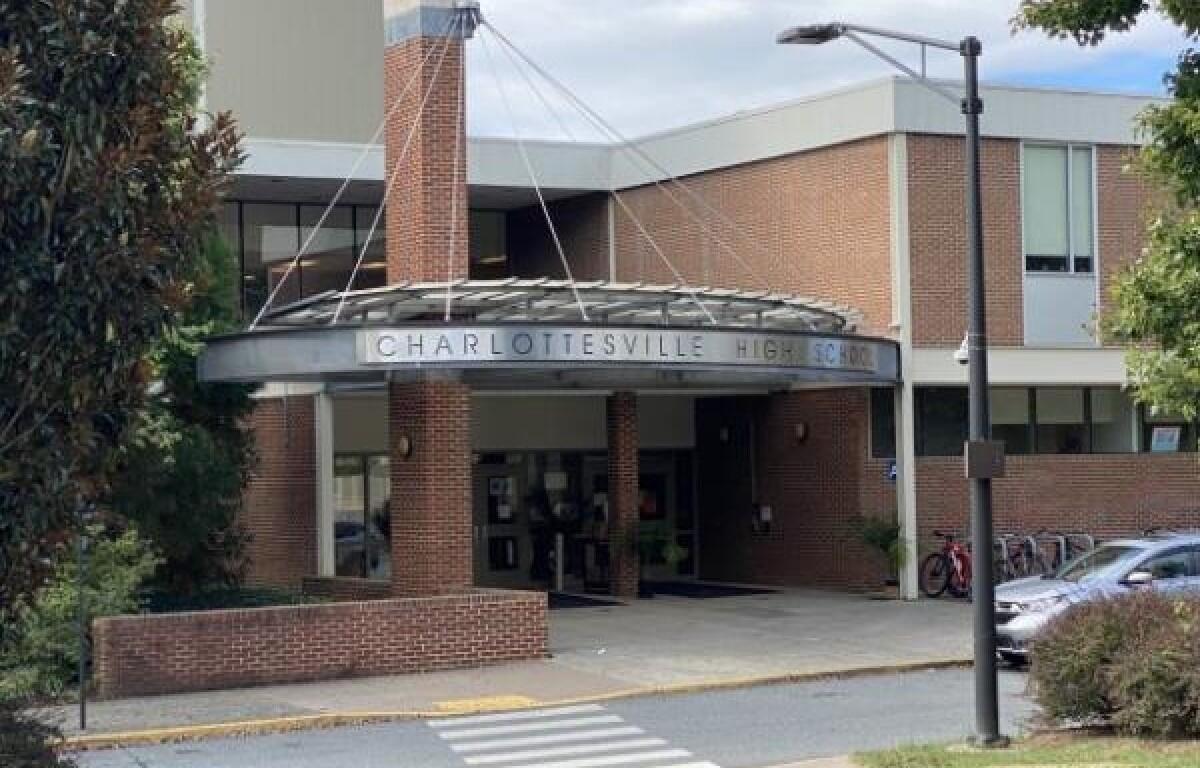

CHARLOTTESVILLE, VA (CVILLE RIGHT NOW) – The Charlottesville School Board is hearing renewed calls to revisit the debate around returning police officers to schools for the 2026-27 school year, with an online petition urging the board to vote again.
The board voted, in March 2025, to place school resource officers in the middle and high school. Since then, it has gathered community input to develop a memorandum of understanding with the Charlottesville Police Department, crafting the details of the program.
But with an online petition circulating, backed by the Legal Aid Justice Center, calling for the board to re-vote, it has set an April 16 work session to consider the matter further. That session will focus exclusively on the topic of police in the city schools.
Backers of the petition note that Zyahna Bryant, a new board member elected in November, indicated she would have voted against the plan, which passed 4-2.
“The work session was added to our calendar to allow ample time and opportunity for the current board to discuss this important topic,” said Board Chair Lisa Torres, who voted against the plan in March and was re-elected to the board in November.
The coalition that opposes the SRO program, under the mantra “Rethink. Revote. Police in Charlottesville Schools,” is urging the community to sign a petition, email, and speak to the board.
They’re contending there has not been a proper process that led to the signing of a memorandum of understanding (MOU) by city schools Superintendent Dr. Royal Gurley and city Police Chief Mike Kochis.
A week ago, Kochis told WINA Morning News they were very close to starting interviews of prospective SRO candidates, which the police department will do in partnership with school administration.
“There are a lot of feelings around that topic on both sides of the issue,” Kochis said. “And I’ve said this before that no matter where you stand about officers in the schools, I believe it comes from a good place, people care about your kids.”
Torres said the board’s original decision was based both on data and community input.
“The Board in 2025 did consider alternative models (the Cambridge Model and variations of that) and did request and receive data to inform its decision-making. In the months leading up to the March 2025 vote, the Board heard many perspectives both against and in favor of SROs,” she said. “In our current safety model, there are no SROs, but officers from CPD are in our schools on a nearly daily basis to work with staff and students, as required by the state. Implementing an SRO program based on our current MOU means that the officers in our building would be specially selected and trained officers who work onsite to provide safety and build strong relationships with school staff, students, and families.”
A flyer by Legal Aid Justice Center, Commonwealth Justice Coalition, The People’s Coalition, Indivisible Charlottesville, Not Me I Believe Inc, and Charlottesville Community Resilience Center urging actions against SROs noted,” Prior to the recent election of its newest members, our School Board voted 4-2 to return armed police to school campuses.”
They claim the board did it without seeking proper community input and proper data, and without presenting “restorative alternatives to school policing.”
According to the city schools’ website, the SRO program will focus on five bullet point adjustments:
- Reducing the number of SROs and reducing the costs of the program. As of September 18, we now recommend 2 SROs, 1 at CHS and 1 at CMS. This staffing is in alignment with the high school SROs in Albemarle County Public Schools. The officers will focus their attention on the needs of the schools during school hours. See FAQ, below, for more information.
- Incorporating language and ideas from the NYCLU model MOU, a source of student- and rights-centered language and protections.
- Building out the specifics of how CCS will co-select and train the SROs to ensure a good fit for the schools. CPD Chief Michael Kochis has confirmed that the SROs will be selected among current, experienced CPD officers who will then receive additional training in areas such as youth mental health, working with students who have special needs, and school routines.
- Defining what circumstances would signal an automatic termination of the program. Earlier this fall, responding to public feedback, we modified the MOU to spell out examples of specific circumstances that would end the program. However, subsequent community feedback (focusing on possible negative impacts of drawing attention to particular groups) convinced us to restore the original language stating that either party may end the agreement at any time. In addition, regarding the removal of a specific officer, we eliminated a reference to requiring “cause” for removal; this change means an officer can be removed at any time for any reason. These changes ultimately provide the maximum flexibility for the school community to be responsive to any circumstances.
- Reviewing specific metrics for program evaluation and developing the ongoing feedback tools for students, staff, and the community to share their experiences (good or bad).
The coalition flyer said, “Charlottesville’s school belong to the community.”
“After a fair and open process, the board may decide to keep SROs or not, but the community deserves a fair and transparent decision-making process first.”
Bryant, the new school board member, at a candidate forum last October said she would have been a “no” vote had she been on the board.
“As a student whose been through our schools, I understand why that is something on the forefront of our minds,” Bryant said. “At the same time, I also don’t feel like we have the data to back up even the perspective of the community on this issue.”