


 Listen Live
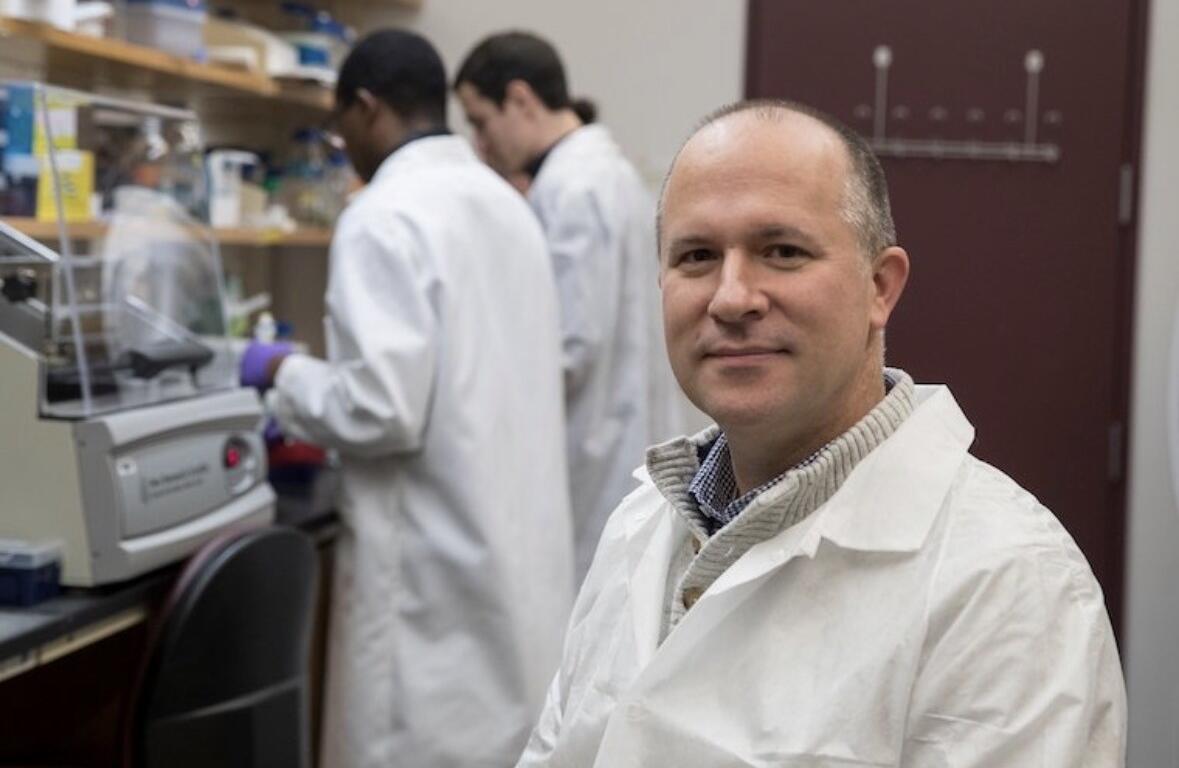

CHARLOTTESVILLE, VA (CVILLE RIGHT NOW) – Researchers at the University of Virginia are working to better understand why the same medication can affect people differently.
The project, called MOSAIC, recently received the first $4 million of a National Institutes of Health award that could total $12 million.
MOSAIC stands for Modeling of Sex-specific metabolism Across Interacting Communities. One of the project’s key aims is to simulate how women’s gut, liver and reproductive systems work together and how gut bacteria can affect estrogen levels.
Researchers are also working to develop a digital model showing how hormonal differences between men and women can impact the effectiveness of some medications.
Jason Papin, Ph.D., a UVA biomedical engineering professor and the project’s principal investigator, said the model will bring together information about multiple systems in the body.
“MOSAIC
CHARLOTTESVILLE, VA (CVILLE RIGHT NOW) – Researchers at the University of Virginia are working to better understand why the same medication can affect people differently.
The project, called MOSAIC, recently received the first $4 million of a National Institutes of Health award that could total $12 million.
MOSAIC stands for Modeling of Sex-specific metabolism Across Interacting Communities. One of the project’s key aims is to simulate how women’s gut, liver and reproductive systems work together and how gut bacteria can affect estrogen levels.
Researchers are also working to develop a digital model showing how hormonal differences between men and women can impact the effectiveness of some medications.
Jason Papin, Ph.D., a UVA biomedical engineering professor and the project’s principal investigator, said the model will bring together information about multiple systems in the body.
“Mosaic involves building large computer models that account for the function of all of these different components to try to predict how one person may respond to a drug differently than another,” Papin told Cville Right Now.
That means researchers have to understand how these systems interact with one another.
“So if we really want to understand a drug that we take orally, for example, and how it might affect one part of the body versus another part of the body, we have to be able to make the connections between all these different components and processes,” Papin said.
A key focus of the research is understanding how hormones may influence the body’s response to medications.
“The reality is we don’t understand how much of an effect they do have,” Papin told Cville Right Now. “I would say that the effect from what we do understand, the effect is significant.”
MOSAIC will look at several systems in the body, including the gut, liver, reproductive system and gut microbiome.
Researchers are initially testing the model using two conditions: bacterial vaginosis, commonly known as BV, and metabolic dysfunction-associated steatotic liver disease, or MASLD.
BV is the most common vaginal condition among women ages 15 to 44 and affects an estimated 29% of women in the United States, according to UVA.
“So bacterial vaginosis is a condition that affects millions of American women every year, and women, of course, across the world,” Papin said. “It leads to lots of additional health complications. There are challenges with recurrence where the condition returns. And so just given that it’s a condition that affects so many and that the role of the microbiome is well understood. That was one we wanted to target.”
For BV, researchers are particularly interested in whether treatment could eventually be tailored based on where a woman is in her hormonal life stage.
In practical terms, that could mean determining whether a woman who has not gone through menopause responds differently to a medication than a woman who is postmenopausal — and whether those differences should eventually be considered when choosing a treatment.
Papin said that is one of the project’s major goals.
“There’s very little understood about how BV is different in pre versus postmenopausal women,” Papin told Cville Right Now. “Again, hormones, these systemic hormones play a really large role in lots of physiology and lots of the ways in which we respond to drugs.”
Right now, there is not enough information to know whether a woman’s hormonal stage should change which medication she receives for BV.
“And unfortunately, there’s not a lot to really be discriminating between women that may be pre or postmenopausal and how treatments can be tailored and optimized to that hormonal state that that woman may be encountering,” Papin said.
MOSAIC could eventually help researchers answer that question.
The goal is not simply to create a computer model that predicts how the body will respond to a drug. Researchers want to determine whether those predictions reveal meaningful differences that could eventually help doctors make more individualized treatment decisions.
For example, if researchers find that a medication works differently in premenopausal and postmenopausal women, that information could eventually help guide how treatments are studied, developed or prescribed.
“So absolutely, that would be a wonderful outcome from the project and one that we hope to be able to tackle,” Papin told Cville Right Now.
That potential is still several steps away from changing what happens in a doctor’s office.
The model will first have to be built and tested. Researchers will compare its predictions with actual experimental results to determine where it works and where it needs improvement.
“Whenever the model makes a prediction, we want to try to test it as quick as we can so that we can see, OK, the model’s accurate here, it’s not accurate there,” Papin said.
Papin said it is too early to know when the research could affect medical treatment.
“Too early to make that kind of a prediction,” Papin told Cville Right Now.
For now, researchers are focused on answering a more basic question: Does a person’s hormonal state change the way their body responds to medication?
The answer could help researchers better understand differences between patients and eventually determine how those differences should be considered in medical care.
“We’re all different and things like hormones, things that we’re exposed to, they change how our body responds to things,” Papin said. “And so I think even appreciating that fact can be a powerful thing for doctors to think about.”
The project is a collaborative effort involving UVA, Johns Hopkins University, the University of Connecticut, the University of Michigan and the University of Illinois Chicago.
“You know, we’re leading this effort here at the University of Virginia, but we have close collaborators that are on our team from multiple institutions and research groups across the country. So these are big problems, big projects that require a lot of different people to try to make it work,” Papin told Cville Right Now.
involves building large computer models that account for the function of all of these different components to try to predict how one person may respond to a drug differently than another,” Papin told Cville Right Now.
That means researchers have to understand how these systems interact with one another.
“So if we really want to understand a drug that we take orally, for example, and how it might affect one part of the body versus another part of the body, we have to be able to make the connections between all these different components and processes,” Papin said.
A key focus of the research is understanding how hormones may influence the body’s response to medications.
“The reality is we don’t understand how much of an effect they do have,” Papin told Cville Right Now. “I would say that the effect from what we do understand, the effect is significant.”
MOSAIC will look at several systems in the body, including the gut, liver, reproductive system and gut microbiome.
Researchers are initially testing the model using two conditions: bacterial vaginosis, commonly known as BV, and metabolic dysfunction-associated steatotic liver disease, or MASLD.
BV is the most common vaginal condition among women ages 15 to 44 and affects an estimated 29% of women in the United States, according to UVA.
“So bacterial vaginosis is a condition that affects millions of American women every year, and women are, of course, across the world. It leads to lots of additional health complications. There are challenges with recurrence where the condition returns. And so just given that it’s a condition that affects so many and that the role of the microbiome is well understood. That was one we wanted to target,” Papin said.
For BV, researchers are particularly interested in whether treatment could eventually be tailored based on where a woman is in her hormonal life stage.
In practical terms, that could mean determining whether a woman who has not gone through menopause responds differently to a medication than a woman who is postmenopausal — and whether those differences should eventually be considered when choosing a treatment.
Papin said that is one of the project’s major goals.
“There’s very little understood about how BV is different in pre versus postmenopausal women,” Papin told Cville Right Now. “Again, hormones, these systemic hormones play a really large role in lots of physiology and lots of the ways in which we respond to drugs.”
Right now, there is not enough information to know whether a woman’s hormonal stage should change which medication she receives for BV.
“And unfortunately, there’s not a lot to really be discriminating between women that may be pre or postmenopausal and how treatments can be tailored and optimized to that hormonal state that that woman may be encountering,” Papin said.
MOSAIC could eventually help researchers answer that question.
The goal is not simply to create a computer model that predicts how the body will respond to a drug. Researchers want to determine whether those predictions reveal meaningful differences that could eventually help doctors make more individualized treatment decisions.
For example, if researchers find that a medication works differently in premenopausal and postmenopausal women, that information could eventually help guide how treatments are studied, developed or prescribed.
“So absolutely, that would be a wonderful outcome from the project and one that we hope to be able to tackle,” Papin told Cville Right Now.
That potential is still several steps away from changing what happens in a doctor’s office.
The model will first have to be built and tested. Researchers will compare its predictions with actual experimental results to determine where it works and where it needs improvement.
“Whenever the model makes a prediction, we want to try to test it as quick as we can so that we can see, OK, the model’s accurate here, it’s not accurate there,” Papin said.
Papin said it is too early to know when the research could affect medical treatment.
“Too early to make that kind of a prediction,” Papin told Cville Right Now.
For now, researchers are focused on answering a more basic question: Does a person’s hormonal state change the way their body responds to medication?
The answer could help researchers better understand differences between patients and eventually determine how those differences should be considered in medical care.
“We’re all different and things like hormones, things that we’re exposed to, they change how our body responds to things,” Papin said. “And so I think even appreciating that fact can be a powerful thing for doctors to think about.”
The project is a collaborative effort involving UVA, Johns Hopkins University, the University of Connecticut, the University of Michigan and the University of Illinois Chicago.
“You know, we’re leading this effort here at the University of Virginia, but we have close collaborators that are on our team from multiple institutions and research groups across the country. So these are big problems, big projects that require a lot of different people to try to make it work,” Papin told Cville Right Now.