


 Listen Live
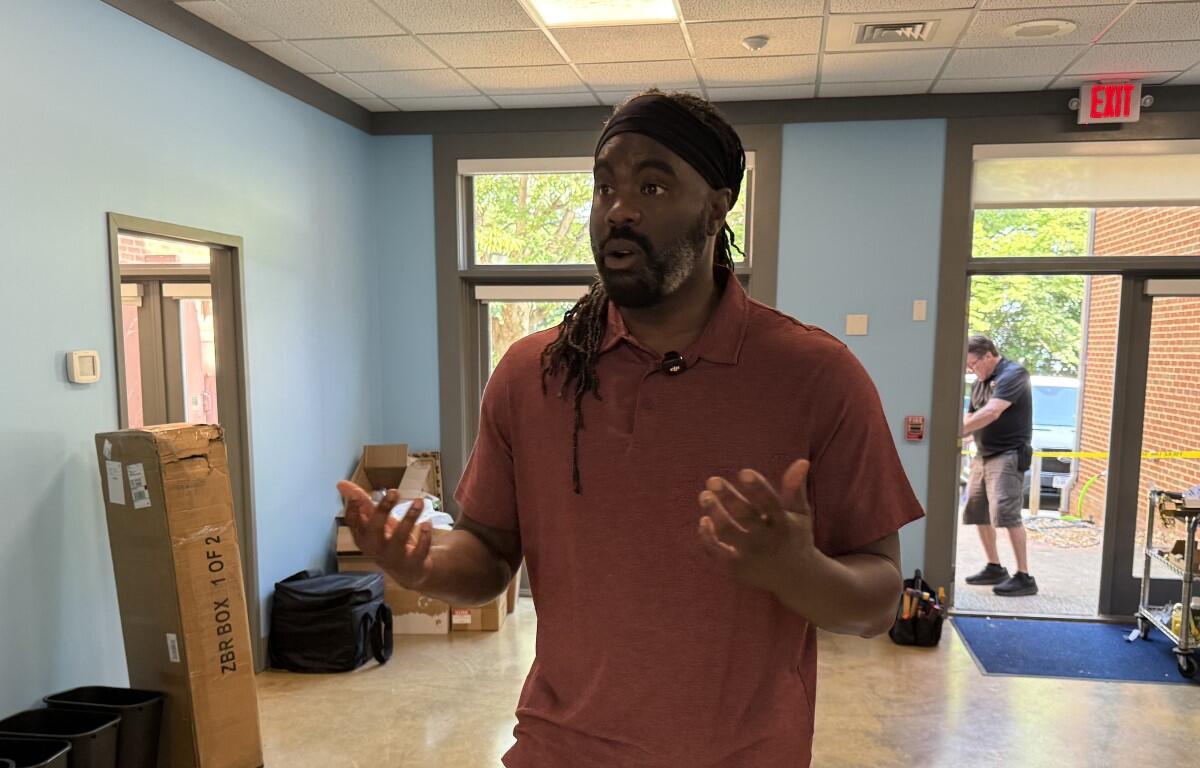

CHARLOTTESVILLE, VA (CVILLE RIGHT NOW) – As the City of Charlottesville prepares to open its homeless shelter at 2000 Holiday Dr. on Tuesday, the CEO of the company tasked with running the new facility said it is fully staffed and ready to receive residents.
The facility is opening as a temporary low-barrier emergency shelter, focusing on overnight lodging, with a capacity of 120 occupants, Central Arizona Shelter Services (CASS) Chief Executive Officer Nathan Smith told Cville Right Now on Monday. The city has announced it will clear the Free Bridge unhoused encampment beginning on Tuesday, coinciding with the shelter’s opening.
While at its height, Free Bridge was home to as many as 120 homeless people, City Councilor Jen Fleisher told Cville Right Now that only about 25-30 still remain camping off the Rivanna River Trail.
Smith said he did not know how many incoming residents to expect on the first day, but CASS had set out 37 beds in one section for men, 21 in another room for women, and four in an isolation room for anyone who may be or become ill and need to be quarantined away, “so the few people don’t get the rest of the people sick.”
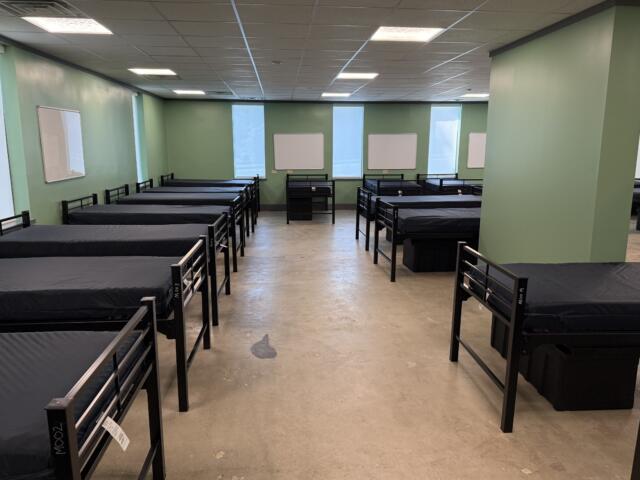
“Think COVID,” said Smith. “Because when you get shelter crud, shelter crud takes everybody out, residents and staff alike. So, we want to do our best to make sure we isolate sick residents away from the other residents who are staying here.”
Each bed has a storage locker underneath where residents can keep possessions securely locked up. There is another separate storage room with numerous numbered clear plastic bins where items can be stored residents don’t need with them.
During a tour of the facility, Smith showed Cville Right Now community areas, complete with tables, televisions and books, and spaces where residents and staff can hang out together. He also noted charging stations.
“A big thing we face all the time is charging stations,” Smith said. “People need to charge their phones, sometimes they need to plug in the C-pap machines and just because folks are living on the streets doesn’t mean they don’t have an iPad and so right here, (we) set up some charging stations.
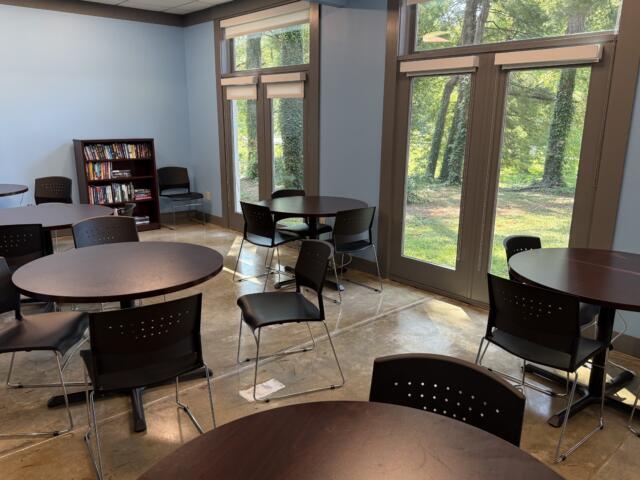
“For us it’s important to make sure folks have community space. One of the things that makes homelessness worse is isolation and so many quality-of-life items associated with being isolated, which is one of the reasons people enjoy living in encampment situations is they have a sense of community.”
The front door to the building, which used to face the 250 bypass, now opens onto Holiday Dr.
“That’s for a whole lot of reasons, and if for nothing else it’s easier and people aren’t having to deal with highway traffic as they walk through the door,” Smith said. “What we want here is to be a welcoming environment where they come in as their first impression and you see staff space here where people can meet with their case manager, work on their case plan, work on their budgeting, identifying all the things that are keeping them from exiting positively into a permanent living situation.”
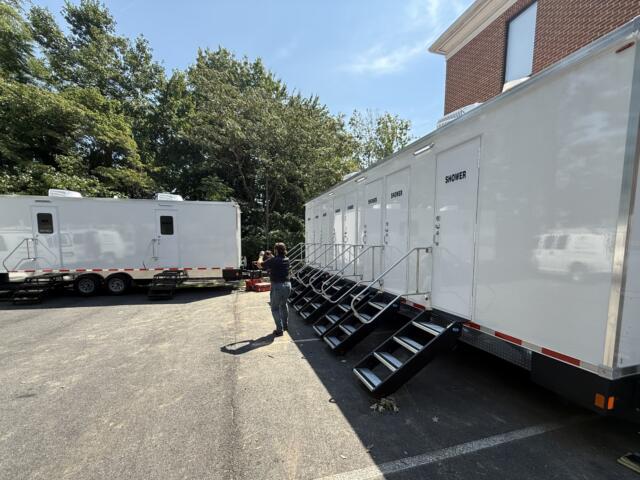
Shower and restroom facilities are outdoors in trailers in an isolated area next to the building.
While Smith was not sure how many people they might have staying at Holiday Drive the first night, Fleisher, who has been working to assess the numbers and needs of the city’s unhoused the past few months, estimated about 10 might attempt to move in Tuesday.
“(It’s) a leap of faith for the residents to make this shift,” Fleisher said. “As uncomfortable as it can be living outside in this weather and the situations they’re in, it is well known and you’re moving into some unknown. We know from the literature and other experts we’ve spoken to is the uptake from an encampment to shelter is generally between 20- and- 30%. We really don’t know how many folks are truly left at the two river encampments at High and Free Bridge, but my guess having been down there every week is about 25-30. So, if you run those stats and you get ten people to come, that would be pretty successful.
“We’ve just spent our time down there encouraging folks to join us, and so not only making the connections but talking about plans and what might be available to them when they get to the shelter and even talking to folks (about) what we expect from the shelter.”
She said some folks two days before say they’re in and then on the day they’re not sure, and others who go elsewhere for a little while and need the shelter services will be available later when they avail themselves of them.
Fleisher said the team that made assessments was made up of workers from PACEM, UVA Health and the university’s nursing schools, background help from The Haven with data entry, BRACH, and general volunteers from the public.
She said they helped understand needs and then continued to do connecting work with the addition of Region Ten and On Our Own Charlottesville to connect people with needs they identified since July.
For those who will not go to 2000 Holiday Drive, Fleisher said they will need to leave the river.
“Some people we’ve already connected to go to friend homes or connect with people out of town as The Haven has a great network for supplying transportation to that,” Fleisher said. “We won’t know where everyone decides to go, but there is a real need to kind of move out of this space and we’re of course hoping that our staff out (at the encampment) does the literature and we have more folks come with us.”
They’re hoping the allowance of dogs, the 24-hour nature of the shelter and the access the food and other services like case management act as incentive to come to the shelter.
The city’s effort, starting on Tuesday and continuing through the rest of the week, will not be the end of it.
Fleisher said the city is in the process of hiring two more outreach workers, expected to come online by the end of September, “to connect to folks that we missed this round,” as well as a supervisor to oversee those outreach workers.
BRACH has also sponsored Support Work outreach workers, and Fleisher said more housing will be available as Vista 29 opens this fall, which will open up 80 spaces from a list managed by BRACH.
The city will also later open transitional housing to help move people from the low-barrier facility to the next level.
“I think all the forces combined will act as the safety net for folks coming from the river or elsewhere,” Fleisher said. “But at this exact moment, the threat of the weather in particular will really have to incentivize folks to move on.”