


 Listen Live
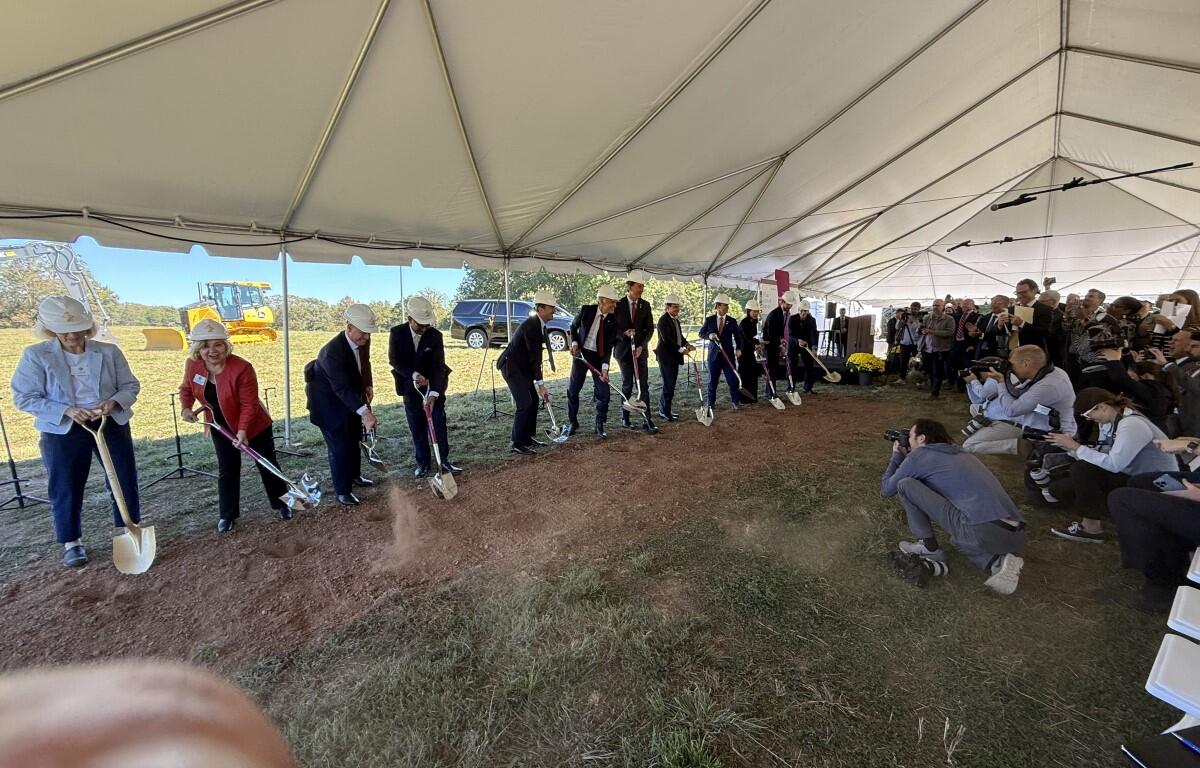

CHARLOTTESVILLE, VA (CVILLE RIGHT NOW) – The Charlottesville area has been successful at attracting biotech companies to the region, including AstraZeneca, and Cville BioHub is working to develop a large enough workforce to staff those companies’ facilities.
The nonprofit launched in 2016, and Cville BioHub President Nikki Hastings told Cville Right Now, “We are Central Virginia’s life sciences accelerating organization. We’re a nonprofit that supports the growth of the industry here.”
“We focus primarily on the entrepreneurial aspect of early-stage ideas that are supporting growth in new drug development, new medical devices, instrumentation and tools supporting research in the life sciences industry at-large, and we work to foster resources across academia, government, and our workforce partners,” Hastings said.
The challenge in Central Virginia, according to Cville BioHub’s data, is once the area lands these companies, there needs to be the properly trained workforce to fill the highly skilled jobs these companies require.
She notes a two-fold issue in this area, as their data shows “fewer than one in three of the region’s Bachelor-level life sciences graduates are still in the area a decade after graduation,” and life sciences companies face a measurable hiring problem as, “nationally, 36% of biopharmaceutical facilities cannot fill process development positions and 28% cannot fill downstream production roles, the exact categories these plants will hire into.”
That’s why Cville BioHub, backed by more than $15 million in state and regional investment, opened what they call Commonwealth BioAccelerator at the North Fork Research Park in 2025, where young biotech and life sciences companies can grow, and young life sciences students can work internships to gain experience to develop skills and knowledge needed by companies like AstraZeneca, which opens in 2030, or work at one of the companies working and growing in the Accelerator.
“An Accelerator is often a program that companies come and they run through a certain period of time dedicated to moving them to the next stage of growth as quickly as possible, reducing a lot of the barriers and friction for their growth to happen” Hastings said. “As these early-stage companies are emerging, many of them we work with are from the University of Virginia. They have (been) developing and researching for ten-plus years on their idea, and finally when it emerges out of the University, we’re here to catch it and grow that idea so that it becomes fundable company.”
She said they help them through an academic to an industry mindset shift and help connect them to the resources and commercialization to help get their products to the market and get their ideas supported and funded by venture capitalists and other funding sources “across Virginia and beyond.”
One of the most important things Hastings thinks Cville BioHub does is foster connections.
She noted the connections of companies with venture capitalists, but she also noted the connection of those enrolled or graduated from life sciences programs at UVA and Piedmont Virginia Community College with potential employers.
The region loses most of the life sciences graduates it produces, and Cville BioHub data shows this more a coordination failure rather than a supply shortage.
“CvilleBioHub built the internship program because the formal channels failed as the university asked founders to complete a two-page application, and founders said they had no time; they just needed an intern,” researchers wrote.
“We are so proud of our internship program,” Hastings said. “We just ended our sixth cohort of this and we’ll typically bring about 20 students together and interact with them three times throughout the summer to kick off the summer program, get them introduced to one another. We’re building community around the students who are going to be working in the companies.”
Hasting said the program sends the interns out to typically 10-15 participating companies and then bring the student back together during the summer for networking and social events. These also give the interns the chance to hear from other local entrepreneurial leaders. The program concludes with a culminating showcase of the work the interns have all done with leaders of the participating companies.
“That has led to many of these students landing in roles, long-term positions that they’ve then grown their careers here in the region,” Hasting said.
According to their data, “interns who work in-person receive full-time job offers at 72%, compared with roughly 56% in hybrid arrangements with proximity the variable and students physically in the office (or lab) get hired”.
Now, as Cville BioHub works primarily with 3rd and 4th year UVA students as well as grad students, Hastings sees an opportunity “to be a very strong partner to our high schools and our middle schools, even to host tours at our Accelerator, and even if it’s a short amount of time, I think we can still have a big impact”.
She said they’re working with PVCC and other community partners about how Cville BioHub can best serve not just the higher ed institutions, but also K-12.
“I can envision taking these students on tours to Agrospheres with really cool biomanufacturing activity happening there, to AstraZeneca when it’s open, to Afton Scientific,” she said. “You know, all of these are great examples in our community that are going to be looking for talent and jobs, and we can get them started early.”
The amount of life sciences and biotech companies coming to Charlottesville, and especially Albemarle County, is a deliberate effort by the county.
Life sciences is one of the top economic development priorities for Albemarle, and County Economic Development Director Emily Kilroy told Cville Right Now Cville BioHub has been working tirelessly since 2016 to build a business support system for the biotech sector.
“When AstraZeneca was evaluating our community, Cville BioHub’s data on the existing workforce and companies was helpful in crafting our life sciences story,” Kilroy said. “We’re so grateful to Nikki Hastings’ leadership and the entire Cville BioHub team for all their efforts.”