


 Listen Live

CHARLOTTESVILLE, VA (CVILLE RIGHT NOW) – For 8-year-old Joshua Quintern, a Burkitt’s lymphoma diagnosis in November 2024 didn’t slow him down.
“He was running through the halls, playing with nurses,” his mother Chelsea Quintern said. “Even through the setbacks, he took it in stride.”
Burkitt’s lymphoma is often highly curable, with survival rates up to 90 percent over 5 years. Combination immunotherapies had put Joshua in remission, but he suddenly relapsed before a stem cell transplant.
That led to a discovery that the lymphoma was refractory and progressing despite treatment, and chances of recovery suddenly looked slim.
As options for next steps in Joshua’s treatment diminished, Chelsea conducted some of her own research – and brought a recently published therapy to his treatment team.
CAR T-cell therapy had only been successful in three adult patients, but Interim Division Director of Pediatric Hematology Oncology Dr. Colleen Druzgal and Director of Pediatric Stem Cell Transplant and Cell Therapy Dr. Daniel Lee saw potential.
“We needed something else that was new and unique,” Lee said. “We were able to put together a protocol just for him with these new therapies.”
After calling on colleagues throughout the United States and Europe and studying the biology of Joshua’s tumor in the lab, Lee and his team assembled a groundbreaking treatment plan for a condition that is often devastating. Doing so required advocating for Joshua at every step of the process to try a brand-new treatment, even getting one-time emergency FDA approval for the therapy.
“In a lot of instances, drugs are developed for adults first. Because pediatric cancers are rare, we have to wait a really long time for those to reach our kids,” Druzgal said. “Dr. Lee was really able to advocate for a rationale for why this treatment should work in a case where we didn’t have much else to do.”
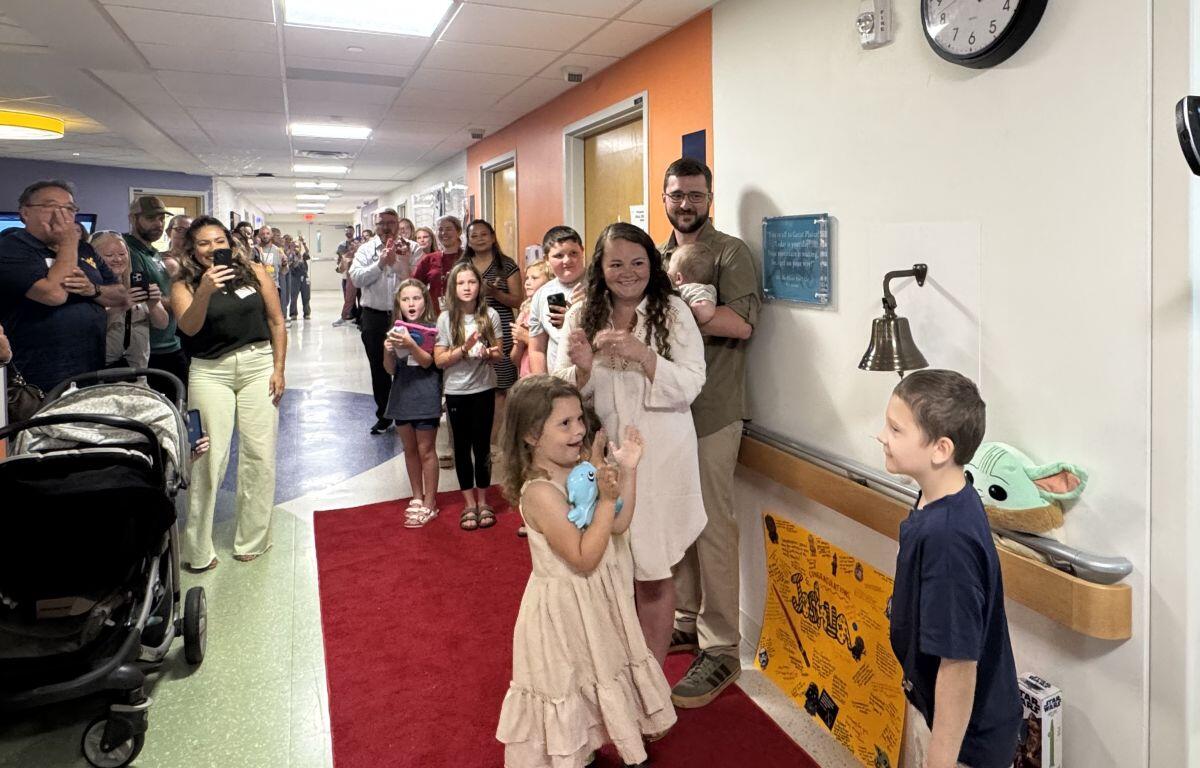
A year and a half later, Joshua rang the bell inside UVA Health’s Pediatric Hematology and Oncology center with a Baby Yoda stuffed animal in tow as smiling family, staff members and Spider-Man looked on. Minutes after, Joshua was wielding a green lightsaber, spinning as he slashed at invisible enemies.
It was a reminder that, through extensive inpatient chemo and a new treatment his family had taken on as one of their last options to save his life, Joshua was still an energetic kid. For his mother, he was also a miracle.
“When we found out that Joshua’s cancer was refractory, we knew at that point we were facing a different battle altogether,” Chelsea said.
Although his team noted that most families of patients wouldn’t be willing to risk a completely new treatment, Chelsea and Joshua fought to be a ‘lab rat’ for the hospital if it meant a chance of getting back to remission.
“Whatever it takes we’re gonna do,” Chelsea said. “And here we are on the other side, and we are looking at a miracle.”
His treatment involved combining two cancer medications with CAR T-cell therapy, which uses the body’s immune system to fight cancer. His two medications worked to dismantle the tumor’s defensive perimeters, while the T-cells were removed from Joshua’s blood, altered in the lab and genetically engineered to fight and kill cancer cells before being infused back into Joshua’s body.
58 days later, Joshua was cancer free. Today, there are no signs of the cancer returning.
“I have (been) the luckiest person to be ringing the bell,” Joshua said.
His treatment team said this case is promising when it comes to this specific form of Burkitt’s lymphoma, and that Joshua’s experience could help lay the basis for further clinical trials. UVA Health Children’s is the first hospital to have a successful treatment using CAR T-cell therapy for a pediatric cancer patient.
For Chelsea and her family, West Virginia natives, reuniting with Joshua’s treatment team, as they had relocated to Charlottesville during his inpatient treatment, and seeing her son ring the bell was bittersweet, but hopeful. Moving forward, she hopes to keep spreading the word about the potential of CAR T-cell therapy for lymphoma as families of kids like Joshua reach out to her, looking for new treatment options even when the outlook is dire.
“It was like a homecoming,” Chelsea said. “It was a wonderful reunion, but I think the best thing is just going to be able to see this little boy grow up.”