


 Listen Live
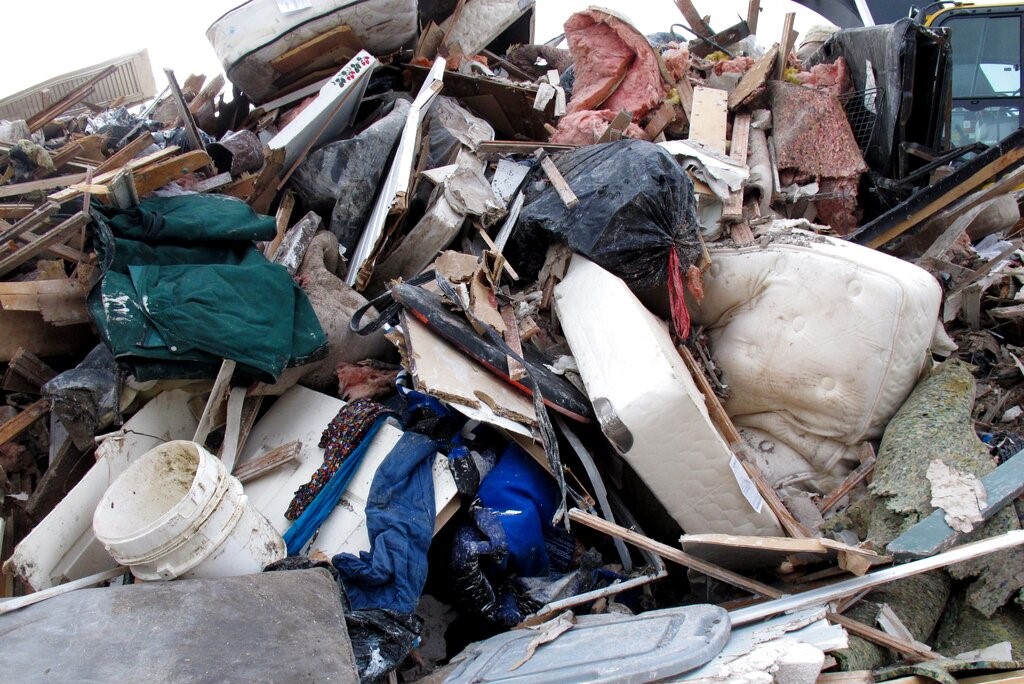

CHARLOTTESVILLE, VA (CVILLE RIGHT NOW) – As landfills continue to reach capacity, Del. Amy Laufer is continuing her quest to facilitate more recycling of one of the largest items that end up in those facilities – mattresses.
“They’re incredibly problematic because of their size,” Laufer told Cville Right Now. “Landfills work by compaction. They’re constantly compacting the fill, which is waste. But mattresses never compact. They actually take up 400% more space than anything else in a landfill. They take over 100 years to decompose. They’re hugely problematic.”
This past legislative session, for a third straight year, Laufer sponsored a bill to create a recycling program, funded by a front-end tax when someone purchases a mattress, that would collect the mattresses and then send them to be recycled. Laufer said its modeled after similar, successful programs in California, Connecticut, Oregon and Rhode Island.
But after passing both houses of the General Assembly, Laufer’s legislation was among the 31 bills vetoed by Gov. Abigail Spanberger. Spanberger did not propose any amendments to the bill. Laufer said she was told the Governor wanted more binding language in the legislation to ensure an open bid process and that the Department of Environmental Quality would monitor the program.
“I’m obviously disappointed,” Laufer said. “I thought we had worked pretty diligently with the Secretary of Natural resources on some of what could possibly be amendments. So, it’s definitely disappointing, but I’m not going to give up.”
Laufer said 75% of a mattress is recyclable.
“We’re basically throwing away raw materials,” Laufer said.
Since many landfills charge extra to take mattresses, or don’t accept them at all, Laufer said people often dispose of them in appropriate places, and the cost of collecting and getting them to landfills falls to taxpayers just the same.
“What we find is, if the fee is at the end, people will most likely throw them on the side of the road,” Laufer said. “Then we have to pay localities to have people go pick them up and then the localities have to pay for dumping them.”
Laufer said that Oregon recycled over 5.5 million pounds of material from mattresses in 2025. She said after a pilot program in the Richmond area last year, it was estimated the region discards 500,000 mattresses per year.
This month, the General Assembly will be back for a special session to finish the budget. When it returns for its full session in August, Laufer said she has a number of bills she’d like to pursue, but did not rule out carrying the mattress recycling legislation again.
“I can appreciate that the Governor is very detail oriented, and so am I,” Laufer said. “We can come to some agreements going forward. I definitely want to continue to work on these issues. It’s so incredibly important that we utilize the raw materials that we have.”
Laufer said that includes tires. She said he’s also been working on legislation to promote and streamline tire recycling. Laufer said that, while consumers already pay a fee when they purchase a new tire, the infrastructure to effectively collect and recycle those items is “lacking.”
She said one Albemarle County resident incurred about $10,000 in damage to their farm when illegally dumped tires on the property led to flooding issues.
“All of these things are so interconnected with environment and affordability,” Laufer said.