


 Listen Live
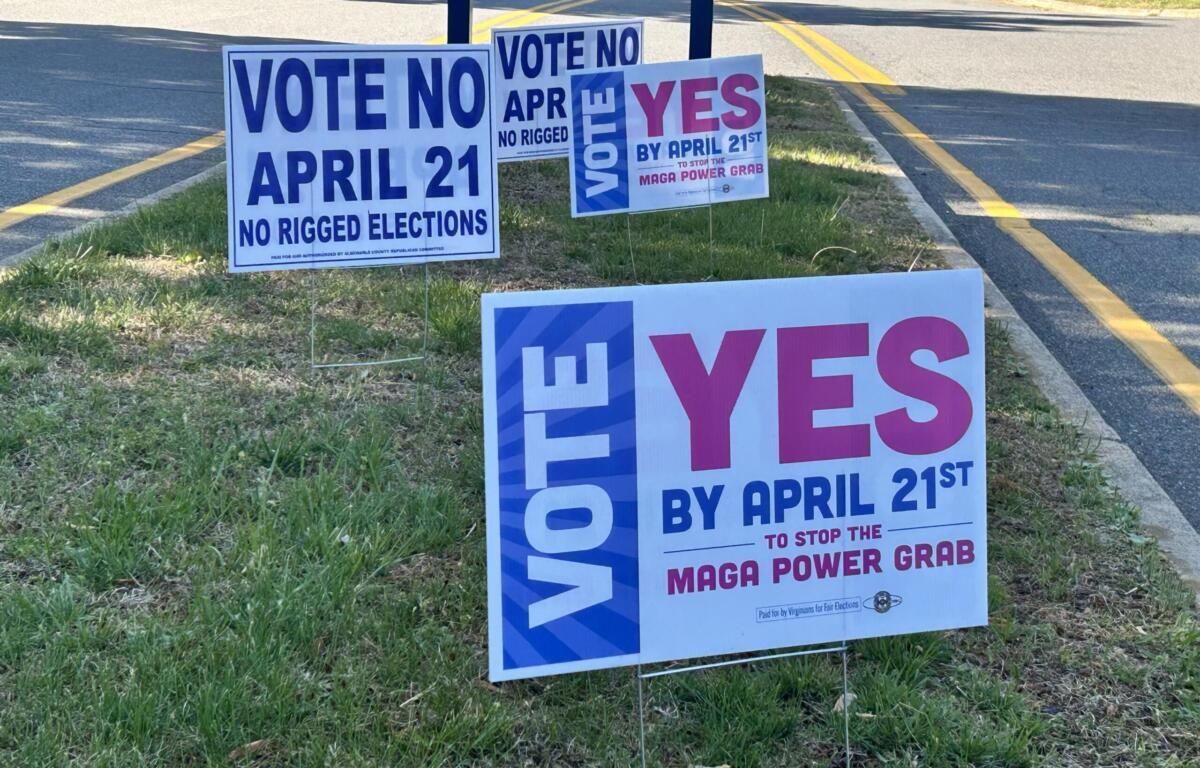

CHARLOTTESVILLE, VA (CVILLE RIGHT NOW) – Voters in Virginia narrowly passed a proposed constitutional redistricting amendment that would have redrawn voting districts, potentially helping Democrats gain as many as four Congressional seats in the midterm elections in November.
Virginia’s current Congressional delegation has six Democrats and five Republicans. Experts have predicted the new maps could give Democrats a 10-1 edge after the next election.
NBC News called the election at 8:44 p.m. CNN and the Associated Press followed eight minutes later.
Polls in Virginia opened at 6 a.m. Tuesday and closed at 7 p.m. There were also over 1.3 million early and mail-in ballots cast in the race. At the time, Yes only led 50.3% to 49.7%, but the remaining outstanding votes were in Democrat leaning population centers including Fairfax County and Richmond.
“Virginia voters are torn,” Sen. Creigh Deeds (D-Charlottesville) told Cville Right Now shortly after the call. “Gerrymandering is wrong, but we are in unprecedented times. Tonight, the voters sent a message to Donald Trump.”
The new maps move Charlottesville and Albemarle County into the 6th District, joining them with Harrisonburg and Roanoke.
The Supreme Court of Virginia will still hear arguments claiming Democrats violated the state constitution’s prescribed process for putting the amendment on the ballot, but in allowing the referendum to proceed in a February ruling, the court seemed to signal it would leave the decision about what happens with Virginia’s maps to the voters.
Tuesday, voters in Charlottesville overwhelmingly backed the measure, voting 85.4% in favor of it. The margin was slimmer in Albemarle County, where 64.8% of the vote supported the redistricting amendment.
In the surrounding areas, voters turned out against the amendment.
In Greene County, 64.8% of votes opposed the measure, 64.1% voted against it in Orange County, 66.2% opposed it in Louisa County, 54.9% opposing it in Fluvanna County and 64.2% voting against it in Buckingham County.
Mid-decade redistricting is unusual, but Democrats, including Virginia Gov. Abigail Spanberger and former President Barack Obama, argued it was a necessary response to similar actions by Republicans in other states.
Texas, Missouri, North Carolina and Ohio passed gerrymandered redistricting maps designed to give Republicans eight more seats. In response, California redrew its maps to favor Democrats, potentially adding five seats.
But Virginia Republicans argued the new gerrymandered maps concentrate too much power in Northern Virginia.
The measure is a temporary one, remaining in effect until after the next census in 2030.
“Virginia voters have spoken, and tonight they approved a temporary measure to push back against a President who claims he is ‘entitled’ to more Republican seats in Congress. Virginians watched other states go along with those demands without voter input — and we refused to let that stand. We responded the right way: at the ballot box,” Gov. Spanberger said in a statement. “I understand the urgency of winning congressional seats as a check on this President, and I look forward to campaigning with candidates across the Commonwealth working to earn Virginians’ trust — and their votes. Looking forward, I remain committed to ensuring Virginia’s bipartisan redistricting commission gets back to work after the 2030 census, and to protecting the process Virginians voted to create.”
The ballot question read: “Should the Constitution of Virginia be amended to allow the General Assembly to temporarily adopt new congressional districts to restore fairness in the upcoming elections, while ensuring Virginia’s standard redistricting process resumes for all future redistricting after the 2030 census?”
Virginia House Republican leader Terry Kilgore indicated he was hopeful the Supreme Court of Virginia would overrule Tuesday’s decision by the voters.
“While these weren’t the results we were hoping for, they were not unexpected. From the start, this process was tilted: misleading ballot language and a massive spending advantage made this an uphill climb for voters trying to make sense of a deeply complicated issue,” Kilgore said in a statement. “But the ballot box was never the final word here. Serious legal questions remain about both the wording of this referendum and the process used to put it before voters. Those questions have not been resolved, and they now move where they belong: to the courts.”
Attorney General Jay Jones, elected along with Spanberger in November, said he’s prepared to defend the amendment.
“The people of the Commonwealth showed up at the polls and voted in support of the constitutional amendment. I want to thank the dedicated election officials and volunteers for their tireless commitment and service to administering fair and secure elections in our Commonwealth. My office stands ready to defend the will of the voters and enforce our laws.”