


 Listen Live
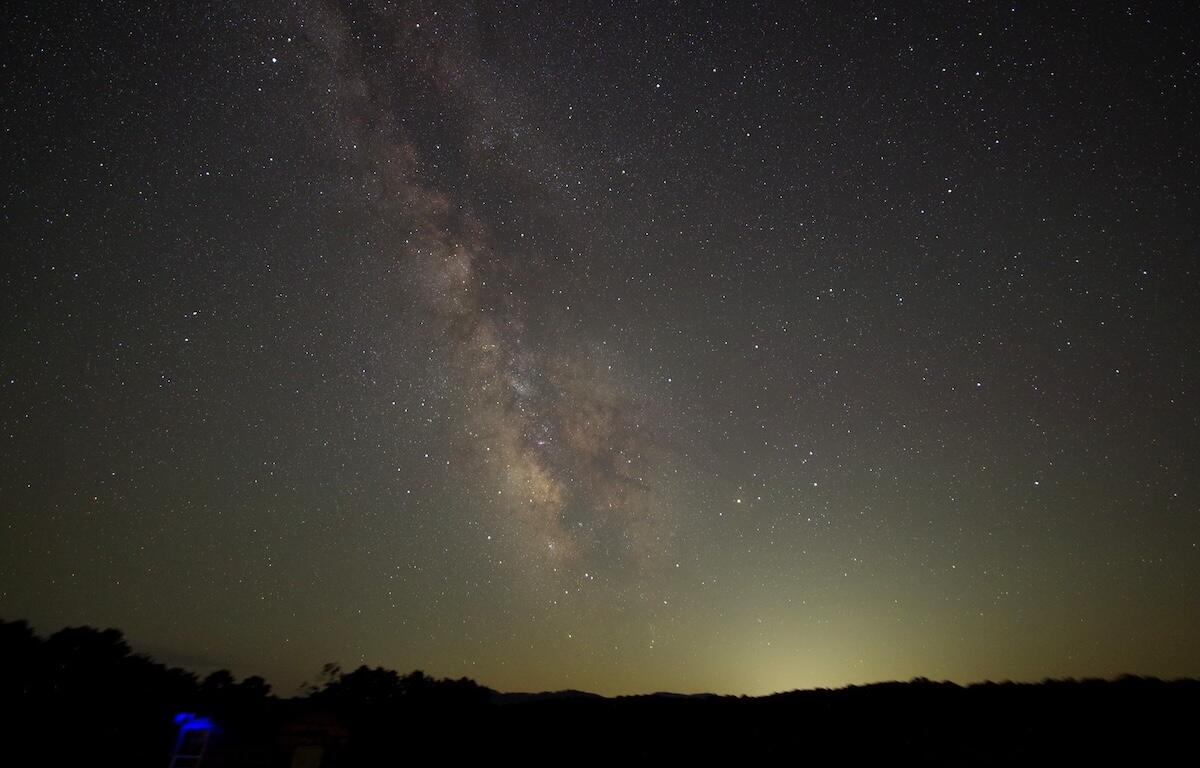

CHARLOTTESVILLE, VA. (CVILLE RIGHT NOW) — This week marks International Dark Sky Week, a global initiative aimed at spreading awareness and preventing light pollution, and local advocates are looking to spread that message.
“The week is set aside for people to take a moment to celebrate both looking up at the stars at night and making that connection, but also, to raise awareness to the problems of light pollution,” Christine Putnam, member of the Albemarle County Natural Heritage Committee, told Cville Right Now. “And with the advent of LED lighting, our world is getting brighter and brighter.”
The annual week, which runs from April 13-20 this year, has been recognized by local officials, as both the Charlottesville City Council and the Albemarle Board of Supervisors have made official proclamations regarding the week.
“The experience of standing beneath a starry sky inspires feelings of wonder and awe,” Charlottesville’s proclamation read, “and many people in Charlottesville live under a dome of light pollution—excessive artificial lighting that disrupts natural darkness—and may never experience the visual wonder or ecological and health benefits of living under a dark sky.”
As part of its proclamation, Albemarle also recognized its proximity to James River State Park, one of four International Dark Sky Parks in the commonwealth, as designated by DarkSky International, the organization that created Dark Sky Week.
While discussions on light pollution often center on the inability to see stars at night, but Putnam highlighted the health impacts of light pollution as well.
“There’s more and more evidence about the health impacts of exposure to light, especially LEDs, because of the blue light content,” she said.
She specifically mentioned how blue light can disrupt the production of melatonin, the hormone which regulates sleep cycles.
Light pollution can also impact the health of animals. The vast majority of amphibians are nocturnal, and increased exposure to light can disrupt their circadian rhythms, in turn disrupting their hunting, mating and reproduction.
Birds are also impacted by light pollution, as 80% of migrating birds travel at night using the stars to navigate. Both Albemarle and Charlottesville’s proclamations cited this figure.
So, what can local residents do to help curb light pollution in the area? Putnam said the best way to commemorate the week is to spend time outside and appreciate the darkness that is still present. But while inside, think about ways to turn down the lights.
Dark Sky’s website highlights five principles of responsible lighting, which are to “Use light only if it is needed,” “Direct light so it falls only where it is needed,” “Light should not be brighter than necessary,” “Use light only when it is needed,” and “Use warmer color lights where possible.”
While simply limiting when, where and how long you use your lights can apply to any lights you already own, Putnam also encourages checking the label on lights to ensure you’re buying the warmest light possible, often in the range of 2200-2700 Kelvin.
“It looks a little bit more yellow,” she said, “and it’s much warmer. And what it does is it would mimic something like candlelight or firelight, and it contains less of that blue light content.”
Putnam also suggested covering outdoor lighting like porch lights to ensure it only illuminates intended areas, as well as keeping those lights on only when needed.
These simple actions can not only improve the health of both people and animals, but they can also ensure the night sky stays dark, maintaining an important connection beyond our planet.
“When I look up at the sky, there are so many things happening down on Earth that feel pretty heavy,” Putnam said, “and taking a moment to just look up and to think about our place in the universe, I think is an important thing for us to take the time to do.”