


 Listen Live

CHARLOTTESVILLE, VA. (CVILLE RIGHT NOW) — In response to spike in reported case of cryptocurrency scams, the Albemarle County Police Department, Virginia State Police and FBI are looking to spread awareness on the crime’s increasing prevalence.
29 total cases were reported in Albemarle between Jan. 1, 2025, to Feb. 28 of this year. Of those cases, nine resulted in victims losing a total of $240,000. Since the new year, 11 cases have already been reported representing a 175% increase in cases compared to the same time last year. There were eight reported in February alone. These crimes primarily target the elderly, and their impact can be financially devastating.
“We have elderly folks who worked their entire careers to be retired,” ACPD Detective Marcus Baggett said, “and after these types of losses, they may find themselves living with elderly parents. Not where they plan to be in their retirement.”
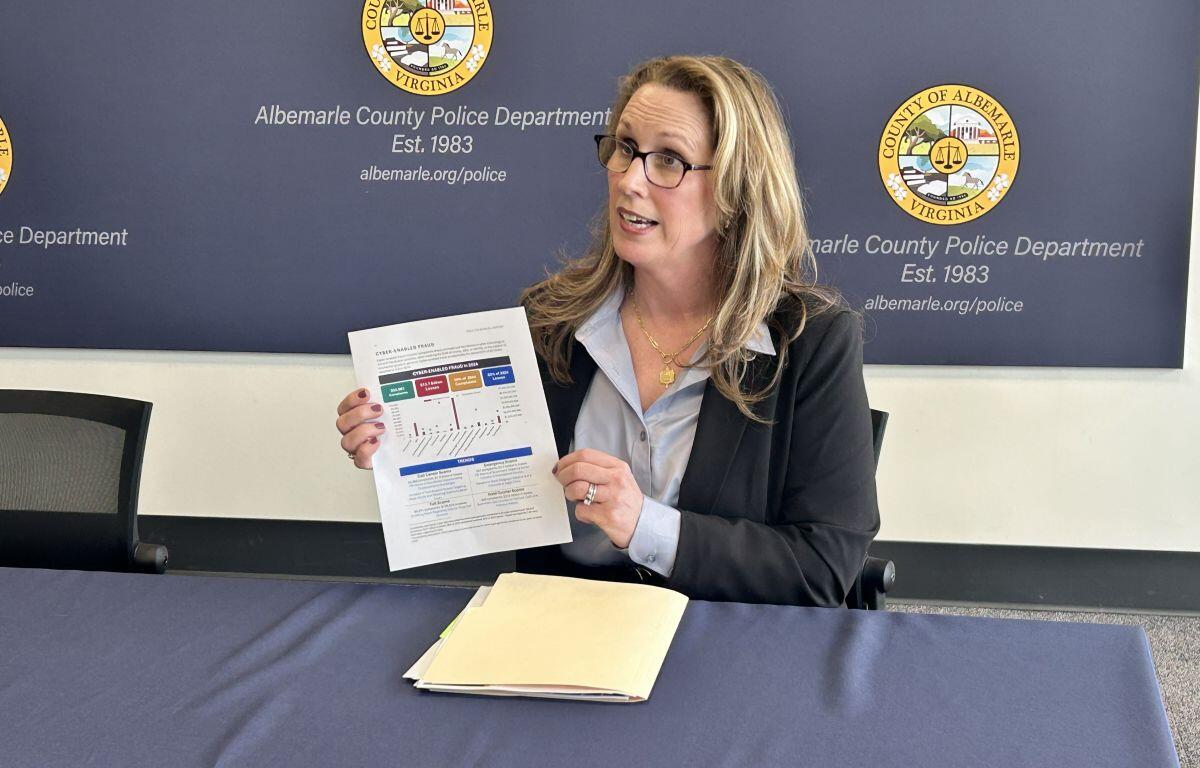
FBI Intelligence Analyst Heather Harris said the trends in Albemarle are happening nationwide. While data from 2025 has not been made publicly available, the FBI’s Internet Crime Center (IC3) reported $9.3 billion in losses in its 2024 annual report, a 66% increase from 2023. Adults over 60 were the most impacted age group, accounting for $2.8 billion in losses.
Cryptocurrency scams can begin a number of different ways. Scammers will try to lure the victim in with an investment scam, convincing them they’ll earn money before taking away large sums. Other times, scammer will call different phone numbers, claiming to be a government agency, tech support, bank or other entity that needs money to fix a problem. This is designed to create a sense of urgency or panic in the victim.
“The fraudsters do this on purpose,” Harris said. “And so now they have the control.”
The fraudsters will then direct the victims to deposit their money into a Bitcoin ATM, which are commonly found in convenience stores, grocery stores, gas stations and vape shops. There are numerous ones in Albemarle County at different locations, and fraudsters will often find and direct victims to the closest one using their address.
Fraudsters will also give the victim a QR code that directs to the address of a cryptocurrency wallet. The victim will then take the QR code to the atm, deposit their money into the machine and send it to the QR code’s address. The machine instantaneously converts the money digitally and sends it to the fraudster, who is oftentimes overseas.
“By the time they walk out of that establishment — that convenience store, the grocery store, it is likely that the fraudster has the money,” Harris said.
This can make it difficult for law enforcement to track down the money. Crypto is often used by fraudsters because it can be transferred quickly, even over international borders.
“We can trace it,” Harris said, “but in order to actually get the funds and return them, often by the time a victim comes and reports it, it has already moved on to other wallets and converted to other types of currency.”
That’s why all three officers emphasized the importance of reporting these crimes early. First Sergeant Adam Kulpa of the Virginia State Police’s High-Tech Crimes Division, which works with ACPD and other localities to trace back the cryptocurrency lost in these cases, said many victims will feel embarrassed or ashamed when these crimes happen, leading to them holding off on reporting it to the police, which can be a critical mistake.
“If we can get somebody to report it within 48 hours, we like to say the chances are so much more successful,” he said. “But the longer we wait, the more difficult it is.”
Kulpa and Harris also said the more information that a victim can provide to the police, the easier it will be to trace the cryptocurrency. This can include names, phone numbers, crypto wallet addresses, receipts from the crypto ATM and even event headers from emails.
“The more information we have, the better that we can do at our job, which is to keep everyone safe,” Harris said.
Harris also made it clear that no legitimate business, government agency, bank or financial institution will demand U.S. Citizens pay or send money through cryptocurrency and encouraged people to share that information with loved ones to help them be aware of these scams before they happen.
“It’s just a great thing to remember to keep you safe,” she said.