


 Listen Live
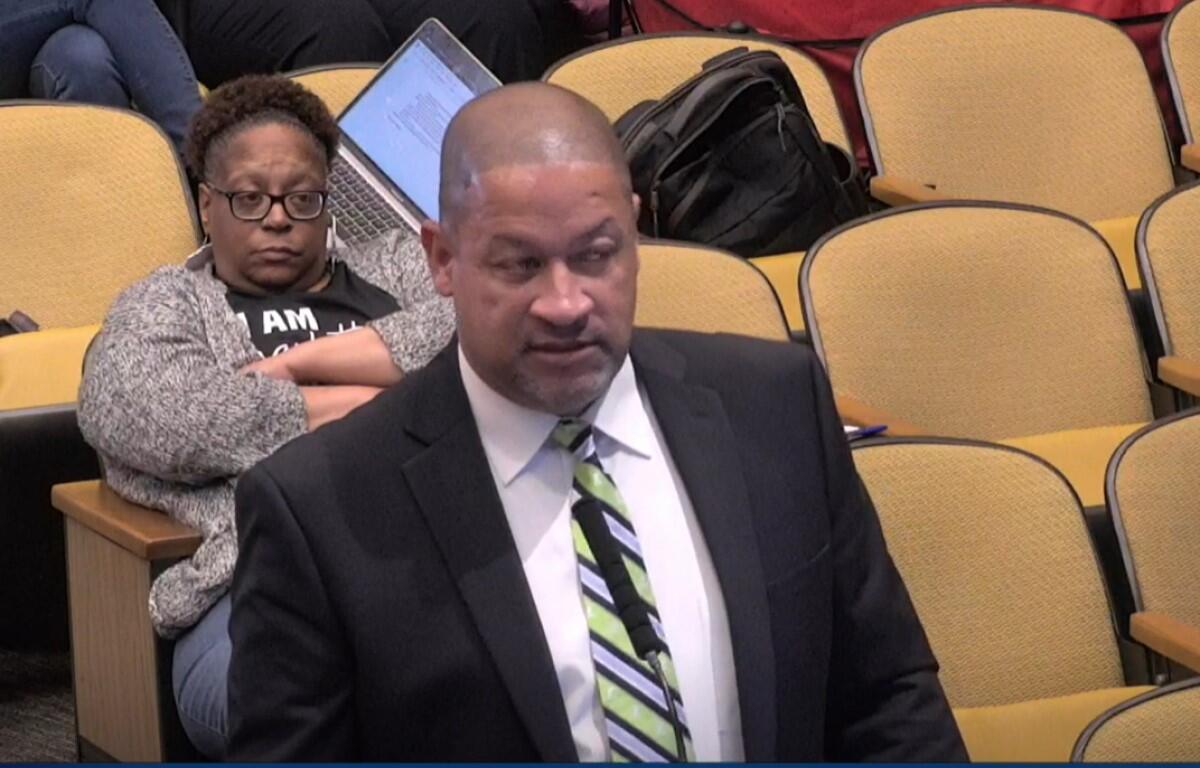

CHARLOTTESVILLE, VA (CVILLE RIGHT NOW) – Collective bargaining agreements are one of the drivers behind a proposed 2-cent real estate tax rate increase, City Manager Sam Sanders told the Charlottesville City Council on Monday.
“It is important for me to state very clearly and emphatically that this is not an anti-collective bargaining presentation from me at all,” said Sanders. “That is a decision that is for this council to make, and you have made it. I am now supporting the implementation of it.”
Sanders gave a breakdown of costs to the Council during a presentation on his proposed balanced budget for FY27.
The city’s police, fire, transit, labor and trades, administrative and technical, and professional groups would make six authorized bargaining units.
Right now there are four that have been implemented with the final two pending.
Sanders used an graphic with bags of cash to give Council an image of how much the city’s contracts will cost. Contracts with the fire, police, transit and labor and trade are now live. But the city has yet to reach proposed agreements with licensed teachers and support personnel at Charlottesville City Schools. Combined, all six groups total $30.5 million.
“This little community of 51,000 people is punching above its weight class,” he said. “This is what that looks like. The challenge is, how do we balance that when we have some structural imbalances? And when you add two big bags labeled collective bargaining contracts, it just gets harder. It doesn’t mean you don’t do it, it just means you have to start to make changes and that is what I have been trying to do, and I think it is time for us to seriously take a step back and take a look at what we’re allocating in all of our various categories because the runway is shorter than it has been.”
Sanders said the city is at a crossroads, but his proposed real estate tax increase will fill the gap.
“The structural imbalance number one is the current hole in the budget of $2.5 million,” he explained. “That it’s going to get bigger and wider and more consistent is the message from tonight’s presentation.”
Councilor Lloyd Snook noted that it appears the earliest the General Assembly could agree on a state budget would be April 23, so it may be mid-May before City Council could get a real idea of what state funding will look like.
“Do we have any major portions of our budget that are dependent on the state budget?” Snook asked.
“No, I wouldn’t say major,” Sanders explained. “We know that we do have different categories of state highway funds, various highway funds and things like that. We know the schools will get some allocation of funds. There are some things that we’ll have to reconcile as it comes in, but I wouldn’t anticipate there’s anything that we’re concerned about.”
“I’d say Council has identified five target areas and to some extent we can say okay, we’ll just buy fewer paper clips,” Snook countered. “That’s not going to balance this budget.”
Councilor Snook had stated on WINA’s The Schilling Show that at some point he plans to suggest the use of part of fiscal year 2026’s budget surplus to close the gap but he did not address that during the meeting.
Michael Payne greatly supports unions, but even he saw the challenge.
“I think denying that it’s difficult won’t benefit anyone including workers,” he said. “So, I’m glad for this conversation. In the end, I think it will be positive because we’ll help regionally set a higher wage floor since we’re such a large employer, but we’ve still got a lot to figure out.”
Only a handful of speakers addressed the city’s proposed FY 27 budget. Among them was C.M. Turner with the 2nd Street Gallery, who noted that the Vibrant Community fund would have only $10,530 available for organizations that support the visual arts.
“Due to the extremely competitive fundraising atmosphere within the region and the lack of funding available from state and federal agencies, we believe it is necessary for the City Council to lead by example and show that an investment in arts and culture programming is indeed a priority in action and not just a name,” he said. “As such, we respectfully request that the City Council move to revise the VCF recommendations for arts and culture funding, beginning by approving funding for 2nd Street Gallery at the level of $20,000, a comparable figure to the amount awarded to the gallery from the fiscal year 2026 Vibrant Community Fund.”
A second public hearing on the tax rate and budget will be at Council’s April 6 regular meeting, and adoption of fiscal 2027 budget is set for an April 9 special meeting.