


 Listen Live

CHARLOTTESVILLE, VA (CVILLE RIGHT NOW) – As she worked to build a career in marketing in New York City, Laura Buller let a number of medical issues go unattended, not seeking care because she didn’t have health insurance.
Then, after the passage of the Affordable Care Act, that changed.
“I was amazed at the sudden change in my insurance options,” Buller said. “I was actually able to get care. There were many issues that I was putting on the backburner that I was able to finally address. And I believe without that, I would have been hospitalized multiple times. I’d probably be in significant debt.”
Laura Buller, now 40, works as a dog groomer in Charlottesville while helping to care for her father. On Monday, she joined a virtual panel presented by Protect Our Care, a national advocacy group focused on healthcare issues, to discuss the impact of the ACA and of Republican cuts to it and to Medicaid.
Buller said, under the ACA, she paid $15 a month last year for health insurance. This year, her monthly bill will go up to $115.
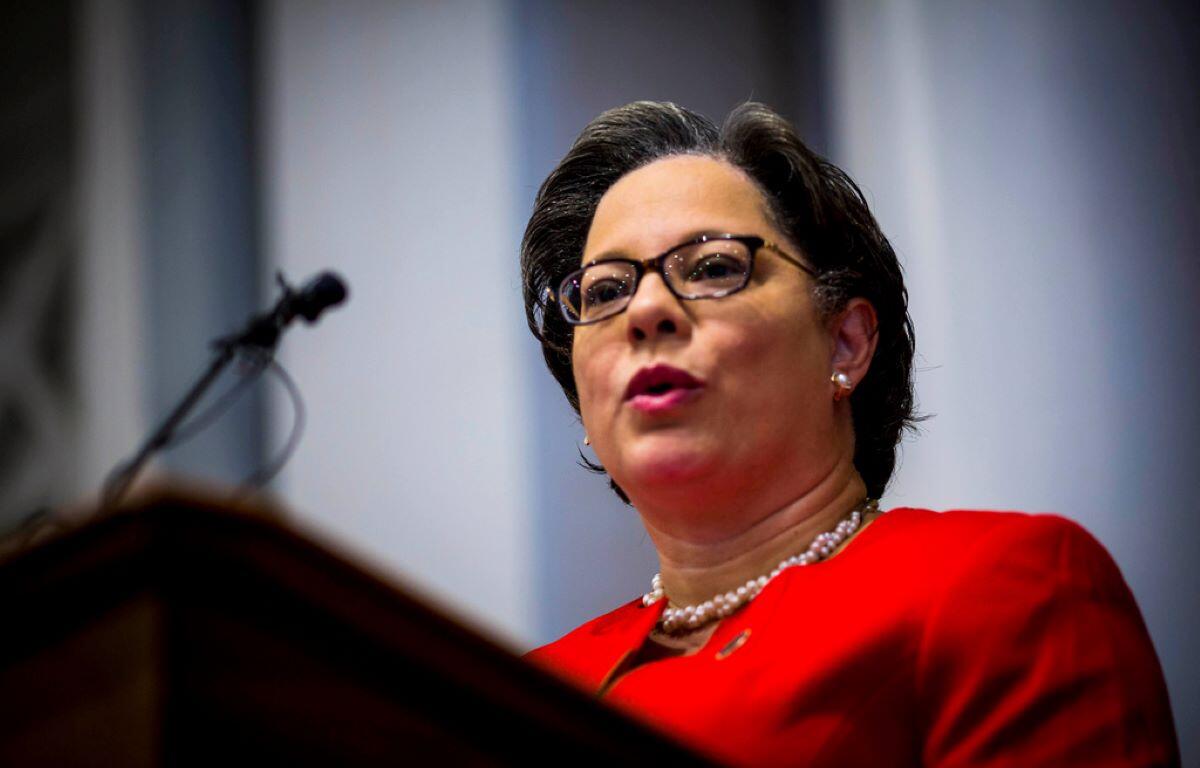
The panel was headlined by 4th District Rep. Jennifer McClellan and included Buller, Kenda Denia, the executive director of Birth In Color, Ashley Kenneth, the president and CEO of the Commonwealth Institute for Fiscal Analysis, and Katie Baker, Virginia state director for Protect Our Care.
McClellan noted the ACA improved access to care for pregnant mothers and protected people with preexisting conditions, and said that preventative and early care helped keep medical costs down in Virginia.
“As more Virginians gained health insurance, we saw health outcomes improve,” McClellan said. “Instead of working to build on this progress, my republican colleagues in congress chose to make over one trillion in cuts to Medicaid and the affordable care act in order to pay for billionaire tax giveaways for Elon Musk and Jeff Bezos.”
Signed into law on March 23, 2010, the ACA – sometimes referred to as Obamacare – was designed to improve access to health insurance by using the purchasing power of a large group of Americans, including small business owners and self-employed people, to open up affordable plans. It also capped insulin costs, protected people with preexisting conditions and expanded Medicaid.
There are also tax credits to lessen the cost of insurance premiums for people who get their insurance through the ACA’s marketplace. In January, with bipartisan support, the House voted to extend those credits. But the Senate has not yet followed suit, with Republicans blocking the extension.
The cuts to Medicaid go into effect on Jan. 1. The ACA tax credits expired in September.
“It is sitting in the Senate. They need to pass it,” McClellan said, adding that a bill to restore Medicaid cuts is also under consideration in the House. “This shouldn’t be a partisan issue because there are more people that Donald Trump won, states that Donald Trump won, who stand to lose their health insurance. This shouldn’t be a Democrat or Republican issue. It should be a bipartisan issue.”
Buller said she reached out to her Congressional representative, 5th District Rep. John McGuire, multiple times before and after he voted against the tax credit extension. She said her two phone calls were taken by staffers and she never heard back from McGuire. After McGuire voted against the extension, Buller she called the office again and sent a letter.
“I received a very formulaic letter back,” Buller said. “The gist was, he was doing his best to support the needs of his constituents, which was an absolute ridiculous response to me. It just does not feel like McGuire specifically has any interest in people like me.”
McGuire’s office did not respond to a request for comment for this article.
6th District Rep. Ben Cline told Cville Right Now the ACA has had a negative impact on patients.
“The Affordable Care Act was sold as a way to lower costs and expand choice, but for many Americans, it’s done the opposite. Families and small businesses are dealing with higher premiums year after year, while fewer plans are available on the individual market, often limiting access to the doctors they know and trust. In some areas, insurers have left altogether, reducing competition and pushing costs even higher,” Rep. Cline said. “Doubling down on a system that doesn’t work is not the answer. We need patient-centered reforms that increase competition, expand options, and bring down costs so Americans can afford and access the care they deserve.”
The issue figures to be consequential one in November’s elections.
Baker said Protect Our Care is planning a “seven-figure” digital ad buy to target Congressional representatives who oppose the extensions, including two Virginians, Rob Wittman (1st District) and Jennifer Kiggans (2nd District).