


 Listen Live

CHARLOTTESVILLE, VA (CVILLE RIGHT NOW) – The Albert and Shirley Small Collection Library at the University of Virginia is launching a new exhibition Tuesday, the second new exhibit it’s released in the past month.
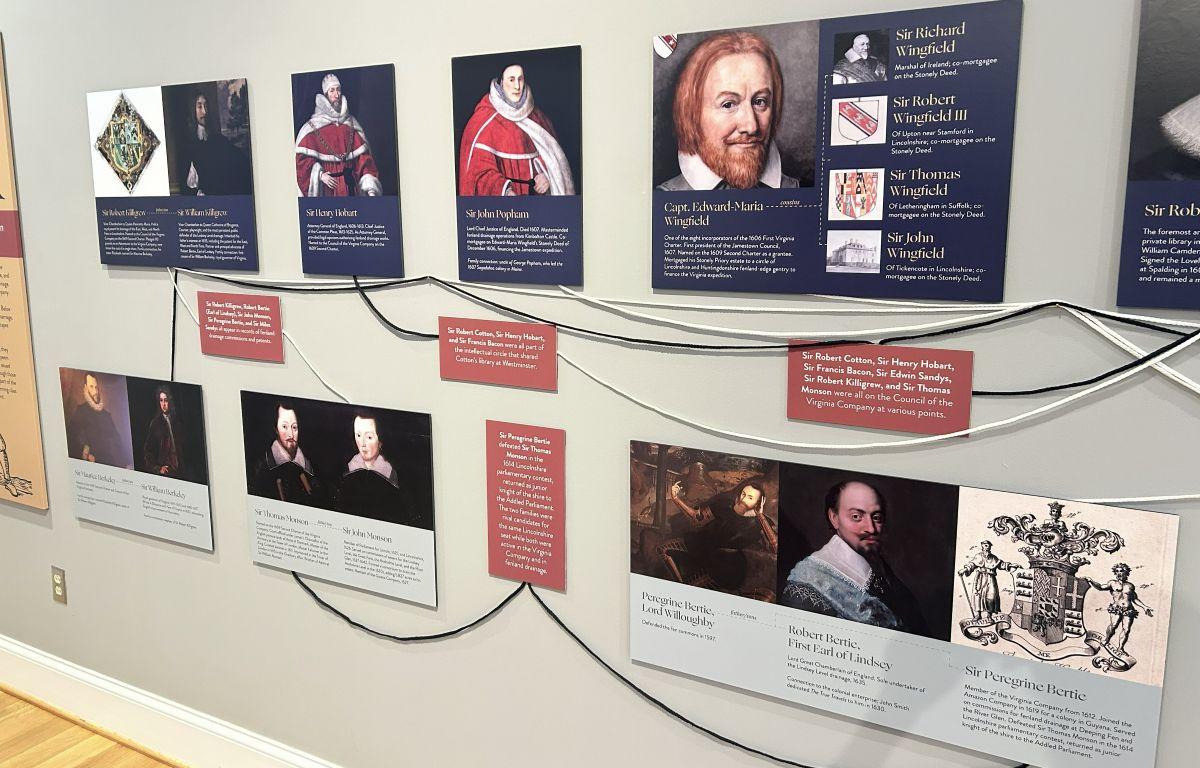
“Taming Waters, Transforming Worlds: Law, Land, and Belonging in Seventeenth-Century England & Virginia” is located in the library’s main gallery and explores the English Crown officials, landowners and colonial promoters who supported both the colonization of the Tidewater region of Virginia and the draining of the English Fens, an area of low-lying wetlands located in eastern England.
“This exhibition brings together these two worlds and asks, ‘What happens when one group’s notion of improvement comes into direct conflict with another’s understanding of land, right, and belonging?'” Stacey LeClair, the exhibit’s curator and a sixth-year Ph.D. candidate in UVA’s Department of History, told Cville Right Now.
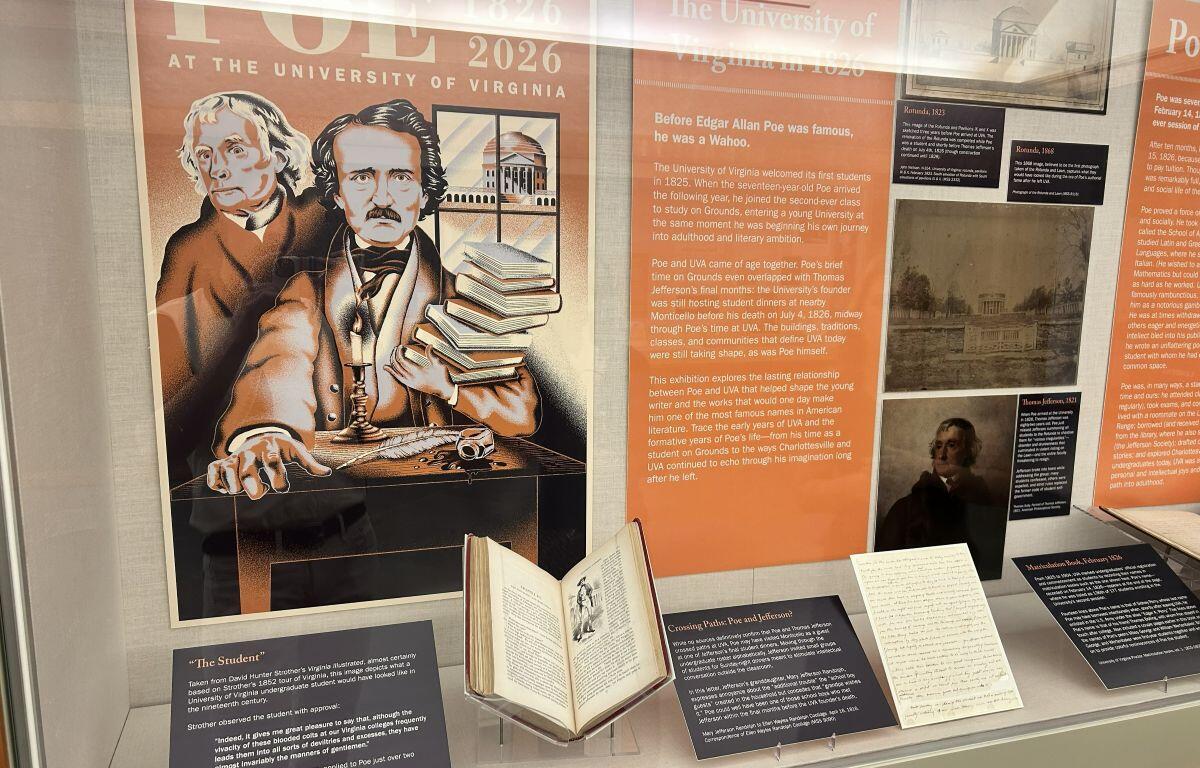
The library also added a new exhibition on Edgar Allan Poe last month in commemoration of the bicentennial of his time as a UVA student. The exhibit, titled “Edgar Allan Poe at the University of Virginia: 1826 | 2026,” explores Poe’s 10 months on grounds as a member of the university’s second-ever class, and is located on the library’s first floor and is part of the university’s “Poe at UVA” celebrations.
Assistant Professor of English and co-director of the UVA Reading Collaborative Christina Griffin told Cville Right Now the exhibit was just one piece of the larger project, which UVA has organized in partnership with the Jefferson-Madison Regional Library, the Poe Museum in Richmond, and UVA Lifelong Learning.
The celebrations also include professional development for Virginia teachers and several talks, book clubs and events.
“Every place that Poe lived likes to claim their own Edgar Allan Poe,” Griffin said.
Both exhibits feature artifacts from the library’s collections, but “Taming Waters, Transforming Worlds” also includes artifacts lent to UVA by the Pamunkey Indian Museum & Cultural Center, as well as commissioned works by Pamunkey and Monacan artists.
The exhibit ultimately aims to show how those who drove the colonization in the Tidewater region, at the cost of the Indigenous people living there, were the same people who eventually contributed to draining the Fens, forcing many of those who lived there out of the region.
While LeClair noted the consequences of Virginia’s colonization were “far more violent” for the Indigenous people living there, the connection with the English Fens does offer another perspective to the English colonizers of that era.
“I think what that says and what I hope this shows (to) people that come see the exhibition is that our notion of what the English were in the 17th century isn’t so black-and-white,” LeClair said. “That there can be people who benefited greatly from colonization and dispossession and displacement, while also people who were very similar to them, that looked very similar to them and spoke the exact same language … were affected in the complete opposite way.
“So, I think that this transforms our understanding of what it means to be English during this time.”
The new exhibit on Poe also aims to provide a unique lens to the history it covers, detailing how Poe’s experiences as a student at UVA shaped him, while connecting him to the experiences of students today.
“We’re interested in preserving the historical specificity of Poe and UVA in this moment, while also drawing connections where possible between the current UVA student experience and the current university,” Annie Persons, Leading Advising Fellow and lecturer in the College of Arts and Sciences, told Cville Right Now.
The exhibit on Poe opened on Sept. 23 and will remain open through April 9. “Taming Waters, Transforming Worlds” will also be open through June 4.