


 Listen Live
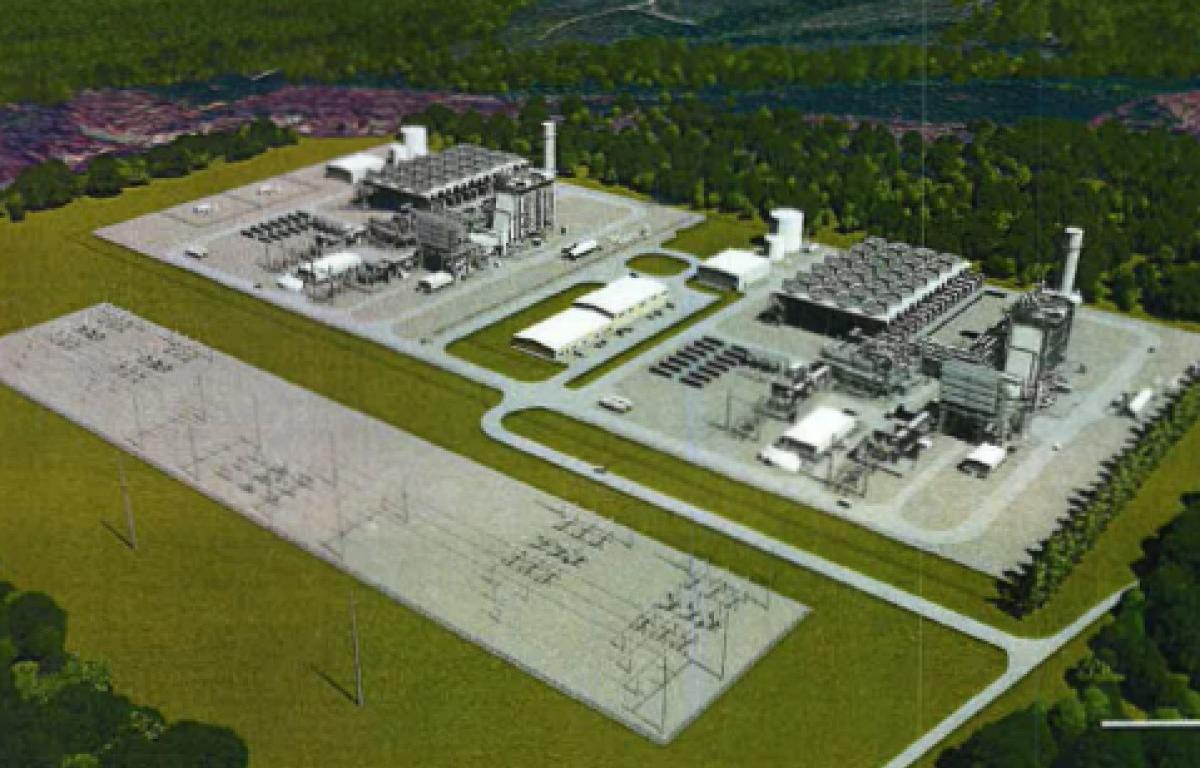

CHARLOTTESVILLE, VA (CVILLE RIGHT NOW) – Tenaska, the Nebraska-based company seeking to build a second power plant in Fluvanna County, will hold an open house Tuesday to address community concerns, an executive told Cville Right now. The informational session will be at Fluvanna County High School from 6-8 p.m. and will focus on Tenaska’s application for a Prevention of Significant Deterioration (PSD) permit from the Virginia Department of Environmental Quality (DEQ).
The company has distributed a flyer throughout the county encouraging residents to, “join us to learn about the environmental impacts associated with the Expedition Generating Station proposed for Fluvanna County and the Virginia Department of Environmental Quality’s permitting process.”
The event, which will include a presentation, a question-and-answer session and information stations on both air and water quality impacts, is a required part of the permit application process.
“We thought, ‘Hey, we’re bringing a fair amount of resources there for the air quality briefing, so while we’re there why don’t we broaden it more to include other environmental topics in more of an open house format,'” Larry Carlson, Tenaska’s Vice President for Environmental Affairs, told Cville Right Now.
Fluvanna Horizons has been monitoring and organizing opposition to the power plant expansion on Branch Rd., claiming it will cause significant health issues among residents not just near it, but in adjacent counties in Central Virginia.
One of the issues they had with a previous open house prior to the Board of Supervisors plant approval, Harris said, was there was no group presentation. She said it was small groups of people asking questions of individuals scattered at the event, where one couldn’t necessarily hear the questions others had asked.
“This is a specific kind of permit triggered by a specific amount of emissions,” Sharon Harris, one of the organizers of the Fluvanna Horizons coalition, told Cville Right Now. “We find that really interesting, from our perspective, because we heard from the developer, throughout, that all their emissions will be well below the federal standards and that they had a good record of keeping their emissions low and safe.
“We think this kind of interesting because this meeting is triggered because they applied for a PSD permit under the federal Clean Air Act, so they know that the emissions are going to be above the threshold of what is considered safe or permittable and the open house is a required aspect of the permitting process.”
“The agency will thoroughly review whether the plant can meet stringent air quality standards under the U.S. Clean Air Act.” Tenaska said in a statement. “These standards are designed to protect the most vulnerable members of society, including the elderly, children and people with asthma. Preliminary air modeling of both Expedition and the existing Tenaska power plant show the combined emissions of these facilities are well below the federal limits.”
Expedition will also be required to submit quarterly air emissions monitoring reports, semi-annual monitoring and deviation reports, annual compliance certification and annual emission inventory to DEQ, as well as quarterly Continuous Emissions Monitoring Systems data to the U.S. Environmental Protection Agency.
The 377-page application to the DEQ outlines emissions expected and plans to mitigate them according to Environmental Protection Agency (EPA) and DEQ standards.
“As part of the application, we have to do what’s called the Best Available Control Technology analysis, and that’s on a case-by-case, project-by-project basis and based on our uncontrolled emissions, we do that analysis and we get to an answer of this is what Best Available Control Technology should be,” Carlson said. “Over 95% of the entire emissions come out the two combined-cycle combustion turbine stacks, and so most of the control equipment is associated with those two systems.
“The primary ones are a selective catalytic reduction system for nitrogen oxides, and then an oxidation catalyst for carbon monoxide in volatile organic compounds, and we’ll have those in the presentation. Those act and perform very similar to a catalytic oxidizer on motor vehicles, so as emissions to through the catalyst they get oxidized to other inert compounds of mostly nitrogen, CO2, and water.”
He said that reduces emissions 80-98%.
The analysis also includes running systems at maximum efficiency, so as not to increase emissions, which Carlson said also is beneficial from a power production standpoint.
Carlson said the only option to avoid emissions further would be wind, solar or nuclear.
“And then nuclear is whole new ballgame that we did not consider as an alternative technology at this particular plant,” Carlson added. “Rule of thumb, most of the new wind turbines are, round numbers, about five megawatts each, so divide 1500 by five and that tells how many wind turbines would be needed.”
For solar, Tenaska Director of Communications Timberly Ross told Cville Right Now they calculated to have the same amount of output would take about a 50,000-60,000-acre solar field.
She also noted Expedition would have to provide power around the clock and wind and solar would not provide that power all the time.
“So, to get to the 100% capacity factor, you need essentially double the solar capacity and maybe even batteries to store excess generation,” Carlson said.
As for water usage, Tenaska announced last week that Expedition “is being designed as a dry-cooling facility, which reduces the combined-cycle power plant’s water needs by 85%.”
“This would be our first dry-cooled facility, even though it’s not a new technology. In fact, Dominion has several dry-cooled facilities in Virginia,” Carlson said. “We’re looking at that technology for all of our projects now because water availability is an issue.”
In its announcement about the dry-cooling technology, Tenaska said, “By using dry-cooled technology, Expedition‘s average water use is anticipated to be approximately 1 million gallons per day. Water will be sourced from the James River and treated prior to use for plant operations. Expedition’s needs are equivalent to approximately 0.03% of the river’s average flow.
“Water will be reused multiple times during the power generation process, minimizing consumptive use and discharge. Treated wastewater will be discharged into the Rivanna River. Average daily discharge is anticipated to be 0.8 million gallons, which is approximately 0.5% of the river’s average flow.”
The morning of the open house, Fluvanna Horizons issued a new statement about what they’re looking for.
“Since Fluvanna County approved the project’s Special Use Permit, public filings submitted to DEQ and the Virginia State Corporation Commission have described additional project infrastructure, including a new 500-kV generating facility switchyard, a new substation, approximately 1.8 miles of new 500-kV generator-tie transmission line, expansion of Dominion Energy’s Cunningham switching station, and related interconnection facilities,” the release said. “FHA says residents want to understand how those changes will be evaluated during DEQ’s air permitting review and what they could mean for local air quality before a permit decision is made. There are still significant unknowns, specifically regarding air quality and water impact during construction, as well as the need for necessary ambient monitoring.”