


 Listen Live
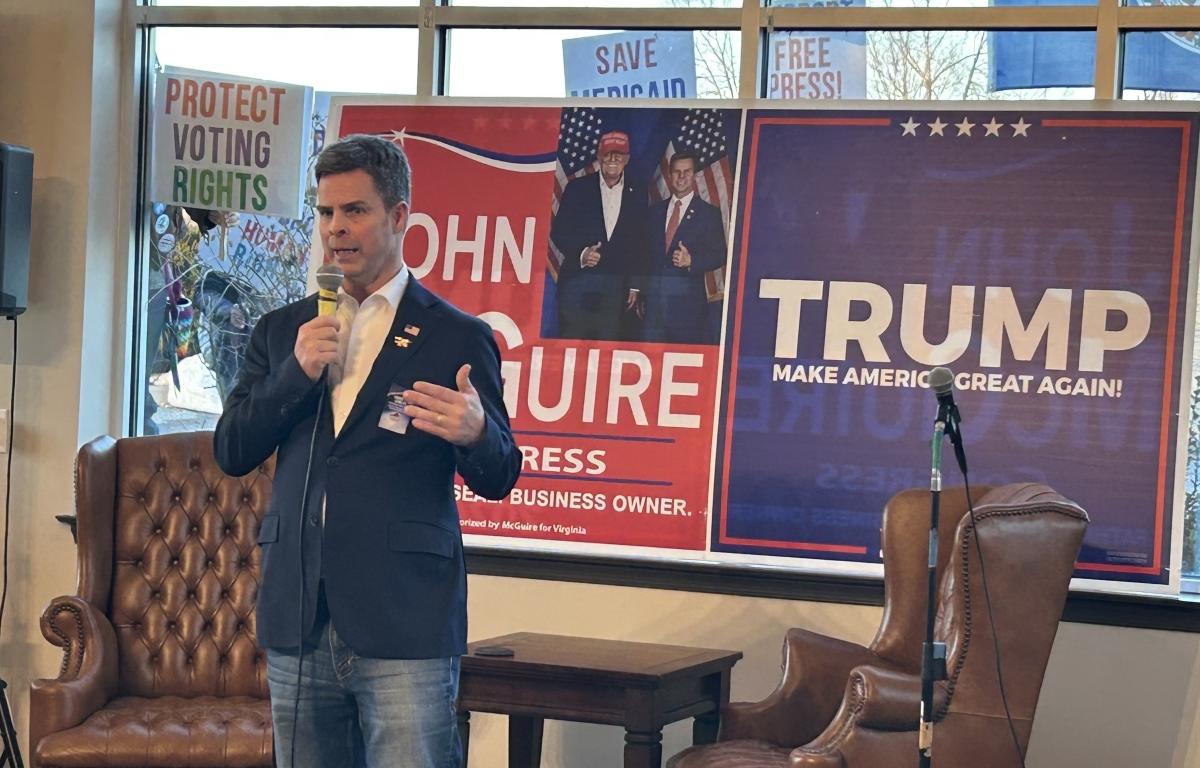

CHARLOTTESVILLE, VA. (CVILLE RIGHT NOW) — 5th District Representative John McGuire introduced the Riley Gaines Act to Congress, his office announced on Monday.
The bill is named after and crafted with help from Riley Gaines, the former University of Kentucky swimmer turned conservative activist. It would allow civil actions against high education institutions and athletic associations that “negligently or recklessly allow a biological male athlete to compete in female-only athletic competitions, resulting in harm to female athletes.” It also allows female athletes to sue for physical injury or other damages, such as a loss of scholarship or professional opportunities, and awards attorney’s fees to winning plaintiffs.
“Female athletes deserve to feel safe and protected in the sports they love,” McGuire wrote in a release. “Instead, they are at risk of serious injury and losing scholarships and professional opportunities due to the unfair advantage created by competing against a male in a female sport. The Riley Gaines Act puts protections in place, so the schools and athletic associations that allow males to compete in female sports are held accountable for their dangerous and reckless actions.”
Gaines first garnered national attention for her advocacy against trans athletes in women’s sports following her tying for fifth place against Penn swimmer and trans athlete Lia Thomas in the NCAA 200-yard freestyle championship in March 2022. Thomas went on to become the first trans athlete to win a NCAA championship in the 500-yard freestyle. Shortly after, Gaines began advocating lawmakers in her home state of Tennessee and went on to sue the NCAA alongside 15 other female athletes for allowing trans women in women’s sports in a suit named after her, Gaines vs. NCAA, in March of 2024.
“Riley Gaines is a trailblazer in the movement to protect female athletes and is the inspiration behind this bill,” McGuire wrote in the release. “It has been an honor working with her on this legislation. I am hoping common sense will prevail and we will keep our daughters safe while they achieve their competitive goals. Together, we will protect our female athletes.”
In the release, Gaines wrote that the bill was centered on holding institutions accountable and argues that if a biological woman loses out on a roster spot, scholarship or suffers an injury because an institution ” ignored biological reality,” there must be a path to justice.
“This bill doesn’t target individuals,” she wrote. “It holds powerful institutions responsible for the policies they choose to enforce. Women deserve fairness, safety, and equal opportunity. And if those rights are violated, they deserve their day in court.”
President Trump signed an executive order titled “Keeping Men Out of Women’s Sports,” directing federal agencies like the DOJ to ensure entities receiving federal funding interpret Title IX as prohibiting athletes from sports based on their gender assigned at birth in February 2025. A bill aiming to ban trans women from participating in school athletic competitions designated for females passed through the House of Representatives in January of last year but failed to pass the Senate two months in March.
NCAA President told a senate panel he was aware of less than 10 transgender athletes in NCAA schools in December of 2024. Following Trump’s executive order just two months later, the NCAA changed its participation policy for transgender athletes, limiting competition in women’s sports only to athletes assigned female at birth.