


 Listen Live
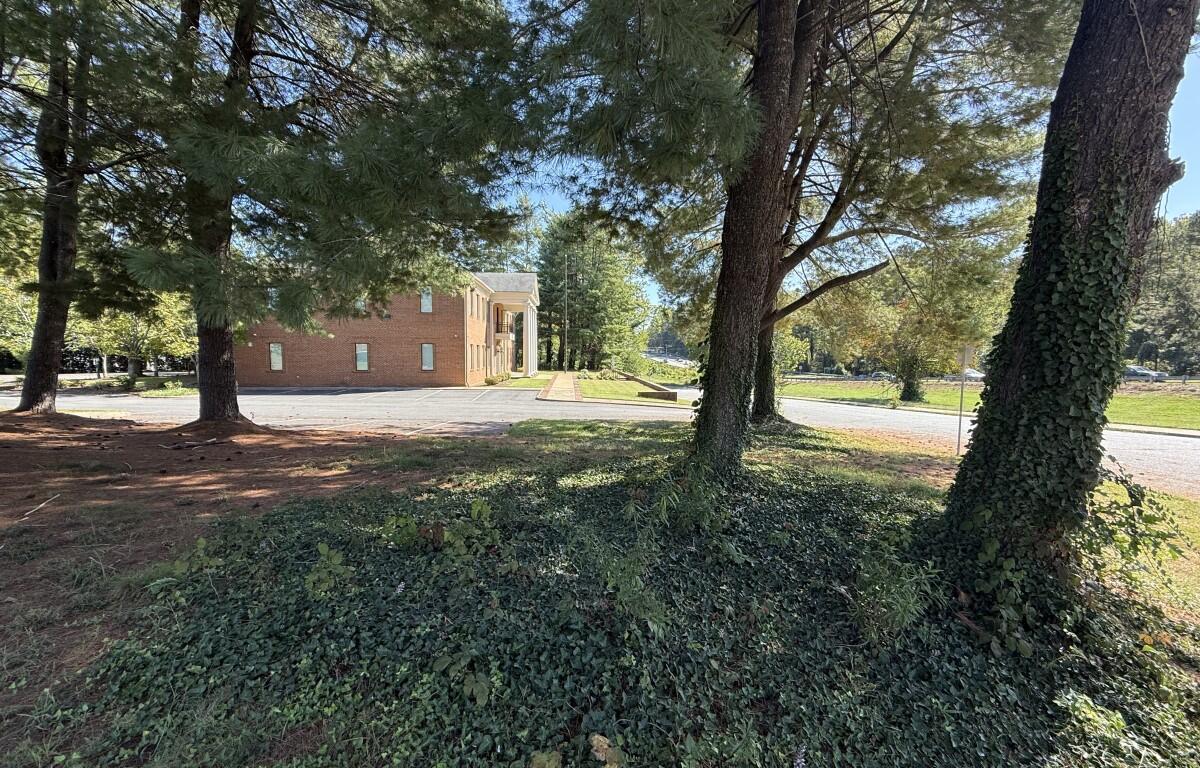

CHARLOTTESVILLE, VA (CVILLE RIGHT NOW) – The Low Barrier Shelter Working Group presented a 2000 Holiday Drive conceptual plan with a minimum 80 beds in a facility providing an array of shelter and support services in the building’s two floors and a basement, during a meeting with City Council on Wednesday.
Erin Hannegan, with Mitchell Matthews Architects and Planners, said the plan would cost $9.7-9.9 million. A downsized version of the project would run the city about $8.6 million.
“The programs will support day shelter services, coordinated entry, case management, housing navigation, and connections to health care and workforce supports,” said Blue Ridge Area Coalition for the Homeless (BRACH) Executive Director Shayla Washington.
The vision was put together over the past several months by representatives of BRACH, PACEM (People and Congregations Engaged in Ministry), and The Haven.
Washington said, “We really want to focus on expanding our housing programming as The Haven currently has homelessness prevention, housing navigation, rapid rehousing, the Laura Delapp Haven Housing Fund, which is a flexible housing fund.
“All of these programs ensure steady exits from shelter into permanent housing while strengthening the homeless response system within our community, and PACEM plans to increase its case management staff to provide housing navigation and potential outreach support as needed.”
Hannegan presented a floor plan with a kitchen and dining area, along with offices, and a small space that would have to be added to the existing building for a UVA Health clinic.
Hannegan noted the current clinic setup at The Haven is in the sanctuary and not ideal for patient privacy.
The Holiday Drive clinic design would provide for privacy and services within compartment spaces, and will have a small staff workroom and some storage.
She said the clinic is priced independently, “With the idea that maybe UVA Health would step in and assist with that portion of the program.”
The second floor is where the beds in rooms apportioned to men and women along with another room with beds for four transgender individuals.
Hannegan said the beds are in pods of 24 pods per room, and are about 3-feet apart from each other, “Which is tight, but acceptable, and improved conditions over what is currently happening at the PACEM sites right now.”
There’s also an isolation, some bathrooms, and a laundry, small lounges for men and women, and some office space as well.
The bedrooms for men are on one side of the facility and women on the other side with the lounge and office space in between separating the wings.
They’ll have to improve the stairway between the first and second floors and also install an elevator that has the size to carry a stretcher.
A partial basement is not occupiable in the current building, but the plan finishes the basement with offices, storage, and a meeting space.
Hannegan said the exterior of the building will need some changes with the stair access in front from the street elevation being made ADA-compliant.
She said there can be bus shelter for pickup and drop-off, and parking encircles the building to the west and north.
Outside, the tentative plan is for a park-like setting with bike racks, tables, and exterior storage lockers for clients who may have restricted access to the building but would still be able to get to their belongings.
She noted they are not able to accommodate all that has been requested within the existing space.
Left out of the floor plans is space for three offices, five workstations, one small conference or Zoom room, as well as a medium conference room.
“These are all preliminary estimates of the probable construction costs based on very early concept information, and should not be taken as the exact fixed price that this will be,” Hannegan said.
“That is typical of any design project that we work on.”
She said they’ve been unable to shave down any further savings.
“The primary reason is this is a heavier renovation, meaning that more of the existing fabric of the building is being torn out to accommodate the new condition because every space needs to be right-sized for exactly what that function is so that we’re not wasting any space in this building.”
The $9.9- to- $9.7 million price tag is reduced to $8.6 million because it reduces the new construction to accommodate the programs, but she said, “We’re actually increasing the renovation cost in the existing building.”
Mayor Juandiego Wade and Councilor Lloyd Snook expressed the desire to look into spending the higher amount for more beds, that Hannegan estimated at between 108 and 113.
“I’m looking at the big picture that on any given night, we have 220 or 230 persons don’t have a reliable place to lay their heads and I know many now are staying with family and friends, but it’s not reliable,” Mayor Wade said.
“I’m trying to see what the most bang we can get for our buck.”
Snook did some math saying, “If we have 80 beds for 8.6 million, that’s roughly $110,000 per bed.”
“If we’re looking at an additional 28 beds for an additional 1.2 million, that works out to a marginal cost of about 54,000 a bed, roughly half of the marginal cost of the first 80.”
Snook continued, “It would seem to me that it might be worthwhile following up… to shoot for the larger number.”
Hannegan also confirmed that if Council looked at the larger number, the programs that have to be left out would be able to be fit in with the more expansive new construction.
The larger estimates Hannegan noted were made back in November, so those costs could be different now.
The plan has not been presented to other surrounding localities, so the working group does not know what contribution or use they would elect.
BRACH, PACEM, and The Haven all said they will reach out to donors to finance the project needs.