Listen Live

CHARLOTTESVILLE, VA (CVILLE RIGHT NOW) – During a visit to Charlottesville on Thursday, Gov. Abigail Spanberger and Secretary of Agriculture Katie Frazier offered a preview of the “Farm and Forestry Prosperity Plan” the Governor is expected to unveil on Dec. 1.
“I think it’s extraordinarily important for us to have a real clear, unified view of what agriculture brings to our communities,” Spanberger said following an event honoring Virginia women in agriculture at Eastwood Farm and Winery. “Agriculture is Virginia’s No. 1 private industry. Forestry is No. 3. And so frequently, that can be disconnected from other sectors of our economy, from our economic development effort. So, for me, ensuring that through the Farm and Forestry Prosperity Plan we are looking at all the levers that we, as an administration, can be pulling on to support agriculture, yes, but in doing so, we are actually supporting Virginia’s economy and rural and agriculture communities across the board.”
Spanberger and Frazier told the audience the plan would aim to help Virginia farmers with labor, costs and technology, while also assisting them in breaking into new markets.
“We realized we had to have a plan that was going to focus on future prosperity for Virginia agriculture and forestry,” Frazier told the audience. “It really is a framework to be able to drive us for, not only the next four years, but our goal is that the next administration takes this plan and builds upon it. We want this to be durable for the future. We know that Virginia forestry and agriculture deserve to have a plan that really drives their prosperity in the future.”
Frazier noted that costs have made farming a difficult way to support a family. She said that when a gallon of milk sells for $4.11, less than 20% makes it back to the farmer. She said that while the current economy has made things worse, Virginia farmers have been dealing with this challenge for a long time.
“When we came into office, not only are our consumers and our citizens facing incredible difficulty putting food on the table and the impact of the tariffs and the global market uncertainty and increased food prices, and the food at the grocery store, but our farmers are, too,” she said. “And the reality is that our farmers have been for many, many, many years.”
Frazier also said the average age of a Virginia farmer is 58.3, an alarmingly high average and a threat to the industry’s future.
“We need the resources to be able to support that and be intentional about, as a state, how do we not only preserve our land but also provide the avenues to be able to transition that property and the operation to a new generation,” Frazier said. “That’s why the plan is so important. When Virginia farmers succeed, then every Virginian succeeds.”
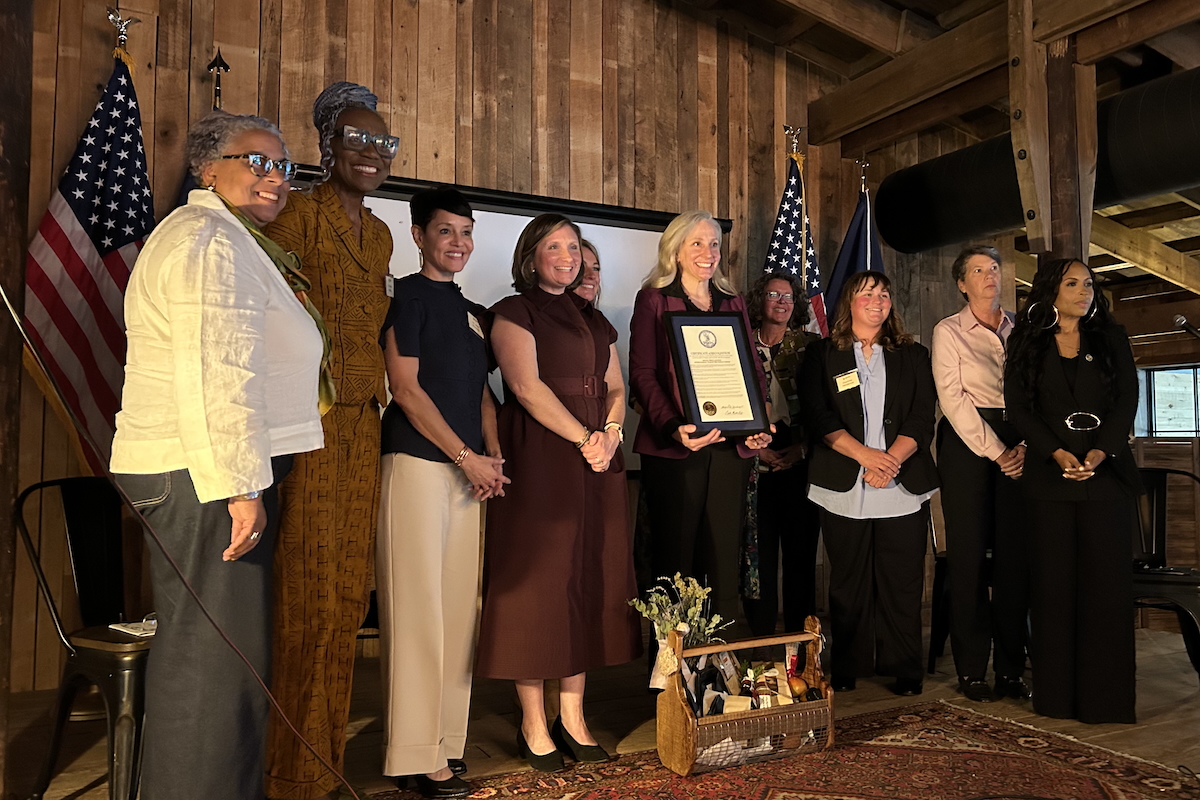
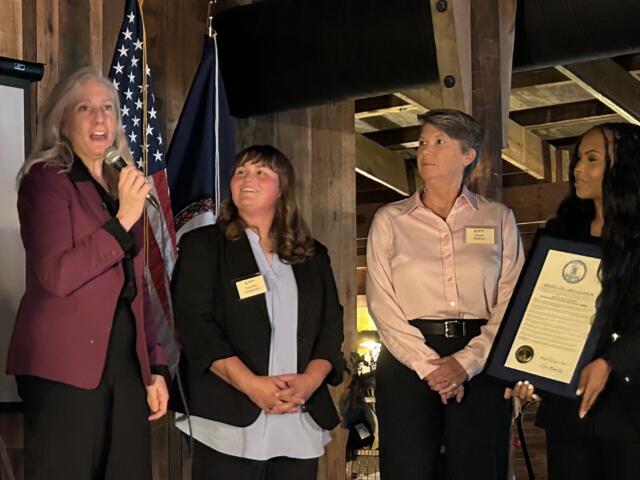
Thursday’s program opened with five women farmers from around Virginia sharing their stories during the program.
Dr. Patience Fielding of Esther Manor Farm in Hanover County spoke about her childhood in Cameroon and how it inspires her farm work.
“I grew up seeing women leaders,” Fielding said.
Courtney Henderson of Cave Hill Dairy Farm in Troutville grew up working the farm with her father and grandfather. The Virginia Tech graduate told the audience she is her family’s first female farmer.
“I break that mold,” she said.
Sarah Morton of Cattle Run Farm in Ruckersville emphasized the impact that local farmers can have in their community and for the country.
“Small farmers feed America,” she said.
Sarah Rogers of Little R Micro Farm told the emotional story of continuing her work while dealing with the loss of her home to a fire earlier this year, balancing her roles as a wife, mother and farmer.
“There is no single definition of a woman in agriculture,” she said.
Susan Watkins of Watkins Farm in Dinwiddie County told the crowd that no farmer wants to lose the family farm on their watch. She said she’s driven to make sure her son – an eighth generation farmer – will be positioned to successfully continue the farm’s work.
“It’s in your blood,” she said. “It’s a passion.”
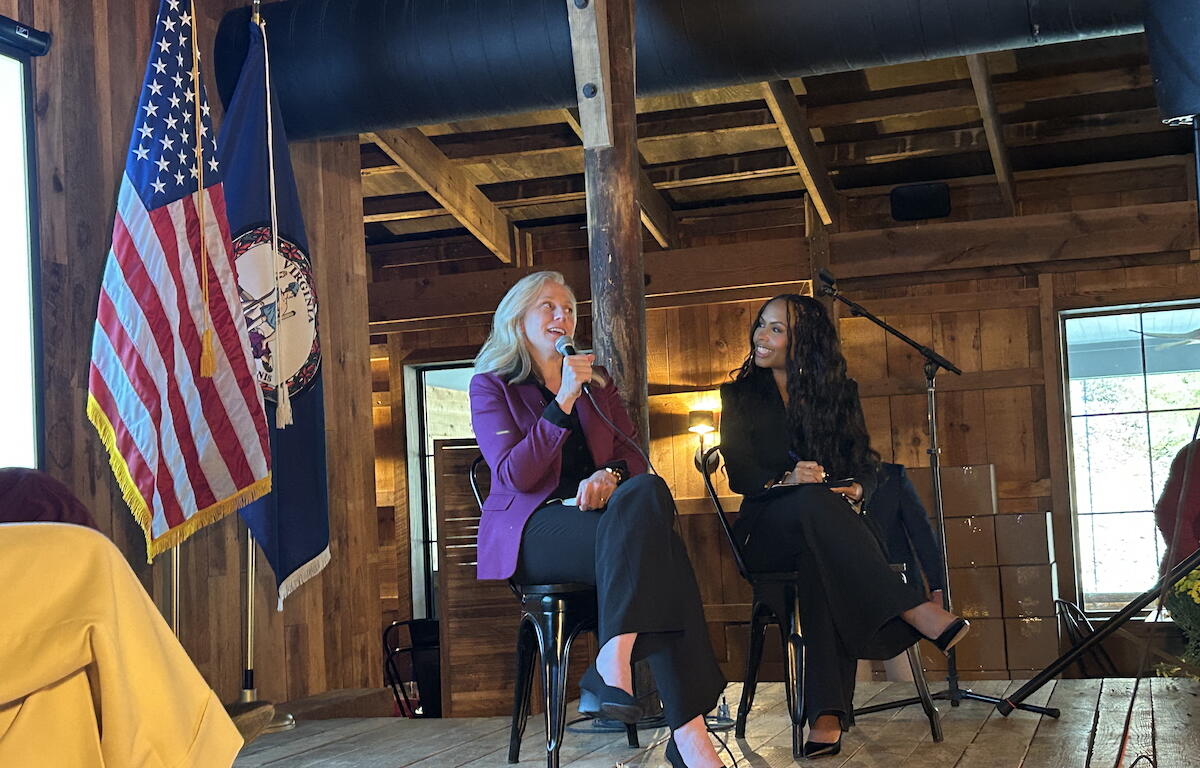
After that, Spanberger took the stage, joined by Frazier and Dr. Jewel Bronaugh, the Dean of the College of Agriculture at Virginia State University.
That trio answered questions from moderator Dr. Sesha Joi Moon, Virginia’s Director of Diversity, Equity and Inclusion.
Spanberger talked about becoming an advocate for Virginia’s agriculture industry during her time in Congress, representing the 7th District and serving on the Agriculture Committee.
“I never had any sense or idea that I would ever do anything related to agriculture, at all. I was focused on national security. I was focused on counter-terrorism. I was focused on narco-trafficking,” Spanberger, a former CIA case officer, said. “It was really having the incredible opportunity of spending time on people’s farms, in people’s homes, talking about the issues that really mattered to producers, but also to the entire economy across rural Virginia, or agriculturally focused Virginia.”
In 2023, she championed the Butcher Block Act, bipartisan legislation designed to support small and medium meat processors. Elements of the bill were eventually put in place by the Biden administration.
“Farmers across my district desperately wanted this bill,” she said.
Spanberger said, as governor, she’s continuing her work to help Virginia’s agriculture industry.