


 Listen Live
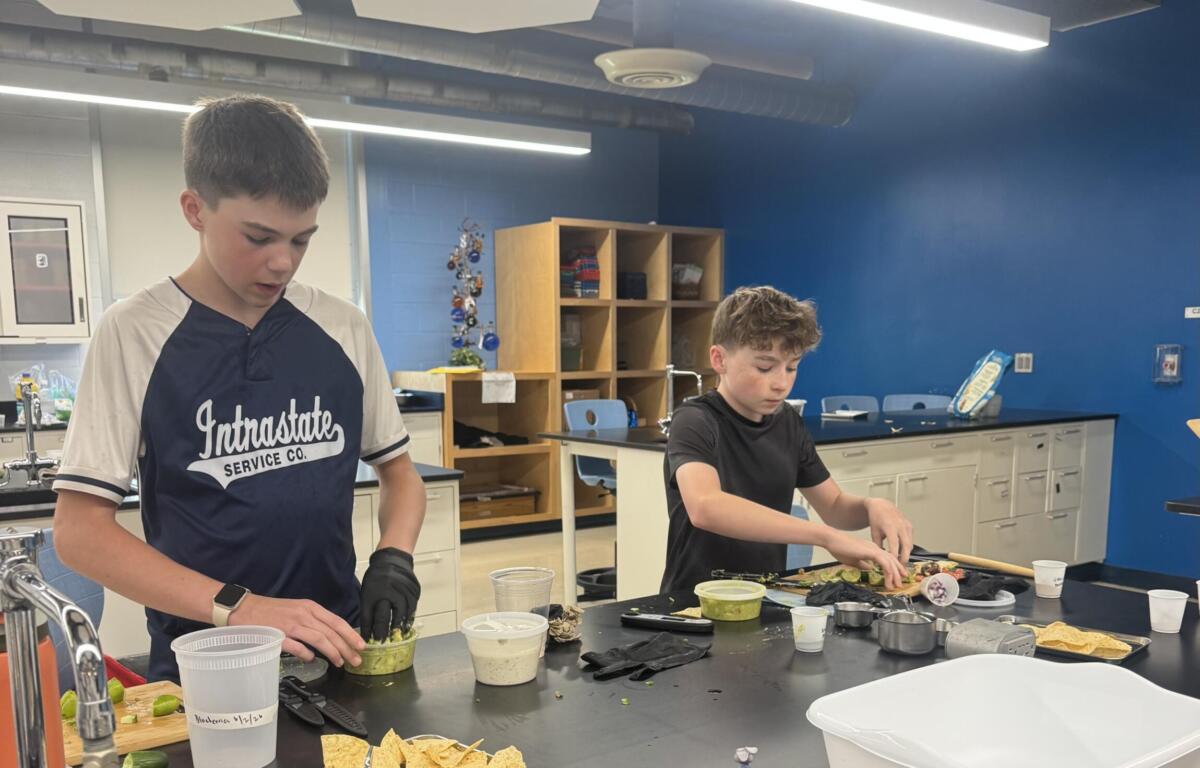

CHARLOTTESVILLE, VA (CVILLE RIGHT NOW) – At Charlottesville High School (CHS), middle school students have spent the past week exploring futures in STEM with FutureWorks Learning Labs day camps.
Offered for students in fifth through eighth grade, FutureWorks labs are taught by instructors from Charlottesville City schools, and encompass topics ranging from environmental engineering, food science, and water pressure to encourage students to explore science and consider future career paths.
Cat Buchanan, Science Learning Facilitator for Charlottesville Middle School (CMS), noted FutureWorks helps students explore more specific areas of science through experiments they often do not have the time or resources for during the school year.
“They still hit the standards that we need to teach, but in a more creative, inventive, eye-catching way,” Buchanan said.
With seven labs offered and approximately 10 students assigned to each, students engaged in different STEM topics before assembling their final projects, building radios, rockets to launch and solar cars, among others.
Teachers from CMS and CHS led the labs, with special guests and guest speakers coming in to tell students about their careers and how they aligned with the topic of the lab. Beekeepers, vegetable farmers, pilots, and executive pastry chef of Farmington Country Club Charles Zimmerman all contributed to student’s knowledge of a range of future careers where STEM is fundamental, even in unexpected ways.
“We’re showing kids jobs that might not be seen every day,” food science lab instructor Daisy Collins said. “It’s been really cool to see them feel more empowered.”
FutureWorks also sought to engage younger students at CMS and Walker Elementary School, as well as students and teachers not typically engaged in science learning.
“The high schoolers have a lot more opportunities to do this… and we’re trying to reach the grades five through eight,” Buchanan said. “Let’s try to get the kids that don’t get (those) opportunities.”
Erica Isler, an 8th grade CMS student in the “Radically Radiant” solar energy lab, found that the program encouraged her interest in engineering and helped familiarize her with CHS as an incoming ninth grader.
“When it comes to learning the basics, I feel like it was very (easy to understand),” Isler said. “I really think I want to do this in the future.”
In deciding on topics to offer, emphasis was placed on topics that allowed for hands-on learning and experimentation, and instructors then designed curriculum introducing students to the subject and showing how it applies in the real world.
The camp’s final day on Thursday marked the culmination of these real-world applications, with food science students trying out their homemade guacamole and the “STEM in Sports” lab testing out their cardboard and Styrofoam helmets, melons standing in to model heads.
“(Students are) always wanting to catch things on fire, they always want to cook,” Buchanan said. “They love to tinker with things, so we try to do that and then teachers ran with it from there.”
The camp was made possible by a grant from the Virginia Department of Education for Charlottesville City Schools, which Buchanan hopes will be provided for the following year. If held next summer, the camp will be relocated to CMS after the school finishes an ongoing $91 million renovation, with reopening set for the 2026-2027 academic year.
“(In the school year) you don’t have time to make these cool solar cars,” Buchanan said. “It’s all science forward, science first, but it’s finding the ways that science is in everything.”