


 Listen Live
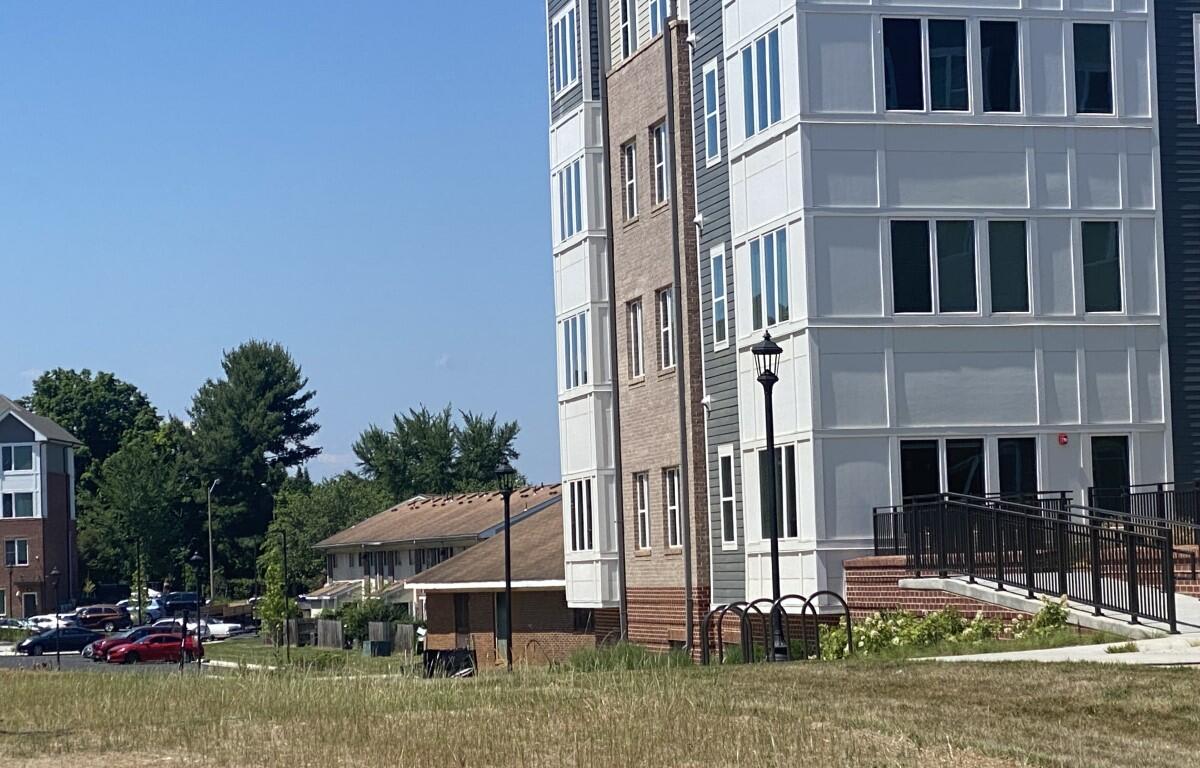

CHARLOTTESVILLE, VA (CVILLE RIGHT NOW) – The Kindlewood project, a multi-year redevelopment of the former Friendship Court neighborhood, will be scaled back due to rising construction costs and questions over the value of tax credits, Charlottesville City Council determined Monday.
Originally planned to be 425 units in 2018, it will now aim for 385. No councilors objected to the revised plan during Monday’s meeting.
City Councilor Jen Fleisher told WINA Morning News the developer is adjusting to the reality that “the barriers are just really high, and a lot of them unexpected.”
“There are multiple factors including how we apply for the tax abatements … in order to execute this project, beyond the fact that the building material costs have changed and we’ve had an administration that has had changes in all the logistics and policies that make these projects possible,” Fleisher said Tuesday morning. “The ask was really, ‘Hey, the world has changed since we made this plan. If we provide fewer units with a very similar proportions of the lowest income accomodations can we still move forward?”
Piedmont Housing Alliance Executive Director Sunshine Mathon, who’s overseeing the project, came before Council Monday night saying they’re at a crossroads as they plan the fourth and final phase, and were coming to receive guidance.
He noted the city has already committed $4.5-million from the Capital Improvement Plan (CIP) toward Phase 4, and he believes with that and leveraging other financial resources, they will be able to build an additional 90 units in that phase.
However, to build the additional 130 units in the phase to bring the total up to the 425, the city would have to invest $5.2-million additionally from the CIP.
“We knew that we had a long road of hard work and creativity, we’re going to need creativity to persevere because it’s a really, really complex project structurally, financially, etc.,” Mathon told the council. “But what we didn’t know is we had a two-year pandemic in the middle of it, we didn’t know there would be historic escalation in construction costs like nobody’s seen in decades, we didn’t know there would be a historic increase in interest rates that added millions to financing costs in that period, we also didn’t know HUD was going to de-designate the having previously been qualified census tract to no longer having that, we didn’t know the extent of the reams of red tape to get HUD funding approval, we also didn’t know there would be massive upheaval in this last year in the federal administration that has created all kinds of uncertainty to very risk averse funders and lenders, and we couldn’t have predicted the green-building funding that had started to blossom and manifest would all be withdrawn and retracted.”
Mathon said what he hadn’t discussed publicly before Monday night’s Council meeting is a reduction in the value of Low Income Housing Tax Credits (LIHTC) which were 91-cents per dollar through the projects Phase 1, 81-cents through Phase 2, and an estimated 75-to-80-cents for Phase 3.
He does not know what that tax credit will be throughout Phase 4.
“Each penny equates to about $150,000-to-$200,000 of actual equity that goes into support construction,” Mathon said. “So between 91-cents a dollar and 81-cents between Phase 1 and Phase 2, that’s a-million-and-a-half to two-millions that disappears in a moment. … What we can project for Phase 4, we have to be conservative in that projection, which means there’s just less revenue, less source, going into supporting the affordability we want to achieve,” Mathon said.
Mathon showed for the 90 units of Phase 4, they can apply for two 9% awards.. and that would be really hard though he handicapped a 9-out-of-10 chance of that being granted.
For the 130 units, they would need to apply for three of those which has not been granted in recent program history.
“Two would be really hard, but three would be really, really, really hard,” Mathon said.
The building would have to be taller and square footage would increase from 11-to-14-thousand square-feet for the 90 units to 13-to-16 thousand square-feet for the 130.
Mathon showed the city CIP commitment of $4.5-million adequate for the 90-unit project, though he also noted a $1-million gap.
But for the 130-unit project, an additional $5.2-milion would be needed in addition to the $4.5-million, and Mathon’s not even sure still if that project would be successful because of the unpredictability of the current federal Administration over the next few years it will take to complete the phase as well as the predictability of financing.
“The one really important question in this calculus is if Council is going to commit another 5-million, is an additional 40 units at Kindlewood the most efficient and best use of those resources, I would personally argue ‘no’,” Mathon said. “I would argue you get better depth of affordability and better bang for your buck if you use those 5-million at a different project at a different time, whether it’s one of ours or somebody else’s.”
All the Councilors gave their go-ahead to the reduced number, with Michael Payne saying, “I think the reality is, particularly when you have an intervening event as extreme as the pandemic, and with the complexity of the project, we have to be willing to be flexible and adjust to reality on our end as you have on your end in finding new financing strategies.”