


 Listen Live
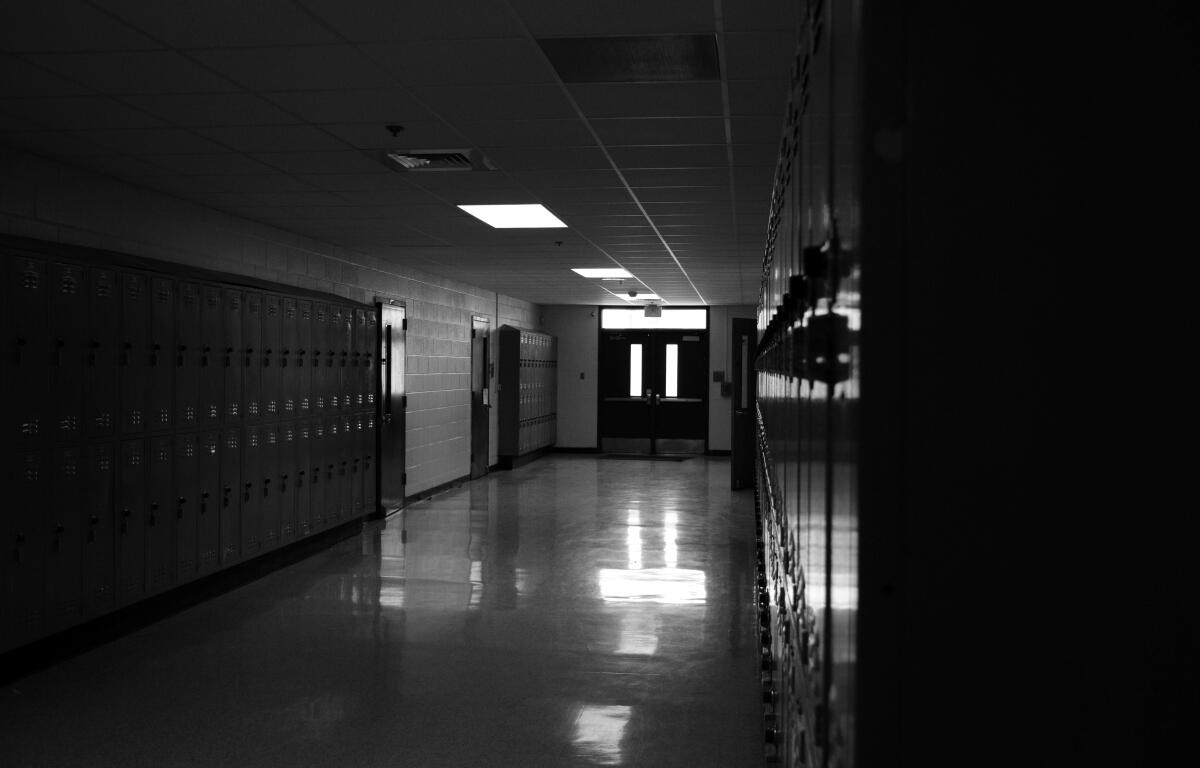

CHARLOTTESVILLE, VA (CVILLE RIGHT NOW) – When a gunman shot his way through a rear door of a Waynesboro elementary school earlier this month, it triggered a multilayered response. The school went into a lockdown, police, fire and other first responders were dispatched to the scene and the school division began coordinating communications and, eventually, a reunification plan for students and their families.
In Albemarle County and the City of Charlottesville, school, police, fire and other emergency responders have worked exhaustively to be ready in case a school shooting or other mass-casualty event occurred.
“I don’t know if anyone is truly 100% ready for this event because of how complex and fluid it’s going to be,” Albemarle County Fire Rescue firefighter Chris Hein, who works with the department’s training, told Cville Right Now. “But having run this program for a few years and seeing the progress that we’ve made, I feel pretty confident that our response would be good. We have good plans in place.
“But like anyone will tell you, best case is I do my 25 years here, and I never respond to one of these events, and we never do anything more than just train for it.”
The first and one of the most significant lines of defense against a school shooting, officials agree, is awareness. In the case of Westwood Hills Elementary in Waynesboro, the shooter was spotted outside of the building before he forced his way in, helping speed up the response for staff to lock down the building. Once inside, the gunman shot and wounded one staff member before taking his own life.
“See something, say something is a big part of our culture. We talk about that a lot,” Charlottesville City Schools Chief Operations Officer Kim Powell told Cville Right Now. “That see something, say something goes hand in hand with situational awareness, and it’s hard to overstate the importance of that.”
The Westwood Hills incident was one of over 40 school shootings so far in 2026, according to CNN’s cross-referenced database of incidents reported by the Gun Violence Archive, Education Week and Everytown for Gun Safety.
From 2016-2025, there were 1,957 school shootings, according to the David Riedman K-12 School Shooting Database.
Preparing students and staff
Even as more and more schools add School Resource Officers, police officers assigned to school buildings during the day, the people taking the first action in the event of a school shooting are most often teachers and staff. County and city school staff receive training from law enforcement and conduct lockdown drills to make sure everyone knows the appropriate response protocols in the event of such an emergency.
One of the things Powell said has evolved in the years since the school division began conducting those type of drills is an emphasis on being nimble and adaptive.
“Originally, when lockdown drills were introduced, it was very much a rote practice where you shut the door, you turn off ringers on phones, you stay quiet, you pull blinds,” Powell said. “Now, a lot of school divisions moved beyond that. You work with your community to have more situational awareness and not just practice things in a rote manner. You teach everyone in your school community to be more situationally aware and respond based on the specifics of any given circumstance.”
That includes the possibility that a drill will be conducted while a class is at recess or lunch, or even during morning drop-off. Powell said City schools also allow time after drills for teachers to talk to their students about why they’re doing what they’re doing.
“It’s different information for different levels,” Powell said. “That was put into the hands of all of our teachers so that when they’re doing their lockdown drills, they’re able to make a decision to also go beyond the drill and use that time to have discussion, at an age-appropriate level with their students.”
Interagency coordination key
Hein said communication between various agencies responding to a mass-casualty event is vital. In the case of school shootings, police and fire departments and school divisions, as well as other locality services, all have roles to play.
That’s another reason that training and coordination is so important in preparedness.
“Everything from the initial response, to our officers going in and assessing a threat, to the aftermath of that. What does that look like?” Charlottesville Chief of Police Michael Kochis said. “To communications. There’s a lot of pieces when you talk about, especially a school shooting. You’re going to have the national media here within hours, or less than that. So, we have to be prepared for all of that and how we handle an incident like that. But for us, we train regularly just to make sure that our officers know what to do when they respond to something like that. And that is: show up, stop the killing, start the healing. That’s what you’ve got to do, in that order.”
Hein said that’s one of the reasons annual training with the Albemarle County Police Department is so helpful.
“At the end of the day, this is really their event,” Hein said. “We are just there to assist them. However, they understand their role, which is to get in and stop the violence and make it safe enough for us to get in as quickly as possible to start treating casualties. And that’s a lot of communication right there.”
Rescue Task Force speeds up care for victims
While firefighting already carries the inherent dangers of entering burning buildings, the mass shooting response presents a new kind of threat. First responders have a better chance of saving lives if they can get to the victims quickly. Increasingly, that means entering buildings or scenes that have not been fully cleared by police.
Hein and Kochis said the county and city use a Rescue Task Force, where specially trained first responders can go with police and get to victims sooner.
“A medic will go in with our officers,” Kochis said. “You’re not waiting for the entire school to be cleared. Once medics get there, the second team of officers will link up with a medic or fire personnel, and they’ll start going in behind them and start addressing all those other issues.”
Hein said the Rescue Task Force model came about after the 1999 Columbine High School shooting. Around 2008, Arlington County pioneered an approach “which allows fire and EMS personnel to operate in what we call the warm zone. That’s an area that law enforcement has kind of been through and deemed safe for us to come in with protection and start treating casualties as quickly as possible.”
ACFR personnel begin training for mass-casualty events during recruit school, Hein said, with Tactical Emergency Casualty Care, “two days of medical training specifically designed for these types of events.” A third day is devoted to Rescue Task Force training, where recruits learn about specific “policies, procedures and protocols” in Albemarle County.
That preparedness work continues once they’re officially part of ACFR, with yearly Rescue Task Force training, collaborating with law enforcement and other relevant agencies and an annual drill.
Not just schools, not just shootings
Emergency personnel train for more than just school shootings. Hein said they label the situations “active threat hostile events” and those can include shootings, stabbings, bombings and even cars being rammed into crowds. They can occur at schools, entertainment venues, shopping centers and outdoor spaces.
“Really, this model is for any sort of active threat response where there are people in a bad situation that has to be remedied and that need care,” Hein said.
Still, school shootings hold a uniquely terrifying space in America’s gun violence epidemic. According to the nonprofit Sandy Hook Promise, since the 1999 Columbine shooting, over 390,000 U.S. students have experienced gun violence at school.