


 Listen Live
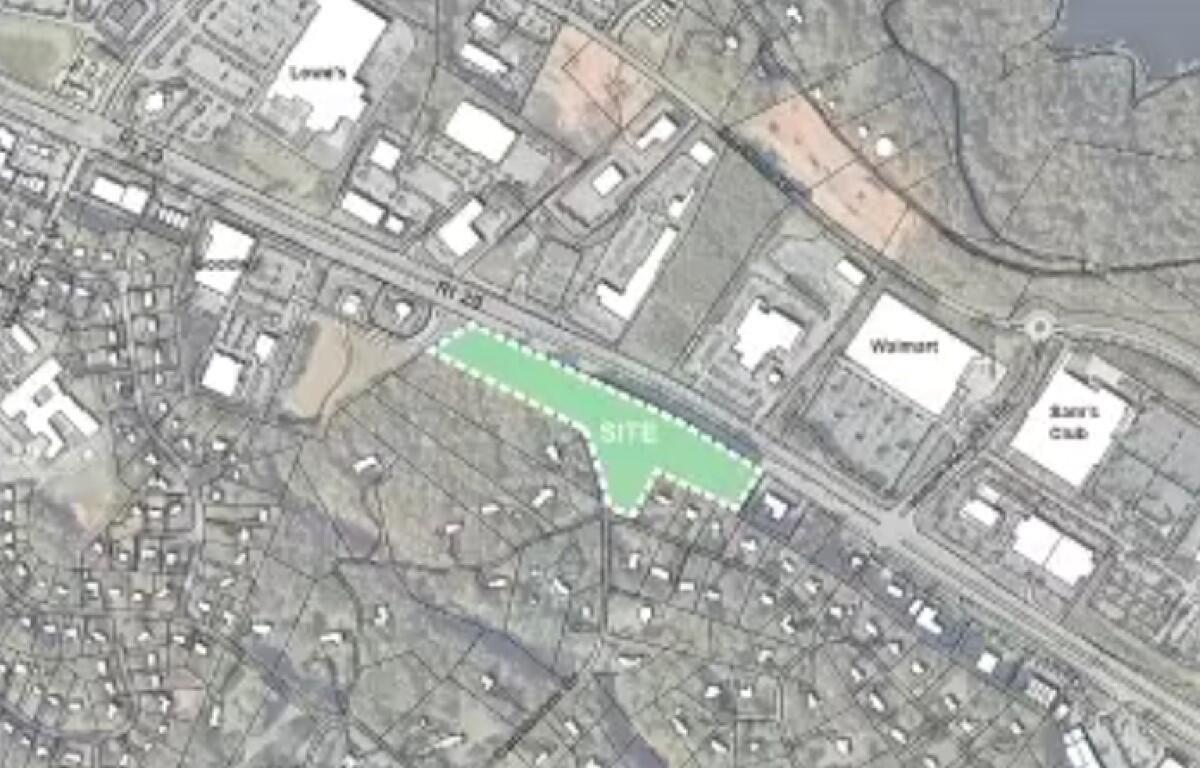

CHARLOTTESVILLE, VA (CVILLE RIGHT NOW) – The Albemarle County Board of Supervisors will decide the fate of the 237-unit proposed North Gander residential development off Carrsbrook Dr. near the Route 29 intersection, a project that did not gain the endorsement of the county’s planning commission.
The Planning Commission recommended denial of the application by a unanimous 5-0 vote, with Chair and at-large Planning Director Luis Carrazana absent. The vote came after opponents of the project packed Tuesday’s meeting at Lane Auditorium, with dozens speaking out against the development.
Residents speaking at the meeting spoke of concerns that the developer did an insufficient traffic study relating to sight distances and speeds of traffic approaching the two proposed development entrances off Carrsbrook Dr. Other cited questions of the legality of constructing multifamily structures on land the state Supreme Court had ruled must be preserved for single-family structures and concerns the North Gander development would adversely affect lakes and streams in the Rivanna River corridor.
But proponents of the project note it will add 237 units to a housing market that needs more inventory, and that up to 48 of those will be affordable housing, up to 60% AMI for rental or 80% AMI for sales, which is 20%.
Speakers brought up what they deemed as flaws in the applicants’ traffic studies, which they claimed vastly understates speeds vehicles will approach at the North Gander entrance points off Carrsbrook in relation to sight lines to Rt. 29 and the other direction up a hill on Carrsbrook.
“The applicants’ … study calculated a sight distance of 200 feet for the southern entrance using an artificially low 20 mph measured at the point vehicles were just completing their turn from 29 north onto Carrsbrook Dr. at the edge of an ongoing construction project and during a holiday week,” said Dean Wenger, chair of the Carrsbrook Homeowners’ Association and 30-year real estate professional. “(Virginia Department of Transportation) standards, however, require using the posted speed limit of 25 miles per hour as the minimum baseline to ensure public safety, and using the posted speed limit, the required sightline distance is 280 feet, not the applicant’s 200 feet.”
Wenger noted the HOA commissioned an independent study by engineering consultant Kimley Horn.
“Their findings exposed severe sightline failures at the northern entrance as well,” Wenger said. “Based on real world percent 85th percentile speeds of 33 miles an hour, VDOT standards require a sightline distance of 368 feet, not the applicant’s 240 feet.”
Scott Collins of Collins Engineering represented the developers at the meeting.
Collins said the developers have tried to engage the community and provide changes based on numerous traffic studies and concerns expressed by residents.
“We didn’t have to do it, but we did to try to help figure out what their concerns were and what the issues really were,” Collins told the commission. “They go out and do a different traffic study report and never once sent it to me. Didn’t hear about it. The only way I know about this traffic study is I read it online with my staff report on Monday. And the traffic study’s based on speed limits, current speed limits. It’s not even based on VDOT information, it’s not an approved traffic study. The posted speed limit is 25 miles an hour in this location, and urban street section will help abide by that street by that speed limit.”
Collins, in his presentation about the project, outlined crosswalks, sidewalks, and a 10-foot shared use path along Seminole Trail and Carrsbrook Dr., elements he described as an urban street structure.
“Urban street sections will slow down traffic,” he said. “They will provide pedestrian amenities such as walking paths, pedestrian multi-use pathways, sidewalks, street trees, buffering the pathway between the road and the pathway. That will slow down the traffic on Carrsbrook Dr., activating the roadway.”
Other speakers, including Linda Hitt with the homeowner’s association, spoke of concerns about the impact on the lakes and streams that are part of the Rivanna River corridor.
Judy Reigel, another member of the homeowners’ association, presented adverse affects from a South Gander development with what she said was the dirt and debris destroying Kuhn’s Lake near that development in a 13-year span.
Collins responded to these concerns as well.
“As far as DEQ regulation, as far as storm water management, DEQ regulations, environmental impacts, this site will absolutely meet the current standards of DEQ regulations as far as erosion control, storm water, and everything else,” he said. “It’s only it’s 7-acre site, this is not a 50-acre development or 100-acre development, all the sediment will be controlled and monitored by DEQ.”
Joe Mason said he and his wife have lived in Carrsbrook for 31 years. He noted that deed restrictions on the parcels in question prohibit the type of buildings the developer is planning. Mason reminded the commission that the Virginia Supreme Court upheld the validity of the deed restrictions in 2004.
“If the request for high density residential is approved, this essentially promotes a commercially operated development which is in violation of settled state and county laws,” he said. “It’s naive of the county to disregard the law and put the residents in a position of having to enforce the law.”
Prior to discussion, Jenny Tavendale with the county attorney’s office advised on that legal matter.
“The county cannot and does not enforce private restrictive covenants and the count the commission here is tasked to evaluate is the land use application against our current zoning ordinance, the comprehensive plan, and the other criteria that we have set out when we are looking at a rezoning and the land use application before you,” she said. “If there are any conflicts in the rezoning with the covenants that would be enforced as a private civil matter.”
Planning commissioners were less cut-and-dry about the other issues in the application.
“I do think that given the contradictory information that we’ve heard about the transportation infrastructure that’s proposed in these reports, I think it’s important to get that worked out in order to approve this to go forward,” said Scottsville District Planning Director Catherine Brown.
Rio District Planning Director Nathan Moore said he favors more multifamily structures as a way to bring more housing, and more affordable housing, to Albemarle County. He said to accomplish this, some neighborhoods have to change. He noted, though, he lives in Raintree after once living in Woodbrook and has walked along Carrsbook and neighborhood streets..
“We need to be able to crossroads like Carrsbrook or even 29 without feeling like we’re playing Frogger with our lives,” he said.
Before the vote, Vice Chair and and Samuel Miller Planning Director Karen Firehock explained the commission’s role advisory in nature, and the matter will be decided by the Board of Supervisors at a date to be determined.