


 Listen Live
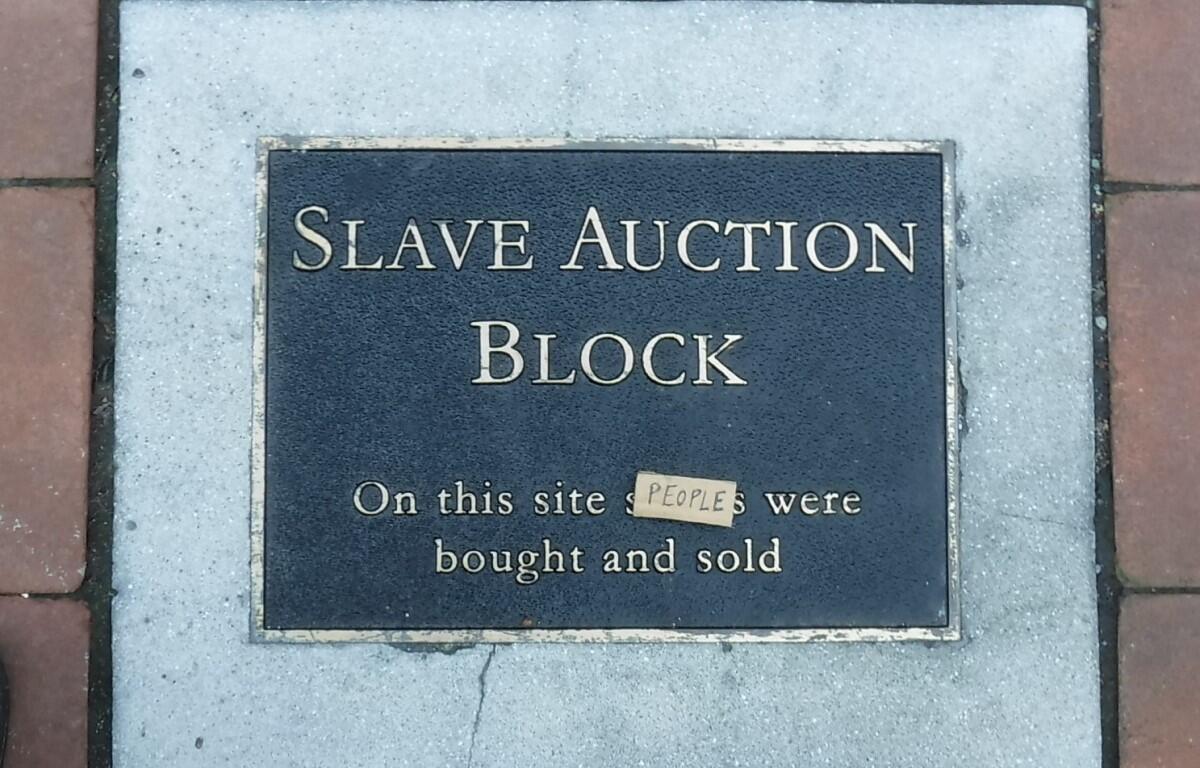

CHARLOTTESVILLE, VA (CVILLE RIGHT NOW) – Charlottesville City Council rejected plans for a historical marker at 0 Court Square, siding with the findings of the Historic Resources Commission that there was insufficient historical evidence that specific location was the site of slave auctions.
Instead, City Council voted unanimously Monday to approve a substitute resolution by Councilor Lloyd Snook.
“Now therefore be it resolved by City Council that City Council declines to authorize the installation of the requested marker,” the resolution read. “City Council suggests that consideration of any further signs or memorials in the Court Square area be undertaken as part of a plan for Court Square that will accurately reflect the complete history of Court Square including the sale of enslaved people in and around Court Square.”
The Historic Resources Commission submitted a paper last month, stating that, “No credible evidence has been identified or provided to support the concept that a dedicated slave auction block existed within the Courthouse Square vicinity.”
“The apparent theory that an auction block ever existed began with circumstantial second-hand accounts compiled by Mary Rawlings in her 1942 book,” said the statement. “No first-hand primary resource accounts have been identified that mention the presence of a slave auction block.”
The document noted sales of enslaved individuals unquestionably happened in the 1820-1865 period to which the marker would refer, but the sales actually happened in various places throughout Court Square and not at any designated slave block.
“HRC concurs with the view that the brutal reality of sales of enslaved people in Charlottesville and Albemarle County must be kept alive in the collective memory,” the statement said. “HRC is committed to fully, accurately, and formally disseminating the terrible legacy of Charlottesville’s slave trade. We note, however, that the current CSEM proposal is not an historically accurate means to this end and may serve to limit the broader story of enslavement at Court Square.”
Councilors also noted, including Mayor Juandiego Wade who said he likely had ancestors who were sold on Court Square, they received emails over the weekend from descendants of enslaved communities at the University of Virginia as well as the Jefferson School “(making) it clear they did not endorse this”.
Among the individuals for the Court Square Enslavement Memorial Group is Richard Allan, an Albemarle Co. resident who pleaded guilty in July 2020 for removing a temporary plaque that was placed on the sidewalk that he considered the placement on the ground disrespectful and called for a more appropriate commemoration.
Group members maintain the block did exist, and Allan contends an HRC subcommittee of eight black descendants who approved the sign unveiled in 2025 commemorating various locations of slave sales also acknowledged a block.
The CSEM group submitted a 20-page refutation to the HRC’s report.
“They (the HRC) approved the marker to read in part, according to tradition slaves were sold on a tree stump,” Allan said during public comment. “They’re validating here an oral and inherited family story. Ten days ago, current HRC leaders sent you a packet that says there’s no credible evidence that a dedicated auction block ever existed in the vicinity of Court Square. Essentially, they tell you they no longer accept according to tradition memory.
“Councilors, please help our group understand this contradiction,” he said, noting that the city attempted three times from 2003 to 2020 to install a commemorative auction block plaque.
Councilors Lloyd Snook and Natalie Oschrin suggested the parks master plan includes public artwork that will be commemorative, and Oschrin suggested there will be a public arts commission that will include memorials.
“That will give folks an avenue in which to request, suggest and approve various types of installations,” she said. “The Historic Resources Commission is already in that role for providing the fact and figures that I assume the arts commission will also use. So, we already have a group that has done extensive homework, and we’ve tasked them with this mission, and so I think it’s my duty here having reviewed both long documents from the groups to trust the folks who we’ve recruited to do this work.”
Wade said Council needs to be deliberate in what they approve.
“As city leaders we must be diligent in our decisions,” he said. “Our decisions on matters like this are permanent, or at least last for decades.”