


 Listen Live
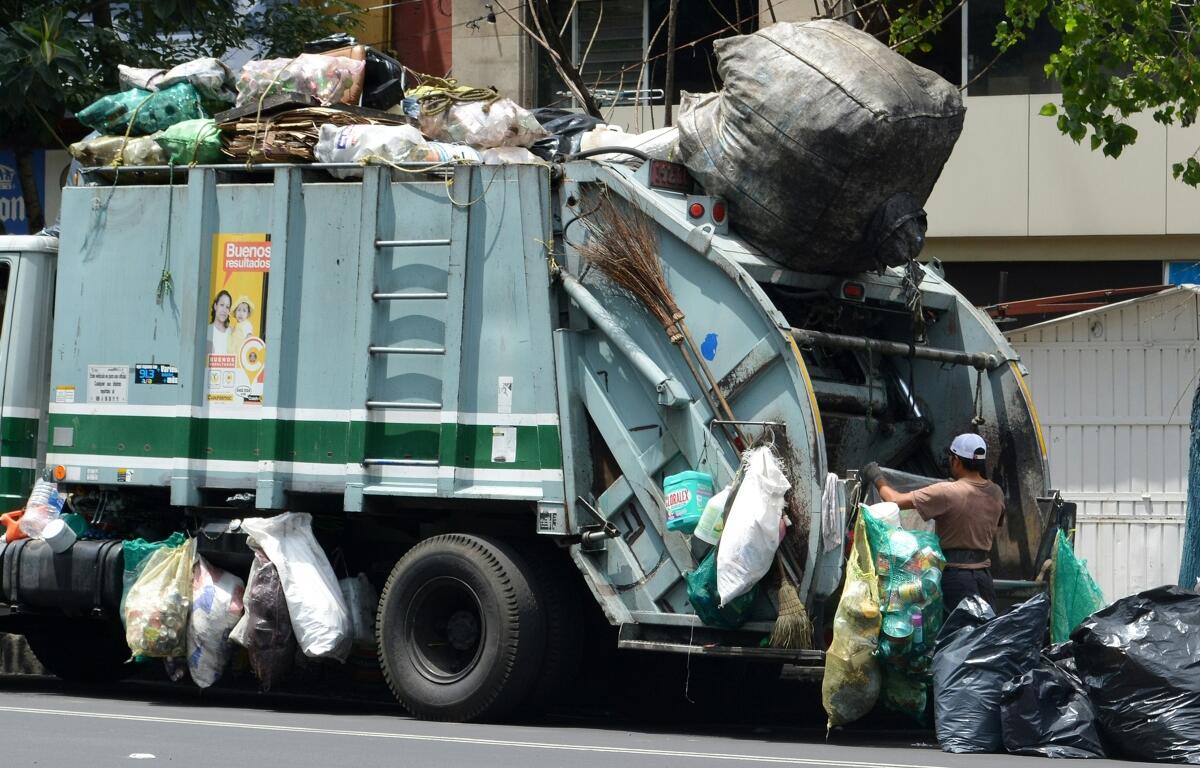

CHARLOTTESVILLE, VA (CVILLE RIGHT NOW) – Charlottesville’s public works director was front and center in Monday afternoon’s City Council report section presenting a cheaper way to handle the city’s trash collection, and a more efficient way to remove snow and ice this coming winter.
Could the city take over trash collection?
“Direct control would improve accountability, responsiveness, and long-term cost management,” said Steven Hicks, Public Works Director, talking about the city taking over the trash collection operation.
Hicks’ plan employs eight operators and one equipment technician, and puts four trash trucks on routes with one in reserve, beginning in April 2028.
The cost of the city operation would be about $730,000 in lieu of paying GFL $1.3 million.
Initial costs will be $1.3 million to purchase the trucks in 2027, recruiting staff from Sept. through Dec. 2027, training employees in Jan. and Feb. 2028, conducting dry runs in March, and beginning the service in April.
“The contracted model served the City for many years,” Hicks said. “Private collection costs increased while customer sticker rates remained largely unchanged. The current GFL collection contract is approximately $1.3M annually.”
“Current analysis indicates City-operated collection can provide greater control at an estimated recurring collection cost of $730K annually,” said Hicks.
And at $1.4 million, Hicks said, “Current revenue is sufficient to cover in-house trash collection and disposal.”
That said, Hicks recommended, “A modest rate adjustment after approximately 15 years without a comprehensive review that will preserve the pay-as-you-throw structure.”
The recommendation is increasing the small sticker price from the current $1.05 to $1.20, and the large sticker from $2.10 to $2.40.
Real estate and rent relief customers would maintain free trash pickup, as those on need-based Social Security.
“Virginia DEQ has secured a nearly $2.5 million settlement in a draft consent order with Microsoft for violations of air regulations at Microsoft’s data center in Leesburg.
DEQ is accepting public comment on the draft order until Oct. 14.
According to the state DEQ, during a power outage, the data center used its emergency diesel generators to power the facility for multiple days and, in doing so, violated state air pollution laws and its DEQ air permit.
The consent order, which will resolve Microsoft’s violations, is intended to capture the profit that accrued to Microsoft when it continued to operate the data center after it had exceeded its permit limits.
The settlement includes $99,000 to be paid into Virginia’s Environmental Emergency Response Fund, and a $2.4 million Supplemental Environmental Project (SEP) to enhance air quality monitoring near data centers in Virginia.
“This is just a presentation of a report,” City Councilor Natalie Oschrin said Tuesday. “No vote has been put on the agenda yet.”
A new plan for snow and ice
While the Jan. “snowcrete” storm presented challenges for all localities, Hicks outlined improved snow and ice mitigation in the city.
“We’re going to move into neighborhoods sooner and greater emphasis will be placed on mobility across all modes,” Hicks told Council. “The operational phases and expectations will be clearly defined.”
A significant improvement, he said, will be the use of street monitors who will be able to see the actual conditions on the roads.
“Coordination with schools and transit will be stronger,” Hicks said. “Designated school bus stops will be coordinated within this winter plan so we can improve the bus stops.”
He noted the city is not promising bare pavement immediately following a significant storm, but it does plan to have more areas accessible.
They’ll be moving equipment into the neighborhoods earlier in advance of a storm, and they will also clear more usable transportation space “rather than simply following previously established wheel patterns,” according to the presentation documents.
“Primary and auxiliary routes will continue to receive first operational attention,” Hicks said. “These routes provide critical access for emergency response, transit, schools, and the highest volumes of traffic.”
The plan is not just for roads, but also includes clearing sidewalks, with ADA accessibility in mind, and bike lanes with Safe Routes to Schools receiving some special attention.
“We’re trying to build out our volunteer shoveling program earlier than last year,” Oschrin told Morning News. “Last year kind of came together last minute, and the United Way helped and bunch of teenagers got out to help shovel, which is great.”
This year they’re trying to formalize that earlier.
“Every year it feels like we’ve gotten a more beefed up and improved snow management plan, and then every year winter says, ‘We’re going to test that theory.’ So, this is definitely the most robust one we’ve seen so far,” she said.
Hicks noted the city has purchased a new snowplow that can work in tandem with a dump truck, allowing crews to remove snow from a scene more efficiently.
The city has 165 personnel with 76 pieces of of vehicles and equipment ready for snow operations this coming winter, according to Hicks.