


 Listen Live
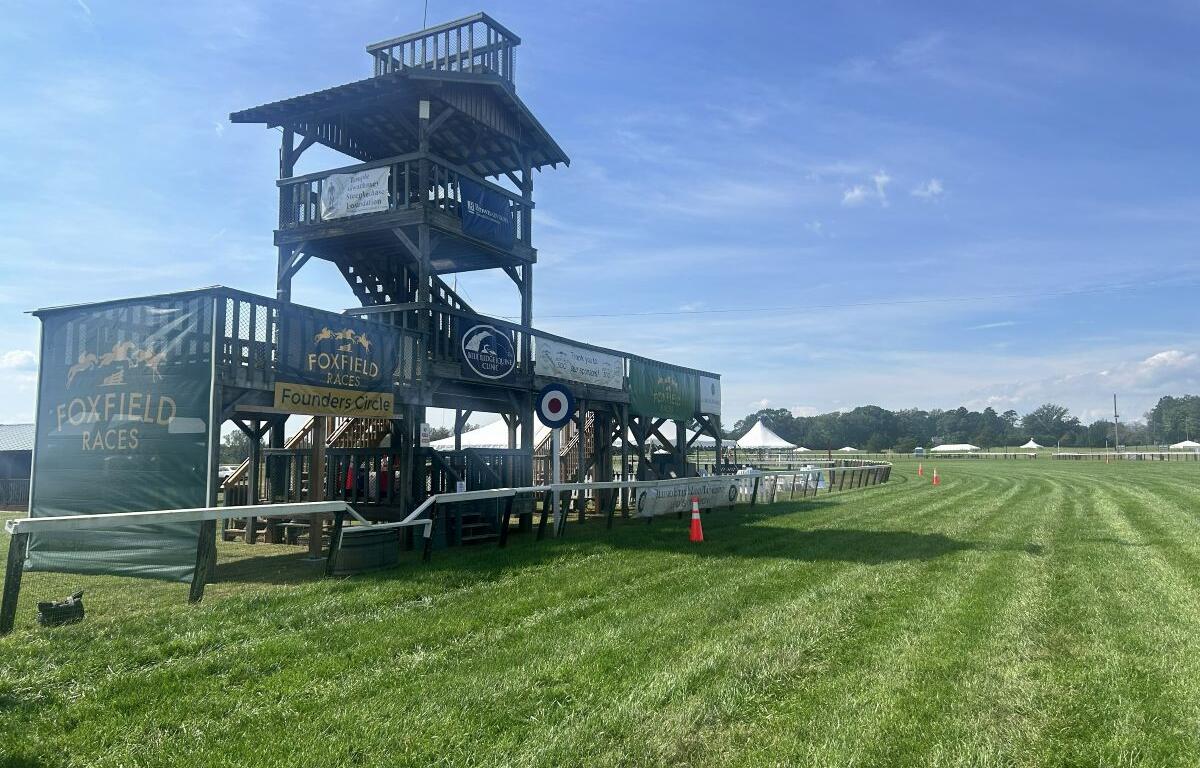

CHARLOTTESVILLE, VA (CVILLE RIGHT NOW) – With a legal battle looming over the future of the historic property, Foxfield Racing, the company that runs the track’s races, is well into its preparations for the track’s fall races on Sunday.
This weekend’s races have arrived just a month-and-a-half after Foxfield Racing filed a lawsuit against the track’s owners, Foxfield Land Preservation, in Albemarle County Circuit Court, in an effort to force the track’s owners to sell the property to the racing company.
Since then, safety concerns about the racetrack have become crucial arguments in Foxfield Land Preservation’s countersuit, which was filed on Sept. 23, and the organization’s claims that the track was unsafe for riders and spectators alike were first brought to the public’s attention by co-founder Zach Miller’s letter to the Charlottesville community, sent on Aug. 21.
But on Friday, hours after the National Steeplechase Association’s regular pre-race inspection, Foxfield Racing board member Dr. Reynolds Cowles once again maintained that the course was safe for all involved.
“This course is very safe,” Cowles told Cville Right Now. “It’s safe for people, it’s safe for horses, it’s safe for riders. This is jump racing, so incidents can occur, horses may fall. We do everything we can do to minimize that happening and the effect thereafter.”
The NSA conducts its inspections before every race day, and are not only present, but are in complete charge of the races themselves. After each race, the stewards of that day’s race complete an assessment, in addition to an analysis by the NSA Safety Committee to cover any issues that may have occurred.
Cowles is Chair of the NSA Safety Committee, and fellow Foxfield Board Member Jack Sanford serves on the Steward Advisory Committee. Both were on hand for Friday’s inspection.
“We walk around the entire course, check every fence, every safety rail, cones, beacons. Everything that’s gonna involve the races on Sunday,” Sanford said. “And (we) had a great inspection.”
And after every race day, Sanford said the process of maintaining the course for the next one begins just one day later.
“There’s a lot of work to put the racecourse back, it’s expensive too, to put it back in shape, to see what you got here today,” he said.
Cowles said the lawsuit has not impacted Foxfield Racing’s operations, which have remained “very standard.”
“We’ve made all the repairs that we deemed necessary over the last six years, and we continue to do that,” he said. “Anything that is needing repair, we do that.”
Cowles pointed to the track’s observation tower as a “perfect example,” as it has gone through “considerable upgrades and maintenance” over the past five years. Miller focused on the observation tower as an example of the track’s safety issues in his letter, stating the structure had shown signs of deterioration, swaying back-and-forth with just one person on the upper decks.
Miller also highlighted the track’s wooden railing as a concern, highlighting how the track has a single, wooden rail separating the horses from spectators, that Miller claimed Foxfield Racing has “allowed to deteriorate and rot,” growing concerns that it might collapse under the weight of spectators.
He also raised concern over the metal wiring on the fence, asserting it could prevent a rider from jumping out of the way of oncoming horses in the case of a fall. These concerns raised by Miller stemmed from multiple structural engineering reviews and a race safety assessment by the independent Horseracing Integrity and Safety Authority, which he said were brought to Foxfield Racing.
Cowles and Sanford both defended the use of a single wooden rail, asserting that it is standard practice for steeplechase racing.
“The standard steeplechase meet has a wooden rail,” Cowles said. “Most of them are vertical. Ours are slanted slightly to be able to give that rider (more space), move that horse off a little bit, so that if a rider does fall, he’s got a little bit of room.”
Sanford added that a month ago, the staff at the course started the process of checking every checking every single post and board, calling the railing “a constant maintenance item.”
The two also shared the track’s process for measuring the compaction and moisture of the turf to ensure the safety of the horses and their riders. Sanford said he and Cowles had pushed for these practices to become standard in the NSA, which they since have, adding to their confidence in their procedures at Foxfield.
“I feel like Foxfield has raised the bar for everybody as far as course maintenance,” Sanford said. “We did a seminar here a couple of years ago. All the other race meets came here, they looked at our equipment, they looked at our procedures and studied what we were doing. And they’ve taken that to heart now, and they’re doing this all over the country.”