


 Listen Live
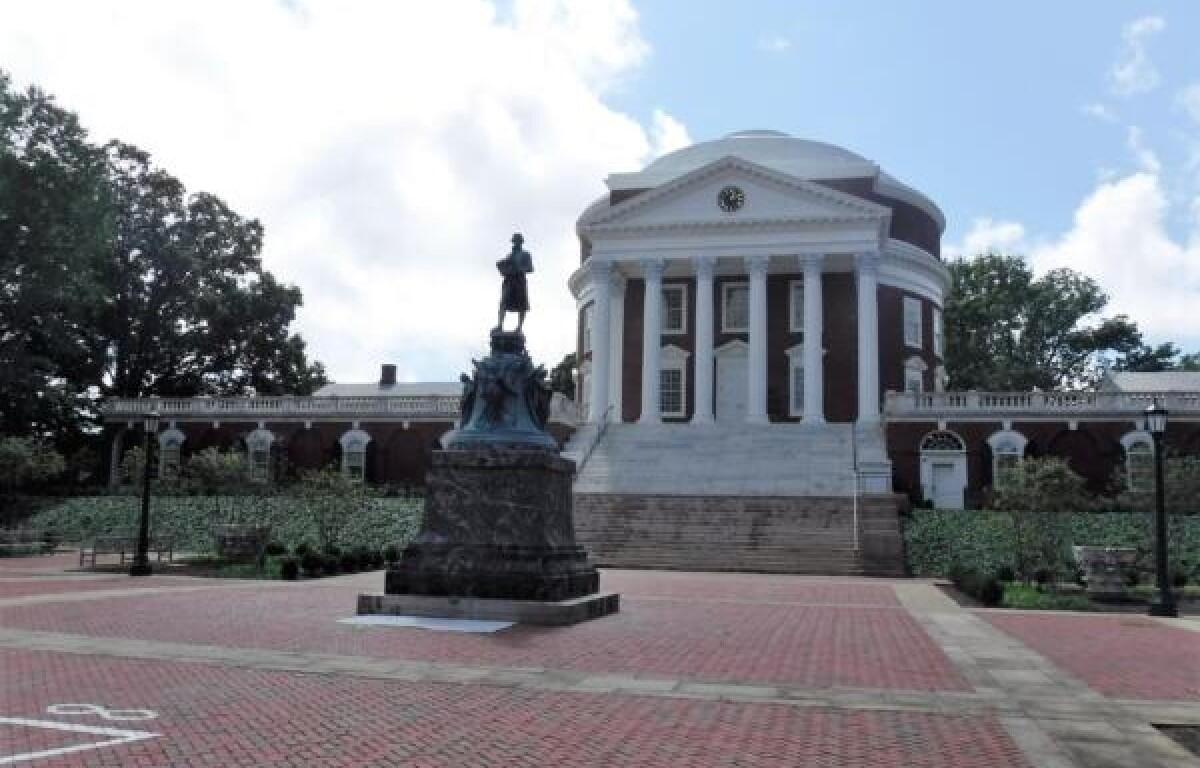

CHARLOTTESVILLE, VA (CVILLE RIGHT NOW) – The University of Virginia ranked at No. 9 in a new 2027 College Free Speech Rankings by the Foundation for Individual Rights and Expression (FIRE), the organization announced.
The University of Chicago topped the ranking of 261 schools for the third time in seven years, followed by the 2026 top-ranked school, Claremont McKenna College, followed by Georgia Tech, Michigan Tech, and Vanderbilt rounding out the top five.
UVA tied for ninth along with fellow in-state school George Mason as well as UNC-Greensboro.
UVA’s administration has focused on free speech in recent years, with the Board of Visitors adopting the “UVA Statement on Free Expression and Free Inquiry” in 2021. It opened with the sentence, “The University of Virginia unequivocally affirms its commitment to free expression and free inquiry.”
While each school was ranked, they were also given a letter grade by FIRE. UVA received a C.
While C is considered average on the grading school, with B good and A excellent, the highest grades issued were B- at the two top-ranked schools and a survey executive summary stated “just 24 receive a C or better”.
“This year, the average overall score (61.36) is the highest recorded in seven years, though it still corresponds to a D- on the report’s grading scale,” the summary stated. “Overall, 121 schools still receive an F.”
“We have built out a methodology in three major buckets,” Connor Murnane, FIRE Campus Advocacy Chief of Staff, told Cville Right Now. “The first is the largest survey of student opinion on campus free expression in the country, so we surveyed around 63,000 students at the 261 schools were ranked this past year.
“We asked a number of questions related to the students’ comfort expressing ideas, the frequency they self-censor while on campus, whether or not they support illiberal or disruptive conduct to stop speech, if they think they’re campus’ administration is pro-speech or would defend their rights, and we also asked a few questions of their openness to different opinions and ideas as well as their tolerance for more controversial political opinions.”
FIRE also looked at bylaws and regulations schools have for students to live under when it comes to expressive conduct, evaluating that on a red, yellow, or green scale. UVA was marked green, considered constitutional and not censorious. Yellow signaled arbitrary or “ripe for abuse,” and red denotes “substantially restrictive.”
They also look at how the university governs itself around speech controversies, Murnane noted.
“UVA’s strongest survey components are political tolerance, which measures students’ willingness to allow controversial speakers on campus, self-censorship, which measures how often students refrain from sharing views, and openness, which measures how many topics students do not identify as difficult to discuss,” Murnane said. “UVA students were more willing than students nationally to allow all six controversial speakers tested in the survey.”
But Murdane said UVA falls up short in some aspects.
“Only 24% of UVA students would allow a speaker who says ‘Black Lives Matter is a hate group,’ and only 28% would allow a speaker who says ‘transgender people have a mental disorder,'” Murdane said. “UVA students were more likely than students nationally to say shouting down a speaker or blocking students from attending a speech is at least rarely acceptable, and they were less likely than students nationally to say the same about using violence to stop a campus speech.
“UVA’s weakest survey components are comfort expressing ideas, which measures students’ comfort speaking in different campus settings, and administrative support, which measures whether students think the administration protects and would defend speech.”
The survey also shows that the ongoing Israeli-Palestinian conflict remains the most taboo topic on campus for the third year in a row.
“This year, half of students nationwide identified this topic as difficult to discuss, down from 53% last year and 55% two years ago,” the survey summary said. “This year, students were also reluctant to talk about two public figures, Charlie Kirk and Donald Trump, and reported increased concern discussing immigration. As in prior years, abortion and transgender rights were identified as difficult topics.”
The Israeli-Palestinian conflict similarly was rated the most difficult topic at UVA.
“UVA ranks 59 on openness. This component measures how many topics students identify as difficult to discuss openly and honestly on campus. UVA improved from 114 last year and returned close to its 2025 performance, when it ranked 54,” Murnane said. “The Israeli-Palestinian conflict was the clear exception to UVA’s broader openness profile. It was the topic UVA students most often identified as difficult to discuss, selected by 54% of students, slightly above the national rate of 50%.”
In a statement to Cville Right Now, UVA maintained the institution’s commitment to maintaining free speech.
“Promoting and protecting free speech on Grounds is core to our mission and integral to who we are,” UVA spokesperson Bethanie Glover told Cville Right Now in an email Wednesday. “That commitment to protect and promote free speech lives alongside a responsibility to ensure that our Grounds are open and accessible to all members of the University community, and that we offer our students, faculty, staff, and visitors a welcoming environment in which to live, learn, and work. Looking ahead, we will keep in mind the feedback offered by the community in the FIRE surveys as we pursue the vision and goals of the University.”
As far as how FIRE thinks UVA can improve, they say the university has “a strong formal baseline” and should preserve its “green light” policies, it’s Statement on Free Expression and Free Inquiry, and its institutional neutrality policy.
But FIRE also recommends the university address ways to tackle addressing topics students have indicated are the toughest.
“UVA could use its existing dialogue infrastructure to address the topics students most often identified as difficult to discuss,” according to the FIRE recommendations. “Rather than creating a new program from scratch, UVA could use the Civic Cornerstone Fellowship, Talking Across Difference, and classroom-based deliberation exercises to host more structured conversations on contested issues, including the Israeli-Palestinian conflict, abortion, Charlie Kirk, Donald Trump, and transgender rights.”