


 Listen Live
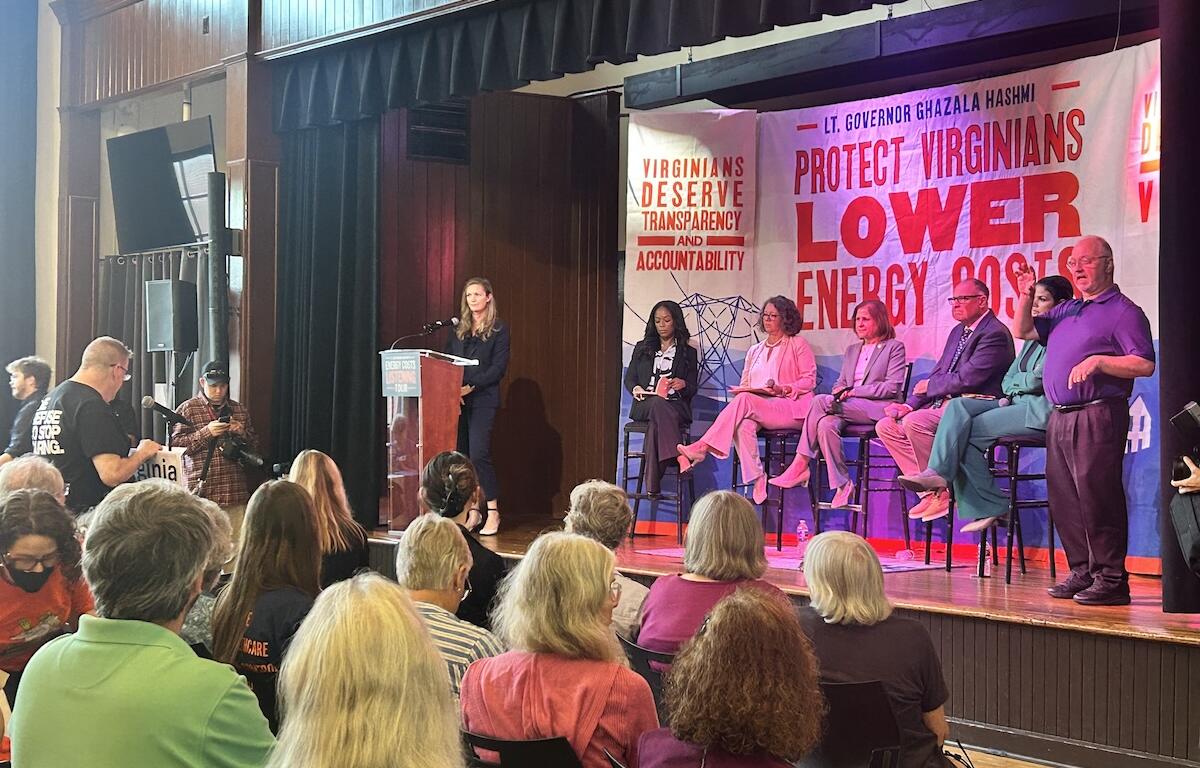

CHARLOTTESVILLE, VA (CVILLE RIGHT NOW) – Lieutenant Governor Ghazala Hashmi heard from frustrated constituents in Charlottesville, the majority of whom shared a strong opposition to the proposed NextEra-Dominion merger, during the fourth stop of her Energy Costs Listening Tour.
The tour is intended to give Virginians a chance to share their experiences, ask questions and hear from local elected officials about energy costs and the merger, which is currently being considered by the State Corporation Commission.
But during what was called a “Q&A session,” Hashmi, along with fellow panelists State Sen. Creigh Deeds, Del. Katrina Callsen, Del. Amy Laufer and merger expert Kajsa Foskey, heard only a handful of questions. Most speakers passed on asking anything and instead voiced their frustrations, with many calling for a stop to the merger. Some carried signs to voice their opposition.
Hashmi told the media afterward that what she heard in Charlottesville was in line with what she has heard around Virginia.
“No matter what locality we’ve been to, we’ve been hearing consistently the concerns from so many citizens about what this merger will mean for their electric cost, but also the fact that we are handing over our necessary state control to an outside company,” she said.
The backlash from the proposed merger has been so profound that earlier on Monday, Dominion and NextEra announced a new set of incentives for customers, including, among other things, a commitment of four years of monthly $10 bill credits for residential customers, up from the originally proposed four years.
Callsen addressed the news in her opening remarks, expressing optimism that the two companies were being responsive to the concerns.
“They need to hear our voices,” she said. “They need the public scrutiny, they need to be called out on their intentions, and now is truly the time to speak up. We have to push for it. We have to ask those questions. And we have to, hopefully, I will just say it on record, stop the acquisition.”
Deeds drew the ire of some in the crowd for not doing the same. He said while he was “very cynical” of the deal, but needed more information and, at numerous points, point to the SCC, as the decision ultimately rests on them. But that wasn’t enough for many in attendance.
“You are a legislator that does appoint these SEC judges,” one woman said to Deeds. “We don’t get to vote for them, but we have to vote for you.”
Afterward, Deeds, unprompted, made his stance on the issue clear to the media.
“I’m not going to create an illusion that by being for or against, I can tilt the decision,” he said. “I wasn’t gonna create an illusion that I think would be dishonest. It’s up to me to try to learn as much as I can about this, and make sure that the standard, as I understand it, as I read the code, gets applied, and the State Corporation Commission has the right information. If I can help them get that information, I’m gonna do that.”
The information Deeds said he’s looking for is if this merger could lead to lower energy rates.
“(NextEra is) only here because of the data center demand,” he said. “We have the demand, they’ve got the power. And the Clean Economy Act is the law of the land. It’s not gonna change. It’s not gonna change. So, I understand that people’s concern about (it), because that’s, it’s constantly under attack, and it’s gonna be under attack. But, it’s the law of the land, and if this transaction goes forward, they’re gonna have to live with it.”
When asked if she would also unequivocally oppose the merger, Laufer also said she needed to “do more due diligence” before she could publicly make a stance. That, too, was not enough for some in attendance.
“We’ve heard from a couple of you that you need to research this, you need to study this more,” the final speaker said. “You are representatives, you are not researchers. We are your data points. This is all you need to know.”
That remark drew praise and agreement from Hashmi as she closed out the meeting.
“This is part of the research,” she said. “You are the primary sources. So, speaking as an academic, we’re here conducting research. We are listening to the primary sources. We are gathering material, and it will be shared and disseminated.”
As part of the tour, a professional stenographer was present to take notes, and Hashmi said after the final stop in Roanoke on Sept. 24, she will be compiling a report with all of the comments and questions which will be presented to legislators and commissioners.
She also encouraged those in attendance to register as a public witness for the SCC proceedings, which those interested can do through Nov. 2, or submit written public comments to the commission, which will be accepted through Nov. 9.