


 Listen Live
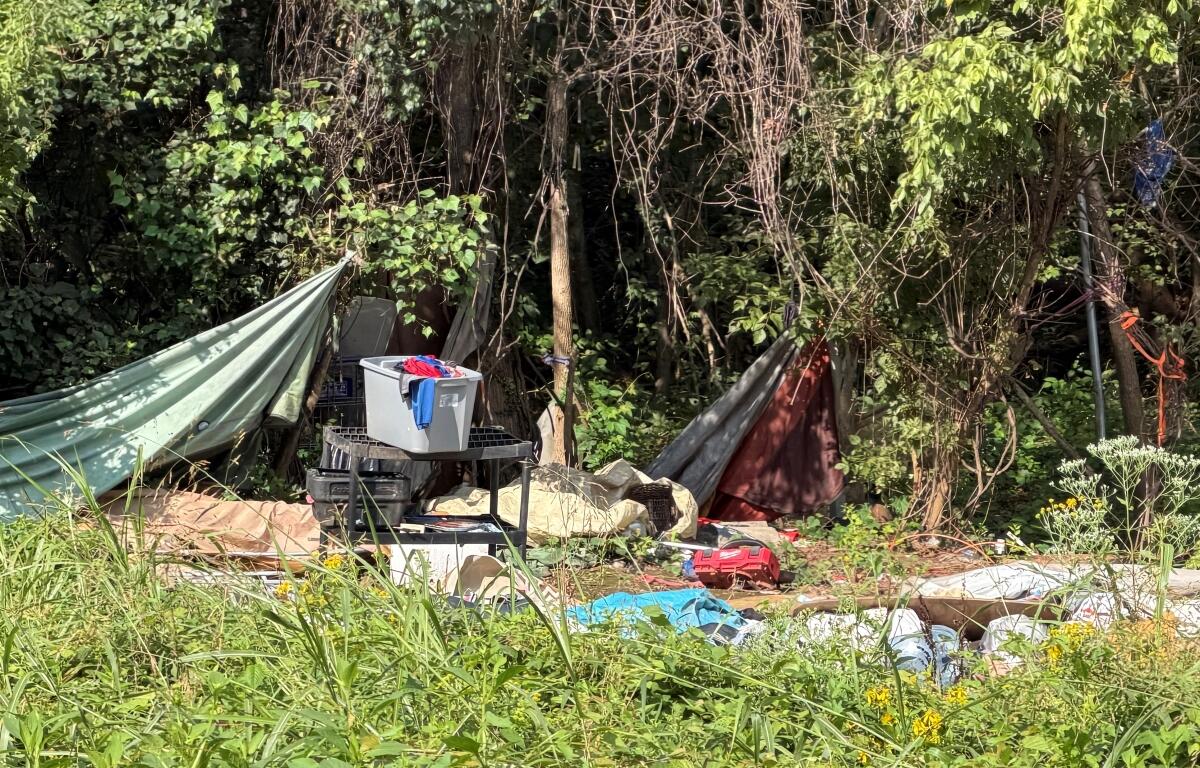

CHARLOTTESVILLE, VA (CVILLE RIGHT NOW) – Charlottesville City Council heard complaints from the critics about the handling of homeless encampments it cleared on Sept. 1, but defended the effort and refuted many of the allegations made by speakers during the public comment portion of Tuesday’s meeting.
“For those that are hearing me and I might sound a bit angry or what have you, it’s just passion and I care,” said City Manager Sam Sanders during the meeting. “And there’s irritation when things aren’t being communicated fairly and accurately, and it’s important for us to make sure people understand that we made a real difference in this community by opening that facility.
“And we’re not done,” Sanders said. “There’s still a lot more to do.”
Council heard from critics who complained people were forcibly removed by an arbitrary Sept. 1 deadline and funneled to a facility that was quickly thrown together and inadequately meets the needs of those who go. Some accused police of showing up over the past several weeks and arresting people or taking them to be involuntarily committed to institutions.
“I watched one of the most sweet, loved people down there have her face slammed into the ground for the cops to handcuff her and force her to the hospital so you would have more people out of your hair day of,” one of the public commenters, Isis Neumann, told City Council. “I wonder if people know that when the city says that things went smooth and without incident that that includes multiple arrests of people who lived down there. One of the Free Bridge residents being transported offsite in an ambulance, people’s belongings being thrown away without permission, people experiencing mental breakdowns due to oppression by the city.”
City officials strongly denied Neumann’s allegation.
“I assure you that at no time there was anyone slammed on the ground and arrested as I heard earlier,” Assistant City Manager of Emergency Management and Human Services Samuel Roman told Council. “I also heard there was a plethora of law enforcement there making mass arrests and I can assure that out of all the human resources and human capital that was there, there were only two police officers.
“Those were non-uniformed police officers, and they were the ones who had established trust and had been in the encampment throughout the entire process,” Roman said. “One of the things I’m aware of… where an ambulance did respond there was an acute issued that extended beyond an onsite medical team’s ability to care, so yes an ambulance was called in.”
A man who lived in the Free Bridge encampment and is now in the Holiday Drive emergency shelter told Council the facility was hastily put together and has not met the needs promised to many individuals who were at the Rivanna River. Donnas Chambers said people at the encampment were told they would be able to come to the shelter when, in fact, there were people who went there who were turned away because it was at capacity.
Roman did confirm as of Tuesday morning there were 57 people living in the shelter, which is just shy of the 37 men’s and 21 women’s beds that were initially set up.
“People came from the Salvation Army, downtown, and everywhere else,” Chambers said. “They said this shelter was opened for the people of the encampment and several different people from the encampment that wanted to go to the shelter are denied because it’s full, because you all allowed other people to come in there before you all made sure that everyone there from the encampment was there who wanted to go. You all made the news that it was for them, and a lot of the people that were there are not in it.”
Central Arizona Shelter Services (CASS), which runs the shelter, told Cville Right Now in an Aug. 31 tour the day before it opened, there are 120 beds that they can put out, but they were starting with 58.
“Obviously the capacity for more is there,” Roman told Council. “The goal with opening the shelter was obviously trying to make it as comfortable, and accommodating, and welcoming as possible to all of the guests at the shelter. Capacity is there to increase that and in terms for time frame, I would estimate a matter of adding beds, and I would lean toward the help of the operators to help me answer that question, but just in my conversations with them there is an opportunity to increase the beds there now.”
Roman said that would be collaboratively done with the guests at the shelter, incorporating their ideas about the best configuration if its decided CASS should add more beds. The beds are primarily in three rooms, two of them for men and one for women. The rooms are barracks style, with beds a few feet apart from each other and all in the open.
He also said as we get into the colder months, People and Congregations Engaged in Ministry (PACEM) will begin their sheltering operations in early November and that will add capacity.
Chambers also expressed to Council concerns about safety.
“I’m actually one of the ones that’s in the shelter, and since I’ve been there, there’s been three incidents that happened where men have threatened women, tried to fight women, tried to go on the women’s side,” said Chambers. “The women are scared to death to go outside at nighttime to use the bathroom, and there would be no shelter to allow women to go outside to use the bathroom. It is crazy, it’s unbelievable, and it’s unacceptable.”
Roman told Council that those issues had not been raised with the shelter operators, and he was able to immediately engage CASS after hearing Chambers’ report, and the city and CASS will “work on collaboratively mitigating these concerns”.
Chambers claimed the restrooms did not have locks on the doors of the showers or toilet stalls, an assertion Roman denied. The restrooms are outdoor trailers that are used in big event venues, according to CASS Chief Executive Officer Nathan Smith when he talked to Cville Right Now Aug. 31.
Chambers also questioned the building’s safety in the case of fire since there are no sprinklers installed at this time. There is a fire plan, according to City Attorney John Maddux, who told Council the building was inspected and meets code. In addition, there is a fire watch in the CASS contract that requires checks throughout the day and night.
City Councilor Jen Fleisher, who was the point person on Council in the efforts to reach out along with city staff and community partners to assess and accommodate individuals’ needs, said she was proud of the working relationships across the different city departments in their collaboration.
“Particularly in the move-out in connecting people to resources they had not accessed in a while, including workforce and food access that had either lapsed or never activated,” Fleisher said. “I did volunteer for an overnight shift at the shelter on Saturday night and I can assure you that they have multiple protocols and procedures for any complaints and grievances. There’s huge QR codes plastered lots of places for residents.”
She noted most of the residents she interacted with, though a lot were sleeping, “were very positive”.
City Councilor Michael Payne expressed frustration that some of the speakers seemed to be sharing inaccurate information.
“I think people can agree with the city’s approach, disagree with our approach or have mixed feelings about it and all that’s fine,” Payne said. “But it is very important to be able to have an accurate basis of facts of what has actually happened.”
Payne said the encampments at Free Bridge and 0 East High had become dangerous and needed to be ended for the safety of the unhoused people there and the public.
“The encampment environment is one in which multiple people died, it’s one in which there were multiple instances of reported sexual violence, there were multiple physical assaults, there was from our first responders a daily risk of a mass casualty event in terms of a flash flood or a widespread fire, there were multiple fires including ones that physically damaged people and burned down all of their belongings, there were reported thefts,” said Payne. “And in all those cases the victims are those who are homeless and staying in the encampment.
“People are entitled to disagree with the city’s approach, but I firmly believe this is a far more compassionate and humane approach than saying that people can die by the encampment with no intervention by the city and that that is humane. I don’t [think] that is compassionate or humane.”