


 Listen Live
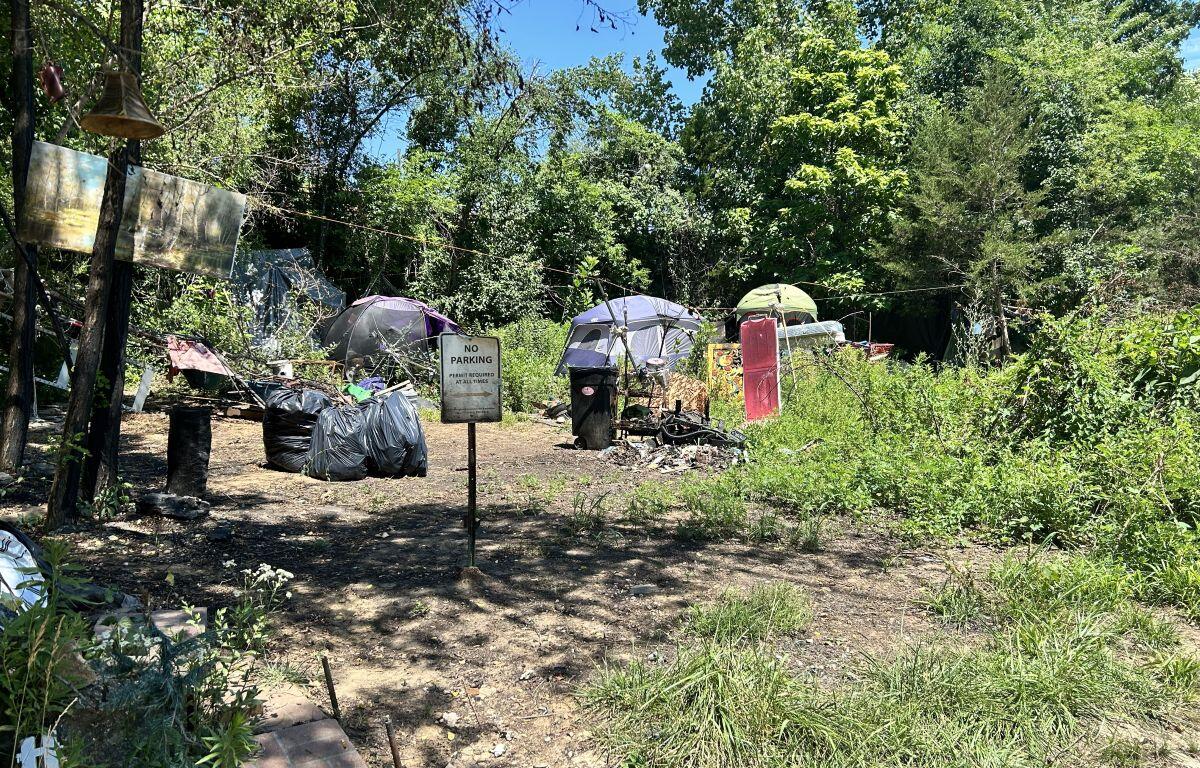

CHARLOTTESVILLE, VA (CVILLE RIGHT NOW) — As the City of Charlottesville continues to work to clear the homeless encampments along the Rivanna River, multidisciplinary teams have been hard at work for weeks, some even months, building relationships with each individual staying in the encampment and connecting them with resources.
So far, city spokesperson Afton Schneider told Cville Right Now those efforts have gone well. Last week, the city, PACEM and UVA Health medical staff completed 38 needs assessments, and no one who was approached declined to be part of the program.
“We’re moving forward getting people registered for the things that they need,” Schneider said.
Aside from the teams from PACEM, the City and UVA Health, there is also a 24/7 police presence at the encampments to ensure safety, while Community Relations Officers are at the encampments on a daily basis. The city is also working to clear out garbage at the site, providing trash bags and having a contractor come down in the coming weeks to pick up some of that garbage
These efforts come as the Sept. 1 date the city is targeting to clear the Free Bridge encampment approaches.
In addition to working directly with the encampment residents to connect them with services, the city is working to have an emergency shelter up and running at 2000 Holiday Drive, the property the city acquired to build a permanent low-barrier homeless shelter.
Schneider said the city will have more information to share on the shelter “hopefully” within the next few days.
Other services include health and mental health services as well the facilitation of travel for residents who wish to go back to their hometowns or stay with family members and friends that could potentially help them.
The city has also produced a two-page brochure for the public as a whole, which covers the city’s response to the unhoused situation as a whole with the context of the upcoming clearing of the encampments along the Rivanna River.
“Homelessness is a complex issue,” Schneider said. “We want the community to have one clear factual document or resource that explains our role and our approach and the work that’s being done with our partners.”
The pamphlet addresses the “Riverfront Encampment Transition” on its first page, mentioning the efforts of the outreach teams at the encampments and stating that multiple city department are working with community partners to support the effort “while balancing compassion, public safety, and environmental stewardship.”
“Our goal is to support people experiencing homelessness while maintaining safe, healthy, and accessible public spaces for the entire community,” the pamphlet reads.
On the second page, the city details its work with its community partners to “connect people with services and resources,” “conduct outreach and assess needs,” “improve access to housing, healthcare, and behavioral health services,” “maintain safe, accessible public spaces,” and “coordinate a community-wide response.”
The pamphlet also details three “Frequently Asked Questions” regarding the unhoused situation in Charlottesville, with the first being “Is homelessness a crime?”
“No. Homelessness itself is not a crime,” the pamphlet reads. “The City responds to criminal activity or public safety concerns regardless of a person’s housing status.”
The second question covers why the encampments are being cleared.
“Encampments can create health, safety, and environmental concerns and may limit public access to shared spaces,” it reads.
The last question asks if everyone accepts the offered services from the city, with the pamphlet stressing that the resources provided are voluntary.
“It’s a small brochure,” Schneider said. “But it’s a start as part of our dedication to being transparent with the community. So those are just a couple of the questions that we thought might be helpful for people in the community to see.”
For those who may have additional questions, Schneider said those can be submitted to city staff through MyCville, which is linked on the brochure through a QR code.
Copies of the brochure have been available at the encampments. However, Schnieder said the document is more intended for the general public, with the city focused on 1-on-1 interactions with the encampment residents.
“We’re really just working with everyone individually to find out what is best for them and how can we help them,” she said.