


 Listen Live
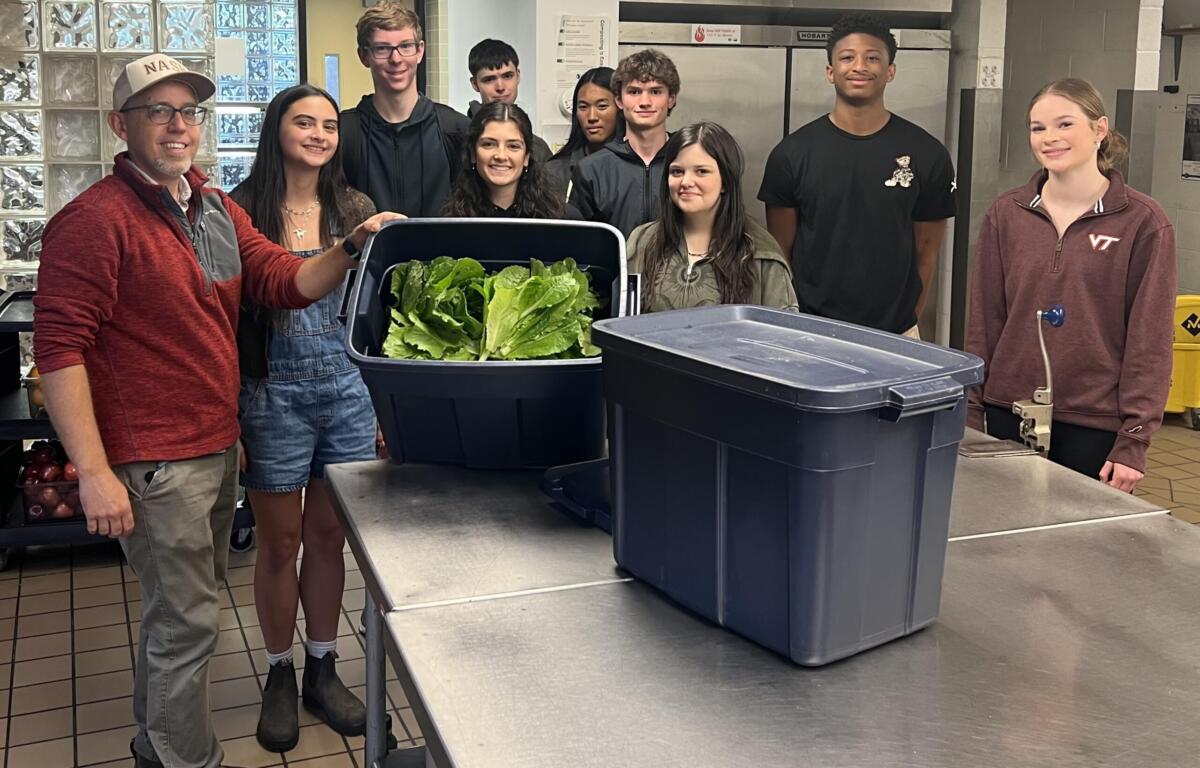

CHARLOTTESVILLE, VA (CVILLE RIGHT NOW) – A dozen years in the making, the Charlottesville High School Urban Farming program made its first food delivery to the school cafeteria earlier this month with a shipment of lettuce.
“It was awesome and it was inspiring, and it’s incredible to be able to share something that’s been a part of my life at CHS and something so pivotal to everybody else at CHS,” said senior and urban farming student Mira Masri. “You know, not everyone’s able to take urban farming, but everybody’s able to try the lettuce we have and eat some of the plants and good that we’ve created and grown.”
Peter Davis is a marketing teacher “by trade,” but he launched the garden about 12 years ago. While the actual agriculture is at the core of the program, according to the CHS Farming website, Davis also includes “developing business and marketing skills along the way,” for the students involved.
“Nutritional professionals cleaned and prepared the lettuce on Wednesday morning and will serve the lettuce in its chef salads as part of this week’s nutritional offerings at CHS,” Charlottesville City Schools spokesperson John Shifflett said about the May 12 lettuce delivery.
The garden is about a-half acre and among the what they’re growing is several varieties of lettuce, collards, kale, peppers, tomatoes, okra, and cucumbers.
Davis said they also have a variety of fruit trees, “We’ve got nectarines, plums, peaches, apples, pears, and cherries.”
While the students would like to grow the project to provide more food to the cafeteria, Davis said there are challenges, including scale and food safety. The yearly turnover of students, pest control and weather issues also make growing the farm difficult.
“Everybody’s like ‘hey, you’ve got a garden, are you feeding the school’, well in a garden this size being able to feed 1200-to-1400 students a day is not realistic,” Davis said.
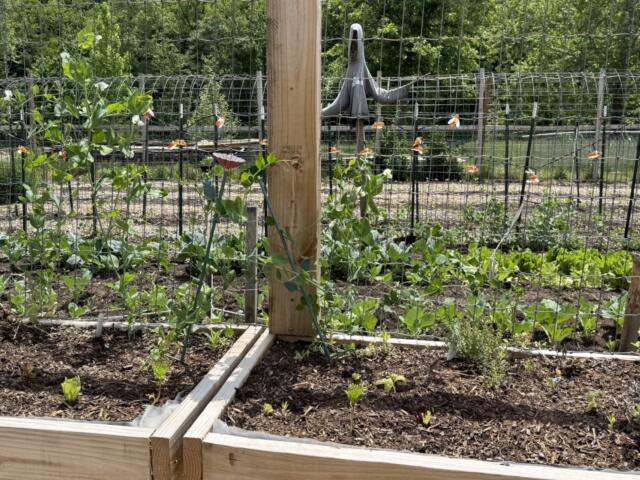
There’s also a chicken coop from which the students can harvest eggs. They take in rounds of chicks and raise them in 2-year increments before rehoming them and getting another batch.
They are different breeds and have names.
“Ace is over here,” said Masri. “Wait, where did Ace go? There’s a frizzle, it looks like it got electrocuted, its name is Doodle. There’s one with like a little afro, it’s called a Polish, its name is Sassy.”
“They’re all under over there, huddled in the shade,” said fellow CHS senior Brooke Cormons. “It’s a hot day.”
“See there’s that brown one, it’s named… uh…uh,” Masri continued.
“That’s the Rhode Island red, right?” Cormons asked.
“That’s Rusty,” Masri said. “Or it could be Maple. Or it could be be Chicky Chicken. They all look the same, but based on the breed you can kind of tell.”
While the students have lobbied to add other livestock to the project, including cows, goats and ducks, Davis has rejected that.
“I’m the killjoy in that one, I’m trying to keep it at chickens as I’m the one who’ll be taking care of them over the duration,” Davis said.
Not only are the students planting and raising chickens, but they’re also involved infrastructure projects that have been built for the operation.
The fencing was installed by contractors, but students have built a greenhouse, a chicken coop, an irrigation system, a rain cistern, and decking that people can walk on through the garden.
Masri and Cormons said that sweat equity, design, and construction are things you just don’t learn in a classroom.
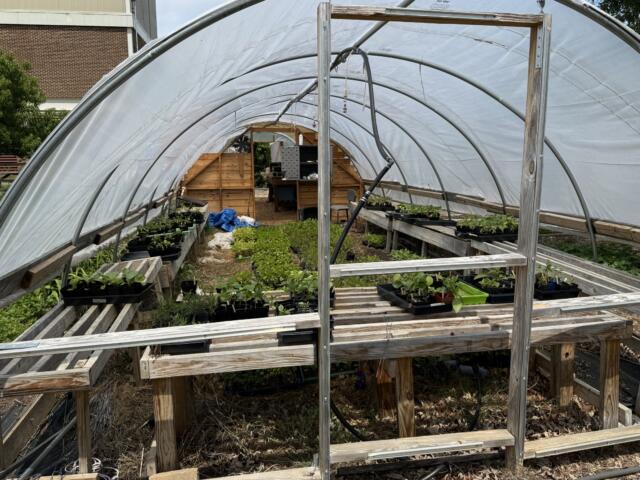
“I think the whole process of learning how those things work as well is important,” Masri said. “You know, learning how to measure, place the wood down, install a sink, install pipes in irrigation systems, that’s all knowledge that you’re going to learn here.”
Masri has been working with the urban farming program the last two years, and Cormon’s been working with it three of the last four.
Up until the cafeteria delivery, Davis said the produce has been going to students, custodians, community members.
Thay also arrange plant sales as they did this pass May 2, with that plant sale date the baseline to think about while students are planning and planting the spring crops.
He expects by summertime, there will be a lot of tomatoes and peppers filling up their areas of the garden.