


 Listen Live
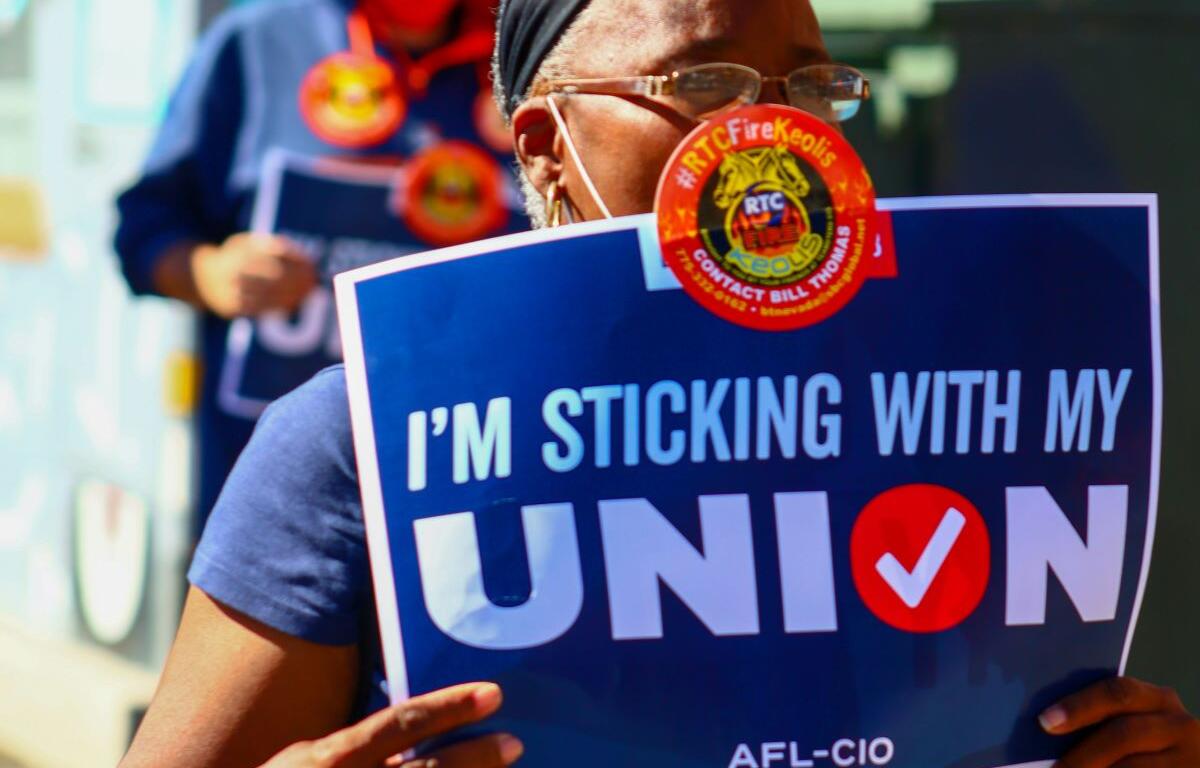

CHARLOTTESVILLE, VA (CVILLE RIGHT NOW) – As Gov. Abigail Spanberger considers the fate of a bill that would extend collective bargaining rights to a wide swath of public employees, local and state educators are urging her to sign the legislation.
“It’s really a piece of historic legislation, and it has been six years in the making,” Virginia Education Association President Carol Bauer told Cville Right Now. “Our labor coalitions have been working with numerous people across the spectrum to make sure that we put in safeguards and to put things into code that will provide some transparency and clarity and help everyone understand what we need to do going forward. This is absolutely going to help workers’ rights and is going to help give a voice for our workers all across the state of Virginia.”
In March, the Virginia General Assembly passed HB1263 and SB378.
The bill creates a public employee relations board, an impartial body that can hear disputes and render binding arbitration decisions.
It also codifies which employees can collectively bargain in Virginia, and what can be bargained for, instead of leaving it up to localities.
Earlier this month, Gov. Spanberger returned the bill to the assembly with amendments, edits that labor leaders said dramatically weakened the legislation. Wednesday, the assembly rejected those changes and sent the bill back to Spanberger in its original form, giving the Governor a month to either sign it into law or veto it. If she chooses to do nothing, it would become law.
Albemarle Education Association President Mary McIntyre said her organization – which already won collective bargaining rights at the local level – is urging the Governor to sign the bill.
“It will help Virginia move on a path towards catching up with all the other states that have already had these kinds of things in place for decades,” McIntyre told Cville Right Now. “And that’s really needed.”
McIntyre said that, among the negative changes Gov. Spanberger had proposed, was the removal of binding arbitration and a delay in when local employees could have grievances heard by the new relations board until 2030.
Perhaps the most damaging proposed change came with Spanberger’s proposal to allow the relations board – which is appointed by the governor and could change when the administration changes – to determine what could and could not be bargained, meaning a governor who did not support collective bargaining could simply appoint a board that would limit the scope of bargaining, McIntyre said.
Neither the original bill nor the substitute included bargaining rights for most state university workers, something McIntyre called “disappointing.”
She said the legislators in the General Assembly who left those workers – including professors, graduate assistants and librarians – out of the bill “folded to the pressure” of groups including university presidents.
“We want everyone included in bargaining. We believe that labor rights are human rights and human rights are for everyone. Not just for a certain subset of people in a certain job, employed by a certain group. We wanted everyone to be covered, ever public sector worker in the state.”
McIntyre hopes that can be amended in the future.
For now, both the AEA and the VEA are urging people to reach out to the Governor’s office to let her know they support collective bargaining rights for state workers.
“They can certainly let the Governor know that this is important legislation, that they support collective bargaining,” Bauer said. “They support workers having the opportunity to have a say, and a seat at the table, on regulations on policies, compensation for their employment.”