


 Listen Live
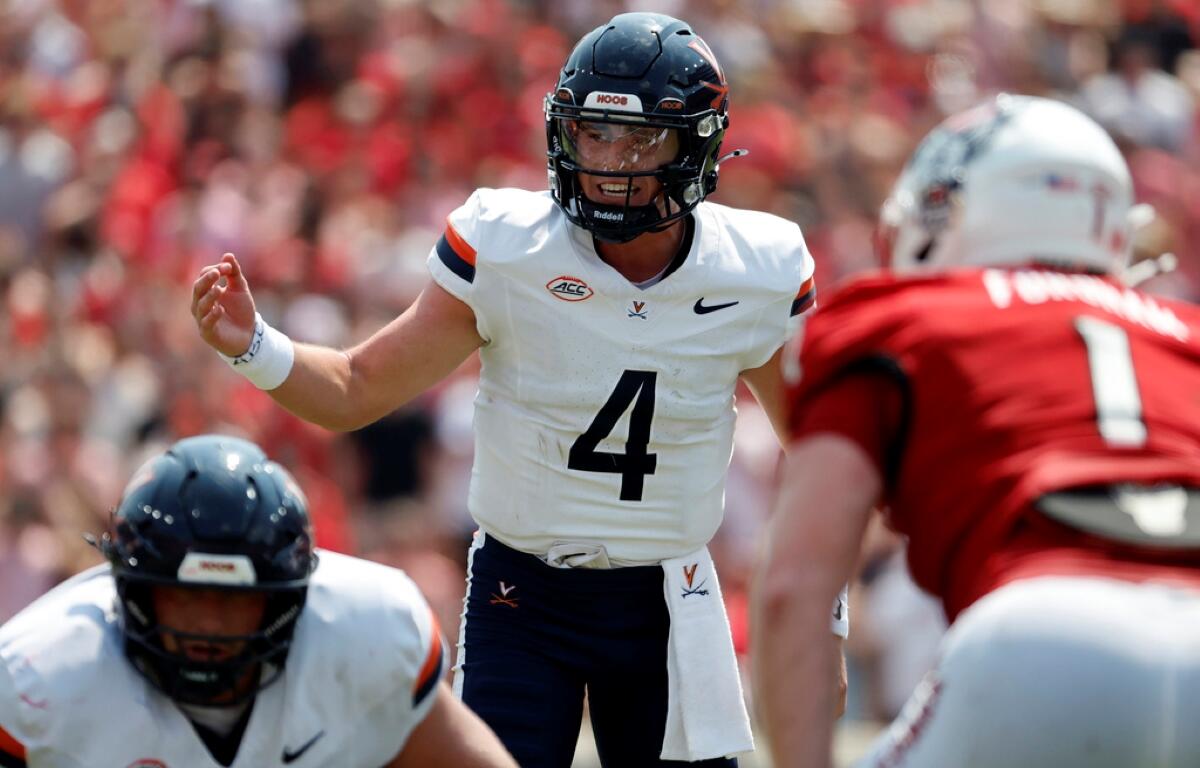

CHARLOTTESVILLE, VA (CVILLE RIGHT NOW) – University of Virginia quarterback Chandler Morris told a Charlottesville Circuit Court judge about the “dark place” his mental health was in following a knee injury during the 2022 football season while at TCU. But Judge Claude Worrell ruled that the NCAA had correctly followed its own bylaws in denying Morris eligibility for the upcoming season and denied Morris’s request for a preliminary injunction that would have allowed him to return to the Cavaliers.
Worrell ruled that Morris, 25, would not be likely to win his case going forward, one of three elements he had to find in order to grant the injunction.
Morris’s attorneys argued that UVA and Morris followed the NCAA guidelines in applying for the waiver to get back eligibility from 2022, and Morris, his father – Clemson’s offensive coordinator – and a mental performance coach all testified that Morris dealt with serious depression and anxiety that year.
But NCAA attorneys successfully convinced Worrell that, while Morris’s situation was sympathetic, the NCAA is bound by the bylaws agree upon by its member institutions, and those bylaws meant Morris had used a year of eligibility that season by playing in four games, even if he took part in just 26 snaps.
Morris’s attorneys had argued his limited participation was less about playing competitive football and more about keeping him mentally engaged with his teammates and coaches to benefit his mental health.
UVA football coach Tony Elliott and a number of teammates, including offensive linemen Noah Josey and Monroe Mills and wide receiver Jayden Thomas.
Morris can still appeal the decision. He left the courthouse Thursday without speaking to the media.
Wearing a dark blue suit, blue tie, checkered shirt and UVA pin, Morris told the court that football “means everything” to him after growing up the son of a high school and college coach. He said he’s continued to love the sport despite a series of injuries and other setbacks.
“I’ve dealt with a lot of sunny days and a lot of stormy days,” Morris testified.
Morris said he felt pressure, as a college football player, to put on a tough face despite his mental health struggles, but ultimately talked to his father about getting help.
Morris spent one season at Oklahoma, playing in five games. He transferred to TCU, where he spent 2021-23.
He played at North Texas in 2024, then at UVA in 2025, leading the Cavaliers to an 11-4 record and a spot in the ACC championship game.
At issue is his 2022 season, when Morris played in four games, including an appearance in the NCAA championship game. After winning the starting job over incumbent starter Max Duggan, Morris suffered a knee injury in the season-opener. That injury is what sent him into a “spiral” of depression, according to his legal team.
Morris noted that one game saw him take three kneel-down snaps, and two others were blowouts. His defense team labeled this playing time as “non-competitive” and said it was part of his mental health treatment.
Morris’s father, former Arkansas and SMU coach Chad Morris, said he could see his son was struggling. He drove up to TCU’s campus to have dinners with Chandler, to check on his son.
“We were in some dark spots,” the elder Morris told the court. “We just wanted Chandler. We just wanted our son back.”
Chandler Morris began having weekly meetings with Brian Cain, a mental performance coach who Morris’s father had met through his coaching work.
But Cain is not a licensed mental health professional, a fact the NCAA cited in denying Morris his waiver. Thursday, NCAA attorneys walked the judge through a series of notes Cain had taken during sessions with Morris where the pair appeared to be focused on football and not mental health issues.
Cain argued that getting Morris back into a routine based around football, and giving him back his football-based identity, was integral to getting Morris’s mental health back in a good place.
Cain testified virtually, appearing from Arizona on a screen in the court room. Cain said, following his injury at TCU in 2022, Morris dealt with “anxiety about the future” and was in a “depressive state.”
The NCAA’s attorneys deferred comment to the body’s communications department.
In giving his decision, Worrell told both Chandler and Chad Morris he appreciated their candid testimony and expressed empathy over what the family had been through, noting that there are “real human consequences that are happening on a football field.”
He agreed that Chandler Morris would suffer irreparable harm, in the form of lost income from football, by not granting the injunction, and that the public interest would be served by granting it, two of the three legal prongs the law requires.
But the third element, the likelihood that Morris would ultimately win the case, is where Worrell ruled Morris’s team’s arguments fell short.