


 Listen Live
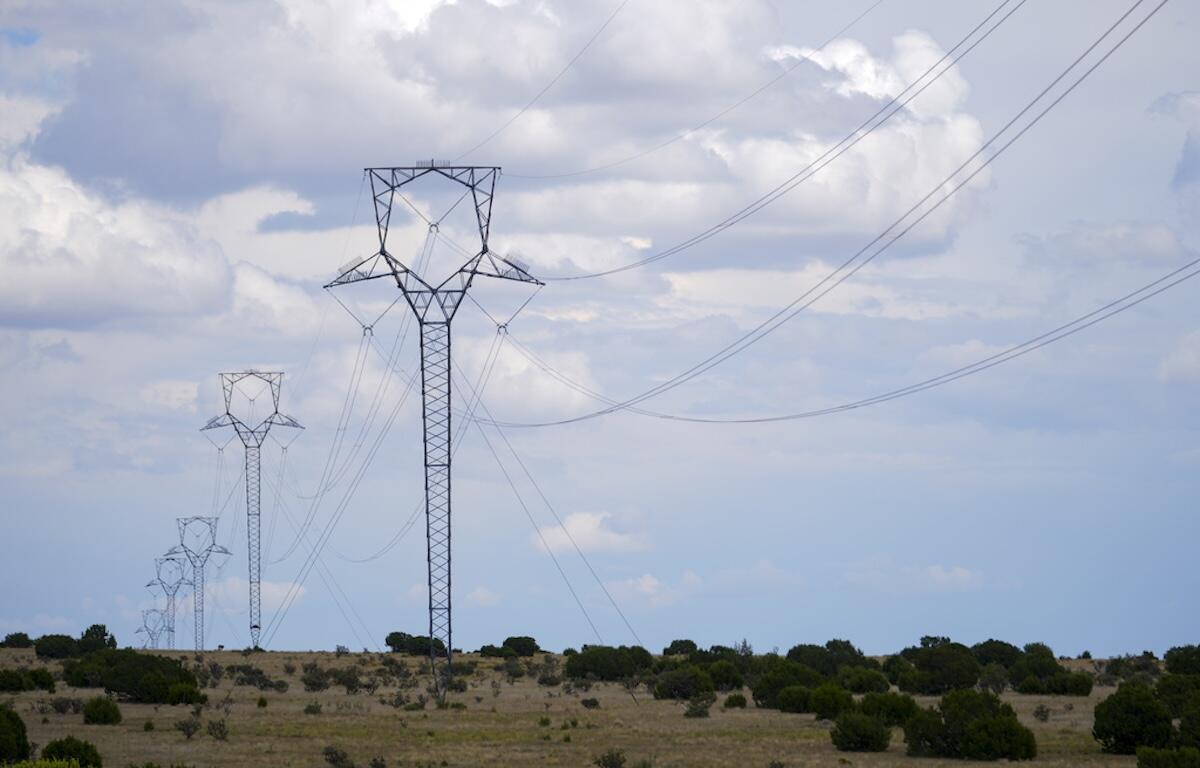

CHARLOTTESVILLE, VA (CVILLE RIGHT NOW) – With energy demands rising, industry experts believe Virginia needs to enhance its power grid. But residents whose property falls in the path of a proposed Valley Link power line project are hoping the project can find an alternative home.
“I have so much compassion for the people who are in the bullseye again,” Friends of Buckingham organizer Kenda Hanuman told Cville Right Now. “They think they can come and take our land. Our land is valuable. That’s our power.”
The project would create about 115 miles of 765-kilovolt electric transmission lines connecting a proposed new substation in Culpeper County to an expanded substation in Campbell County, according to a Valley Link spokesperson. It is a collaborative project between Valley Link and Dominion Energy, FirstEnergy Transmission, LLC and Transource Energy, LLC.
The company is currently considering routes for the power lines, holding informational sessions to both explain the project to impacted residents and to gather their concerns for consideration as final maps for the lines’ path are drawn.
The map Valley Link is considering for the Joshua Falls to Yeat project would construct lines starting in Campbell County and traveling northeast through Appomattox County, Buckingham County, Fluvanna County, Goochland County, Louisa County, Spotsylvania County, and Orange County, before ending in Culpeper County.
The line’s route avoids Albemarle County, where 26.2% of the county’s rural land is designated as environmental easement, according to an Albemarle spokesperson.
Residents in those areas have concerns about the impact on the local environment and on their property values. They argue the 135-160-foot tall towers are unsightly and that they bring both noise and health concerns.
Impact on residents
Craig Carper, a spokesperson for Dominion and Valley Link, told Cville Right Now there have been no conclusive studies linking health problems to living near the structures, though he acknowledged he was not aware of any studies proving conclusively that there is no danger, either.
He said Valley Link is striving to avoid crossing bodies of water, avoiding densely populated areas and schools,
“We’re working with landowners to minimize impact,” Carper said. “…We really want to hear from them. We’ve been very pleased with the turnout we’ve received. It’s fair to say, absolutely, that there’s a lot of concern.”
In September, Valley Link will formally ask Virginia’s State Corporation Commission to green-light the project. It anticipates an answer in a about a year, so by September 2027.
The new substation in Culpeper also requires local approval, unlike the lines and towers themselves. That means the Culpeper Planning Commission and the Culpeper Board of Supervisors could deal the project a major disruption by rejecting permit applications there.
Carper said Valley Link is “confident” it will get the approvals it needs to move forward, believing that the need to enhance the energy grid is well established. He said the companies behind the project are sympathetic to the concerns of residents who could be impacted. That, he said, is why they’ve been hosting what he called “science fair”-style meetings, attended by as many as 50 Valley Link representatives and drawing over 500 residents, to explain the project and hear specific concerns.
What are the concerns?
One the major complaints is that, to keep the 200-foot-wide clearing needed on either side of each tower clear, chemical sprays would be employed.
Since 1985, Chad Oba has kept her five-acre Buckingham County farm pesticide free, focusing on organic gardening.
“It’s so important for people to come together over this,” Oba told Cville Right Now. “They sit down and map it out. We’re just a few lines on a map. But there’s lots of people, lots of people, along those lines who are impacted by this. I care about my neighbors. If there’s anything I’ve learned, it’s that we have to care about each other.”
Oba, who works with Hanuman with Friends of Buckingham, also worries about the disruption the towers could cause disruption to the migratory habits of birds and could also impact native bee populations.
Liz Barrow lives on a 20-acre horse farm in Fluvanna County, about two miles from one of the proposed spots for a Valley Link tower, she said.
About four years ago, Barrow moved to the property from North Carolina.
“I just wanted to have a place to keep my horses,” she told Cville Right Now. “I’ve got two horses, and I had for a long time wanted to have a piece of property that I could try to make kind of a nature haven, where I could have native plants, try to figure out how to take care of the land without pesticides, and encourage the wildlife on the property.”
Barrow said the proposed Valley Link plan flies in the face of all the goals she had when she purchased her property and will have negative impacts, environmentally and economically, on landowners throughout the region.
“I hate to see the rural nature of our area disturbed any more than it already has been,” Barrow said. “It’s still rural and it’s very beautiful here.”
Barrow worries that the electro-magnetic fields produced by the towers could lead to health issues and said the presence of towers on properties will lower the resale value for those property owners.
Butch Duke has lived on a small farm in the western part of Louisa County for about 30 years. Duke said worries that if the lines go up, they would pave the way for future projects, possibly data centers or big warehouse distribution centers, to be built drawing power from the new lines.
“The biggest concern that we have aside from this particular run of electricity is that this line would be tapped into at will,” Duke told Cville Right Now. “So, this is the first leg of a fight against this incursion, this land grab. The future is clear, but it’s unclear as to what their plans are.”
Neither Duke nor Barrow nor Hanuman nor Oba has any illusions about their standing in their quest to stop the Valley Link project.
“I feel like we’re the underdog,” Barrow said. “But it may be that enough public outcry would make a difference.”
To that end, throughout the potentially impacted counties, groups are organizing, hosting meetings, launching websites and ramping up their social media profiles.
“If you were a betting person, I would say the odds are slim,” Duke said. “But we’re going to do what we can, and hope that, even if we’re able to stall it, that another answer would come about. So, we’re going to give it everything we’ve got.”