


 Listen Live
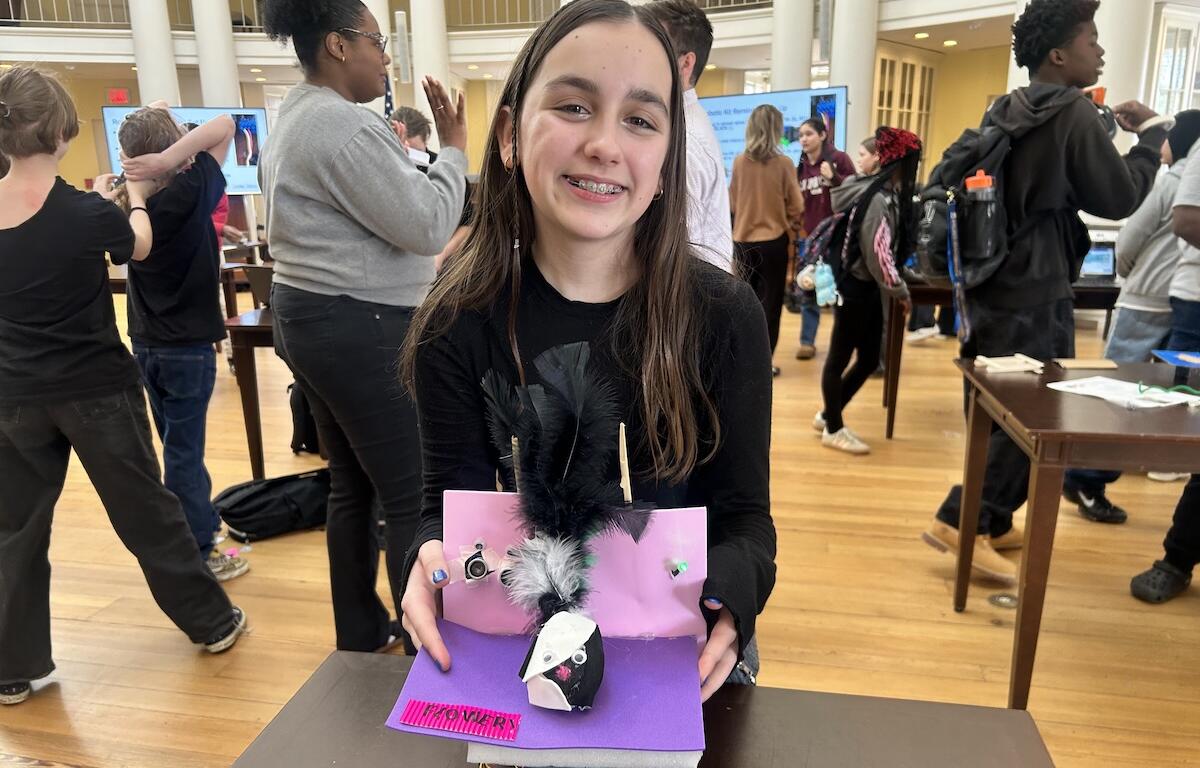

CHARLOTTESVILLE, VA. (CVILLE RIGHT NOW) — It was a lively scene inside of the UVA Rotunda’s dome room this past week, as Charlottesville Middle School students gathered to showcase their “BioBots,” robots built and programmed by the students to mimic the adaptations of animals.
The students displayed their creations at a Showcase on Grounds from Tuesday-Thursday. As part of the trip, the students showcased their fully functioning robots in the dome room, toured the UVA Link Lab and interacted with scientists and researchers at the university.
The project itself started a similar activity created at Arizona State University called March Mammal Madness, which, in a fun twist on the NCAA Tournament format, matches up animals based on adaptations and survivability. Kate Kogge, an Innovation Specialist with UVA’s Innovation Hub at CMS, told Cville Right Now that kids were to create predictions for the bracket and see the outcome from last years’ rounds to “get a sense of what adaptions really mean.”
“It allows an animal to survive and thrive and carry on,” she said. “So [the kids] took that concept and modeled adaptation in a species of their choice with these robotic kits.”
The students not only built their robots, but programmed them as well. Kogge said there was plenty of trial and error during the process, but with students saying the coding was the hardest part of the process .
“The code was kind of hard to figure out,” seventh grader Ellery Robinson told Cville Right Now, “but once you figured it out, you kind of got the gist of it, and you were able to add it all together.”
Robinson’s project was robot skunk she named Flower. Get too close to Flower, and a red light would go off with a sound to mimic the spraying of a skunk. She said she chose to build a skunk because she wanted to build a cute animal with scary adaptation.
Other students also said the coding was hard, but enjoyed the challenge. JJ Maynor told Cville Right Now his favorite part of the process was “making the code and failing a bunch of time and then finally getting it.”
He built a clownfish named Mr. Nemo with fellow students Heath Cornwell and Joseph Wieber. When turned on, Mr. Nemo would spin in a circle to mimic its movements in the wild.
Maynor called the project “The entire meaning of ‘hard work pays off.'”
Adding to the difficulty of the showcase, students hadn’t seen their projects in a week before having to set them up for the showcase in just a few minutes. As a result, Kogge said the Rotunda room became an “atmosphere of learning and creativity and teamwork,” with many students jump into other kids’ projects to help them set everything up.
“There was so much cooperation and partnership in here,” she said, “and it’s bringing all of us in here a bunch of joy, just seeing these kids, not only work on their individual projects, but come together make it all work.”
Kogge said she hopes the students take away “a sense of curiosity, but also a sense of empowerment,” from this experience.
“For a lot of these kids, we talked about doing robotics, and we talked about doing computer science, they immediately turned off or said, ‘This isn’t my thing,'” she said. “And we’re seeing here in real time, these kids can do this. They can program, they can code, they can build thins that really serve a purpose and do something.
“And so, my hope is that they leave this ready to take on whatever the next project is, or even something in their own lives that involves really critical thinking and working through a tough problem to solve.”