


 Listen Live
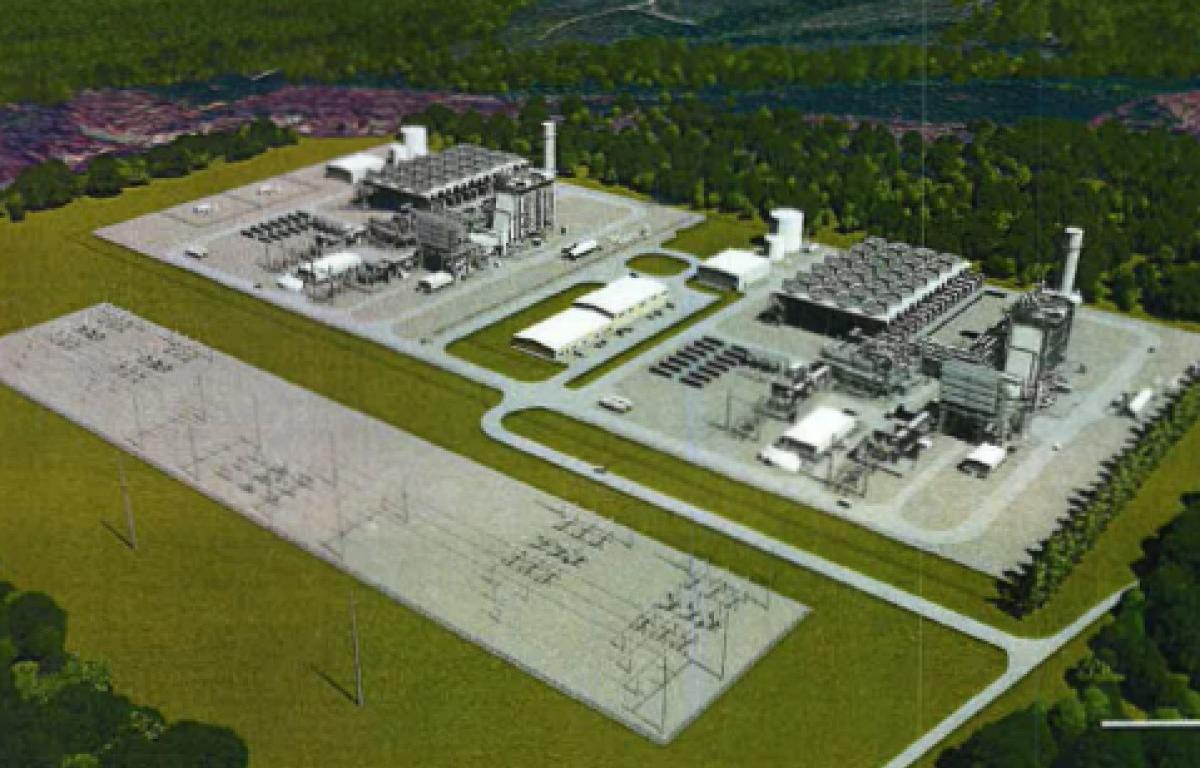

CHARLOTTESVILLE, VA (CVILLE RIGHT NOW) – After rejections by the Fluvanna County Planning Commission of a “substantial accord” petition, and later a special use permit for higher smokestacks, the Fluvanna County Board of Supervisors decides on those issues Wednesday night.
It has not just been Fluvanna County residents weighing in at public comment during planning commission meetings, but people from around the region including the Community Climate Collaborative, Southern Environmental Law Center, Chesapeake Climate Action Network, and others.
Tenaska Project Expedition is an effort by Nebraska-based Tenaska to add a 1500 megawatt gas-fired power plant next to the current gas-fired facility that for 20 years has added 1000 megawatts a day to the power grid.
The company claims they’re answering the call for growing power needs in a growing region.
“The requested change is necessary to meet rapidly growing energy demand in Fluvanna County and across Virginia,” according to the application. “This demand is being driven by the retirement of coal-fired plants, as well as significant growth in data centers, domestic manufacturing, and residential development and the need to respond to extreme weather events. Recent forecasts project that regional electricity demand will double between 2025 and 2040.”
The application also states that Virginia is the largest electric power importer of any state in the nation, and said Project Expedition will “help reverse this trend” by add new in-state generation capacity, reducing the need for out-of-state energy.
The application also noted that be adding reliable natural gas generation, the project will “strengthen grid reliability, help prevent blackouts and brownouts, and contribute to stabilizing electricity costs for residents and businesses in both Fluvanna County and the Commonwealth.”
The company has noted the plan includes acres of green space and vegetative cover of the plants, and myriad sound mitigators. The application also said Tenaska is already one of the county’s largest taxpayers with its current plant, and the addition will make them an even larger contributor.
Opponents have expressed the need is overblown and would generate electricity for current and future data centers in northern Virginia and other localities, not for just Fluvanna County.
In January, the Fluvanna County Planning Commission found the new proposal not in “substantial accord” with the county comprehensive plan.
Jennifer Ruffner, who presented a petition of more than 8000 residents on behalf of the Fluvanna Horizons Alliance at that meeting, said, “Many of us chose to live in Fluvanna precisely to avoid chronic exposure to industrial scale pollution,” Ruffner said. “We did not choose to live in New York or Los Angeles but chose a rural county with a reasonable expectation of cleaner air, lower cumulative exposure, and land use decisions that reflect that character.”
Then in February, the Planning Commission considered the changing the ordinance allowing taller smokestacks on new power generating facilities, which they endorsed.
However, the commission rejected the specific special use permit allowing the smokestacks on the proposed new Tenaska facility.
Opponents complained although the proposed plant meets EPA standards, some called those standards “watered down” while others said any increase in fine particulate matter released into the atmosphere is adverse to the public health.
Fluvanna resident Josephus Almond, who’s also an attorney for the Southern Environmental Law Center, takes exception to plant proponents, and Tenaska’s plan. In a recent mailer to county residents, the company accused many opponents of fear-mongering.
He pointed to a recent Harvard study his organization commissioned that explored the potential impacts of the new plant.
“Public health experts agree there’s no safe level of exposure, and even small increases are linked increased risk of heart attacks, stroke, severe asthma attacks, pneumonia, and premature death for the most vulnerable members of our community,” he said.
Ashleigh Crocker told the story of her daughter who caught RSV when she was one and described being on the bathroom floor watching her baby struggling to breathe and then having issues with asthma for years after.
“For families like mine, this is not theoretical, it’s personal,” Crocker told the commission. “When you have held a baby whose lungs are desperately trying to pull in air, listening to them gasp and wheeze and choke, you do not accept arguments that emissions will be within limits. You do not accept the reassurances that it has to be managed, and you especially do not trust billion-dollar companies with plants they own in Pennsylvania that have been out of compliance with EPA standards for roughly three years.”
Osteen lives about 2 miles from the current plant and he says he hears the noise from the operation.
“Contrary to popular belief, I can hear it from inside my bedroom at times, I can watch my window vibrate, my back door vibrate with that thing running full-steam,” Osteen said.
He said that’s just going to intensify with the second larger plant.
Fluvanna Horizons Alliance, in a social media blitz leading into the Wednesday night meeting, is questioning negotiations they claim have been conducted behind closed doors as well as the status of land Chairman and Rivanna District Supervisor Tony O’Brien owns.
They claim O’Brien owns land eligible for money from one of the conditions the company is agreeing to if the new plant is approved, a Good Neighbor Fund.
They’re calling on him to recuse himself from the vote, but he said his property will not be eligible.
“This is a generational vote,” Osteen told planning commissioners.
“It’s not just going to affect us, it’s going to affect our kids, it’s going to affect our kids’ kids, but we can all do this civilly and together.”