


 Listen Live
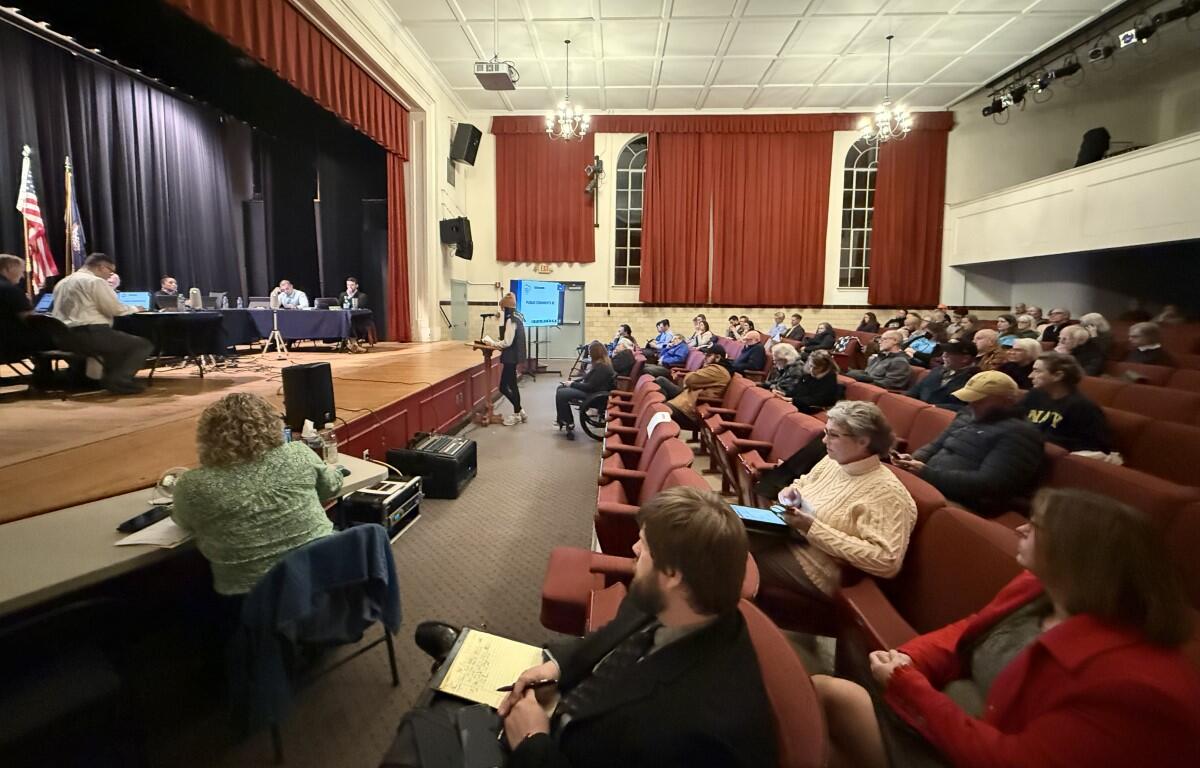

FORK UNION, VA (CVILLE RIGHT NOW) – The Fluvanna Planning Commission dealt another setback to Nebraska-based Tenaska’s hopes of building a second natural gas power plant in the county.
“This is a generational vote,” said Gary Osteen, who was born and raised in Fluvanna County, told the Planning Commission before it agreed in unanimously rejecting larger smokestacks on a proposed additional Tenaska gas-fueled power plant off Branch Road. “It’s not just going to affect us, it’s going to affect our kids, it’s going to affect our kids’ kids.”
Project Expedition is a $2-billion, 1.5 gigawatt plant project Tenaska wants to add across the street from an existing 940 megawatt plant which has been operating since 2004.
The commission took two votes Tuesday.
The first was a 3-to-1 approval, with one abstention, on changing the county ordinance to allow stacks at new power plants to be up to 230-feet as new engineering data shows stacks of 199-feet would be appropriate to allow the pollutants from the natural gas burning emissions to distribute over large distances rather than concentrate in the air and ground around the plant.
In order to consider the actual Special Use Permit for the 199-foot stack for the specific Tenaska plant, the county ordinance must first be amended to allow for it.
Then afterwards, the panel unanimously rejected the actual Special Use Permit request for this particular project.
Dozens of speakers presented during public comment at the meeting with about a 60-40 split led by those opposing.
“I’ve heard people say, ‘Well, Fluvanna isn’t even going to use the electricity that’s being produced,'” said county resident Nancy Kidd. “Guys, it’s on the grid. Every one of us, when we plug in our appliances at home, we’re using the grid, and electricity most certainly is coming back to Fluvanna County on the grid.”
“And I really want to say this,” Kidd said, “I really think it’s sad that Tenaska here tonight and other times on Facebook and other things are being presented as these villains that want to come in and destroy Fluvanna County.”
She said research indicating the existing plant has already caused cancer and other diseases in the community is not substantiated.
“Nobody wants someone to be sick, and Tenaska is not a villain,” Kidd said.
Fluvanna resident Josephus Almond, who’s also an attorney for the Southern Environmental Law Center, takes exception to plant proponents, and Tenaska’s plan. In a recent mailer to county residents, the company accused many opponents of fear-mongering.
He pointed to a recent Harvard study his organization commissioned that explored the potential impacts of the new plant.
“Public health experts agree there’s no safe level of exposure, and even small increases are linked increased risk of heart attacks, stroke, severe asthma attacks, pneumonia, and premature death for the most vulnerable members of our community,” he said.
Ashleigh Crocker told the story of her daughter who caught RSV when she was one and described being on the bathroom floor watching her baby struggling to breathe and then having issues with asthma for years after.
“For families like mine, this is not theoretical, it’s personal,” Crocker told the commission. “When you have held a baby whose lungs are desperately trying to pull in air, listening to them gasp and wheeze and choke, you do not accept arguments that emissions will be within limits. You do not accept the reassurances that it has to be managed, and you especially do not trust billion-dollar companies with plants they own in Pennsylvania that have been out of compliance with EPA standards for roughly three years.”
Osteen lives about 2 miles from the current plant and he says he hears the noise from the operation.
“Contrary to popular belief, I can hear it from inside my bedroom at times, I can watch my window vibrate, my back door vibrate with that thing running full-steam,” Osteen said.
He said that’s just going to intensify with the second larger plant.
Commission Chair Barry Bibb said he finds the noise arguments compelling, saying in a long statement before voting that he’d done a lot of research into health effects from the noise and pollution.
He said while there are benefits the plant would provide to the electric grid, “I have some friends around there that take care of children and by looking at this, I have concerns.”
Bibb continued, “I probably shouldn’t say this, but I’m also on the board of a daycare center that has 38 children and I’m concerned about that.”
Commissioner Loretta Johnson-Morgan, who grew up in Fluvanna, said, “Once again, why does it all have to reside in Fluvanna County, and to me this just too much for our county handle right now.”
“We’re going to have these very tall power lines proposing coming through, probably in my district, the Columbia district,” she said. “We’re going to have Tenaska on one end, we had Dominion here with all the coal ash problems, why does everything have to be centered in Fluvanna County.”
Commissioner Kathleen Kilpatrick noted she voted in January that the plant is not in substantial accord with the county’s comprehensive plan, even with 41 adjustments Tenaska has agreed to do to mitigate sound and air pollution concerns, as well as establish money to give to first responders and a fund set aside to mitigate any issues for those living within two miles of the plant.
She said while nothing in the comprehensive plan is lawfully binding, it is a compact between county leadership and its citizens.
“The comp plan is riddled from beginning to end with calls for preserving our rural character, our identity, and our heritage and way of life,” Kilpatrick stated. “Yes, there are some quantitative benefits associated with this proposal, but there’s an awful lot of competing data one side or another that places us at risk.”
A Planning Commission decision is not binding, and County Planning Director Todd Fortune said this night’s recommendations will be considered when these petitions are considered likely at the March 4 regular meeting.