


 Listen Live
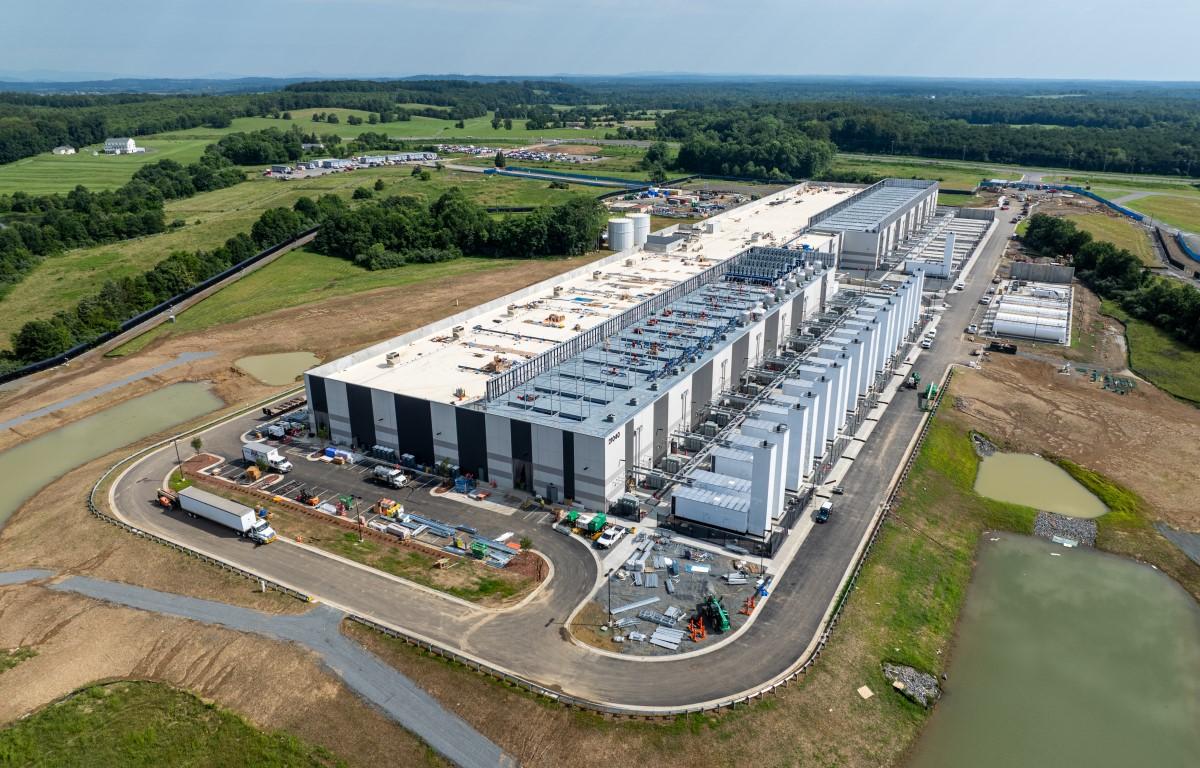

CHARLOTTESVILLE, VA (CVILLE RIGHT NOW) – As localities across Virginia await what will come out of the General Assembly in regard to data center and energy policies, some 200 people from across the Commonwealth gathered at St. Paul’s Episcopal Church across from Capitol Square for the Virginia Data Center Reform Coalition’s Lobby Day on Monday.
According to a release prior to the event, the Data Center Reform Coalition is made up of more than 50 organizations as well as hundreds of advocates and concerned citizens from across Virginia, all concerned about “impacts of unconstrained data center development”.
One of the 50 is Charlottesville-based Piedmont Environmental Council. Rob McGinnis, Senior Land Use Field Representative for Albemarle and Greene Counties, told Cville Right Now that PEC and the Coalition are focusing on four major categories of legislation from not just this year, but past years as well.
The four categories are state oversight, enhanced transparency, rate payer protections and tax incentive reform. Each have bills associated with them.
House and Senate bills in regard to state oversight involve prohibitions on operating a high-load facility, defined as a facility whose electricity demand exceeds 25 megawatts that was not operating before July 2026, without first obtaining a certificate of operation from the State Corporation Commission. The bill also details factors for the Commission to consider when reviewing a petition to operate such facilities.
Another set of state oversight companion bills in the House and Senate directs the commission to establish demand flexibility programs for Dominion Energy and Appalachian Power Company by 2028, as well as other electric cooperatives by 2029. Afterward, each program will be reassessed every three years.
Demand flexibility are measures designed to lower total electric grid system load requirements from time periods of peak system demand to lower system demand. This can be done by requiring or incentivizing retail electric service customers to temporarily reduce or interrupt their electricity usage, or by permitting some to secure electric load reductions from others during periods of peak system demand or other events that cause strain on the electric grid.
Those four bills also address enhanced transparency along with another that directs localities to require an applicant to perform and submit a site assessment and disclose the expected water use for a new data center prior to any approval of a rezoning application, special exception application or special use permit
Rate payer protection has companion House and Senate bills the specifically directs the State Corporation Commission to review cost allocation among different customer classifications for some electric utilities.
In addition, House and Senate companion bills for tax incentives propose tying tax break eligibility for data centers to best practices, pollution reduction and energy efficiency.
“The Coalition’s annual Lobby Day provides an opportunity for constituents to meet with legislators and make their voices heard on critical data center issues impacting Virginia communities,” The Data Center Reform Coalition’s announcement stated, “The Coalition works with lawmakers and data center leaders to establish fair, transparent regulatory oversight for this rapidly growing industry.”
Ultimately though, McGinnis said the big picture at this time among PEC and the other coalition members is pausing data centers for now.
“A lot that is because we just simply don’t have a handle on the energy consumption use planning going forward,” he said. “There just simply is too much load demand coming from data center proposals, so what you get is gas-fueled energy generation proposals. There’s multiple ones, including one very close to here at Tenaska’s second plant, and then you get transmission line projects as well, and those, despite the fact Albemarle County doesn’t have any data center proposals of scale, it’s those transmission lines and the gas plant that actually impact us.”
He added Albemarle County paused their data center policy deliberations until after the General Assembly’s decision but pointed out that three supervisors essentially opposed any update beyond what the policy is now.
“In Greene County, the supervisors basically through their technology district ordinance said they don’t want any data centers there,” McGinnis said.
That said, McGinnis still believes data centers will likely in a way be part of the economic development landscape in Albemarle County.
“AI and the defense intelligence industries; AI and biomed, biotech, life sciences is a reality,” McGinnis said, “There’s already companies that have moved into Albemarle County that specialize in the use of AI in defense intelligence. Is it inevitable? Perhaps. But right now, PEC supports, and we have other coalition partners who support, data centers only by special use permit above the size of 40,000 square feet.”
The Lobby Day release also cites two polls. The first is from the CCAN Action Fund, which found 89% of the voters polled want state legislators to manage the impacts of data centers and 82% are concerned about corporations receiving special tax breaks to build new ones.
The second comes from Christopher Newport University’s Wason Center, in which 86% of respondents support for site assessments before data center approvals that look at water usage, the electric grid, carbon emissions and agricultural impacts, while 69% support laws that would prohibit locating them within a mile of a national park, state park or historically significant site.